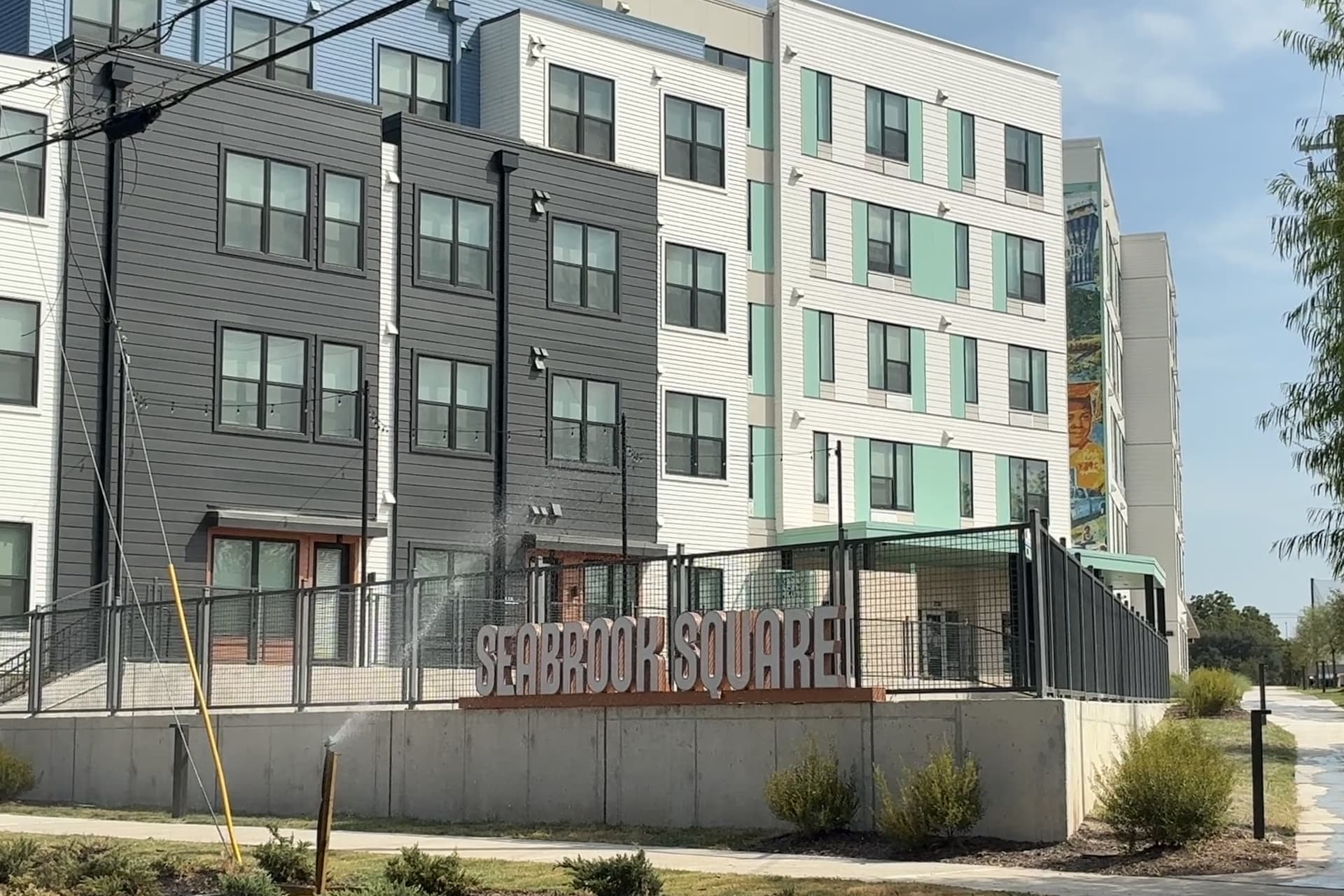
An update to Austin's comprehensive housing strategy is officially moving forward, with the goal of producing a new 10-year plan for citywide affordable housing construction and preservation.
The overview
The current Strategic Housing Blueprint was adopted in 2017 as a framework for housing affordability goals and policies through 2027. With its end date in sight, city planners are readying for a new version of the blueprint that'll extend into the 2030s.
Austin Housing Principal Planner Rachel Tepper noted the original blueprint's "ambitious" high-level goal of adding 135,000 new housing units, including 60,000 for lower-income earners, along with dozens of policy objectives related to housing production and stability. But the end of its intended timeframe and changes across the city since the 2010s have prompted the plan's next iteration.
“We’re here today as we end our 10-year horizon. We’re approaching 2027 and we know that conditions have shifted including major transit investments, major investments in anti-displacement," she told City Council members in October.
Officials voted to formally kick off the Strategic Housing Blueprint update Nov. 5. Austin Housing staff said the move provided clear policy direction for the city's next housing plan.
Zooming in
The plan will feature updated progress tracking and reporting on housing goals from 2028-37, including:
New goals for affordable housing development and preservation
Data analysis of Austin's housing needs, supply and demand, population and employment trends, and impacts of new infrastructure and development
More current displacement prevention strategies
Affordable housing strategies tied to both public and private partnerships
Additionally, the housing department is working to update Austin's outdated Opportunity Map, which highlights more desirable areas of town to add more housing options. The original blueprint called for 25% of new affordable housing in Austin to be built in high-opportunity areas, but only 11% was based on the latest reporting as of 2024.
Direction from council member Ryan Alter will also expand the blueprint with a regional scope; focus more on the city's long-term housing support and use of its land; and include housing strategies for specific populations like the homeless, youth, students and domestic violence victims.
The blueprint and opportunity map revisions are supported with $750,000 of a $6.7 million federal housing grant award, which will also cover $1.2 million for salaries of staff involved in the effort. No city dollars are being used.
The process and related public engagement will ramp up next year, and the housing department has already completed several advance preparations. Those include the launch of interactive housing market and blueprint progress reporting dashboards, and the start of a new round of opportunity mapping.
"We view these as key inputs that will help inform future housing goals, priorities, and strategies," housing staff said.
The new blueprint could also continue city leaders' shift toward supporting deeper levels of housing affordability. Tepper said city planners aim to be "a lot more calibrated" in relation to housing market needs and are looking at more deeply affordable options.
Many of Austin's existing incentives and density bonuses focus on producing units available at 60%-80% of the local median family income, or MFI. But officials now say more work must be done at levels of 50% MFI and below.
“Honestly, I don’t know how interested I am in subsidizing 60%, 80% MFI," Mayor Pro Tem Chito Vela said in October. "Our old vertical mixed use, VMU, originally was 10% [of new units] at 80% [MFI]. That just really does nothing for me nowadays, and I would take a fee in lieu that goes toward 30% [MFI units] rather than a handful of units where you’re shaving $100, $150 off someone’s rent.”
One more thing
The 2028 blueprint will focus more on displacement and Austin's stock of naturally occurring affordable housing, referred to as NOAH, that's available at market rates without any public subsidy.
Staff are working to expand the city's understanding of NOAH properties under a proposal from council member Marc Duchen approved last year. They recently found natural affordable housing is widespread across the city, with more than 550 NOAH properties that include 68,311 units—about 28% of Austin's total rental housing stock.
A broader NOAH approach could result in future bond funding—potentially as soon as 2028—to help preserve those sites in addition to dollars typically used for new construction. Direction from Duchen incorporated into the housing blueprint update will also result in reporting on NOAH units lost through property demolitions and redevelopments tied to city incentive programs for housing construction.
"We’ve approved zoning changes to developments that result in a net loss of affordable housing, even with the participation of our density bonus programs," he said Nov. 5. "I know it’s hard to capture those kinds of stories in a spreadsheet, but I’d like to encourage Austin Housing to find ways to count NOAH, provide an account of their preservations and losses, especially when the demolition of those properties is associated with participation in our city programs.”