Small and mid-sized Central Texas farms are in line for preservation assistance through a nearly $9 million federal conservation award announced this fall.
The Department of Agriculture funding is intended to help stave off farmland losses and support area farms, key goals of the Austin/Travis County Food Plan that's now being implemented.
The big picture
The Conservation Fund, in partnership with Austin and the Central Texas Food Bank, was recently granted $8.91 million through the USDA's Regional Conservation Partnership Program.
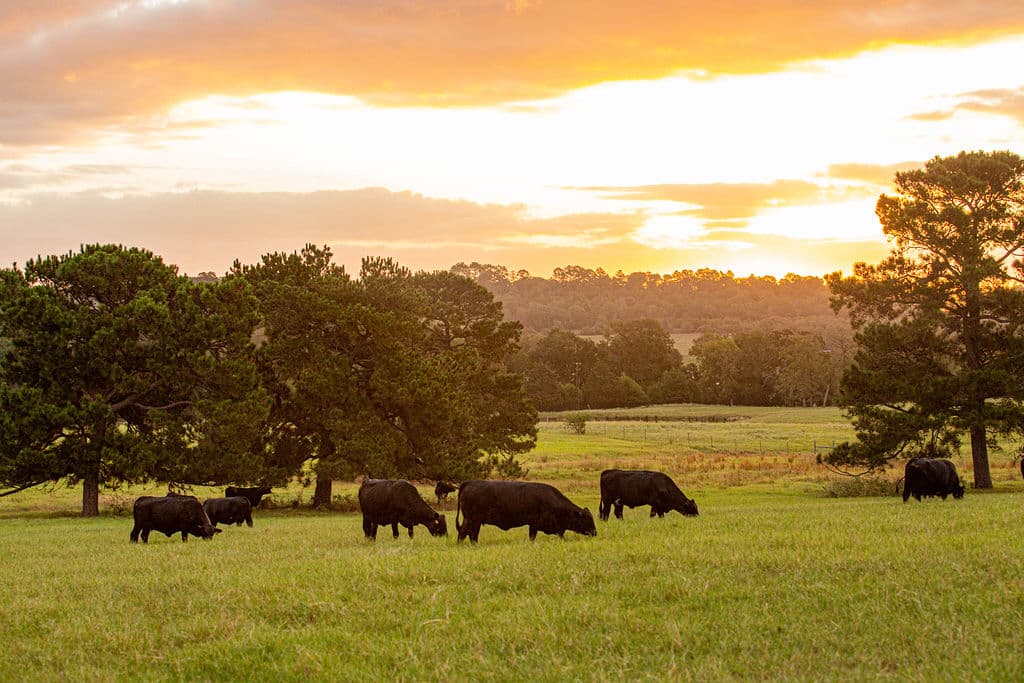
The award will be used to protect at-risk small farms through conservation easements, preserving the land for agricultural purposes. Funding will be focused on farms that produce food for human consumption.
“This investment represents an important step toward protecting Central Texas’s most vulnerable farmland. We are proud to partner with regional leaders to make this effort possible,” Ellen Gass, Texas field representative with The Conservation Fund, said in a statement. "This funding will help safeguard the working lands that feed our communities and preserve the agricultural heritage that defines Texas for generations to come.”
The award comes as Central Texas has seen rapid farmland losses in recent years due to new development. USDA estimates found Travis County lost more than a third of its existing farms from 2002-22, and the Central Texas Hill Country overall now averages hundreds of acres of farmland losses per week.
The USDA funds will be used to purchase easements on 25- to 500-acre farms across a project area including Bastrop, Bell, Blanco, Burnet, Caldwell, Falls, Fayette, Freestone, Gillespie, Hays, Lee, Limestone, Llano, McLennan, Travis, and Williamson counties, according to Austin Climate Action and Resilience. Recipient farms will be identified through a future selection process coordinated with the USDA's Natural Resource Conservation Service.
Locations will be prioritized based on the development risk they face, their agricultural productivity potential and their contributions to Central Texas' food system. Other factors will include farms' statewide importance, proximity to impaired waterways and location in areas experiencing greater farmland losses.
All development rights purchases through the federal award are expected to be completed by 2031.
“This award is an exciting development in our efforts to protect working lands and strengthen our regional food system,” Zach Baumer, director of Austin Climate Action and Resilience, said in a statement. “It demonstrates what’s possible when community partners and the City unify around a shared vision for a more sustainable, equitable food future for Austin and our region.”
Zooming out
Farmland preservation is among the many varied priorities laid out in the Austin/Travis County Food Plan, which city and county officials formally signed off on in 2024.
The federal funds will expand on existing work like Travis County's own conservation easement program to protect eligible properties. The food plan also calls to explore strategies like farmland conservation funds in a future bond, local incentives for agricultural activities and support options for urban farms.
Regional food planning is now moving forward under the new Austin/Travis County Food Plan Collaborative established in June. The network is designed to advance the adopted food plan into actionable progress across local governments, community groups, individuals and other entities.
Some recent progress includes a food rescue mini-summit hosted by one of the collaborative's working groups, the distribution of city and third-party award funding and the new USDA farmland awards.
Austin will continue its support for the food plan collaborative over the coming months by launching further programs, adding new performance tracking and searching for more funding opportunities, Baumer reported.
"Austin continues to make meaningful progress in implementing a more equitable and resilient food system. While external challenges present real constraints, the City’s strong partnerships, national leadership and growing implementation infrastructure position us well to sustain momentum," he wrote in a Nov. 19 memo.