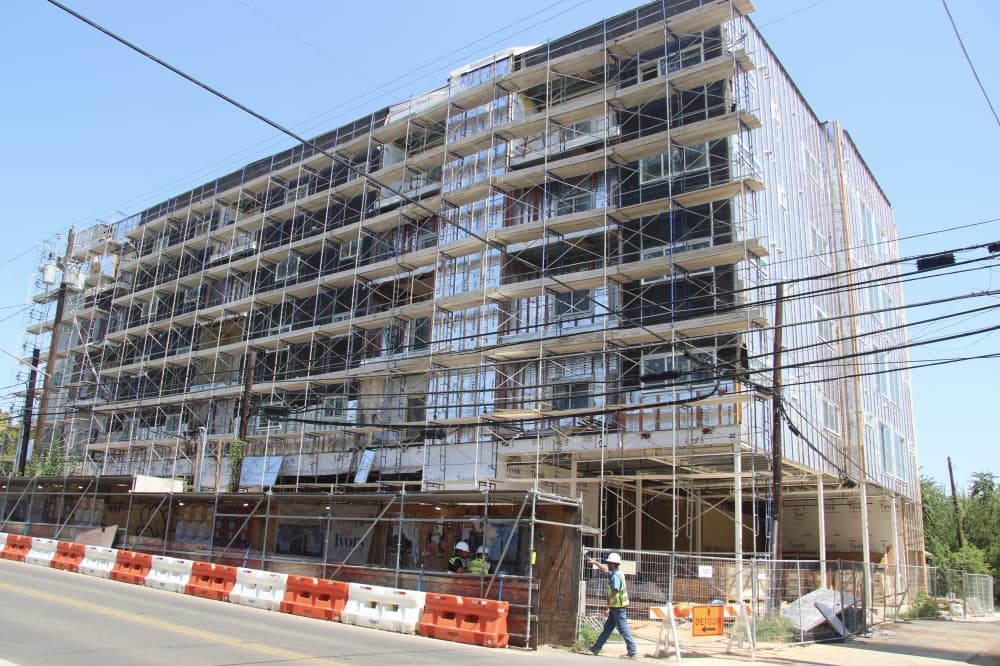
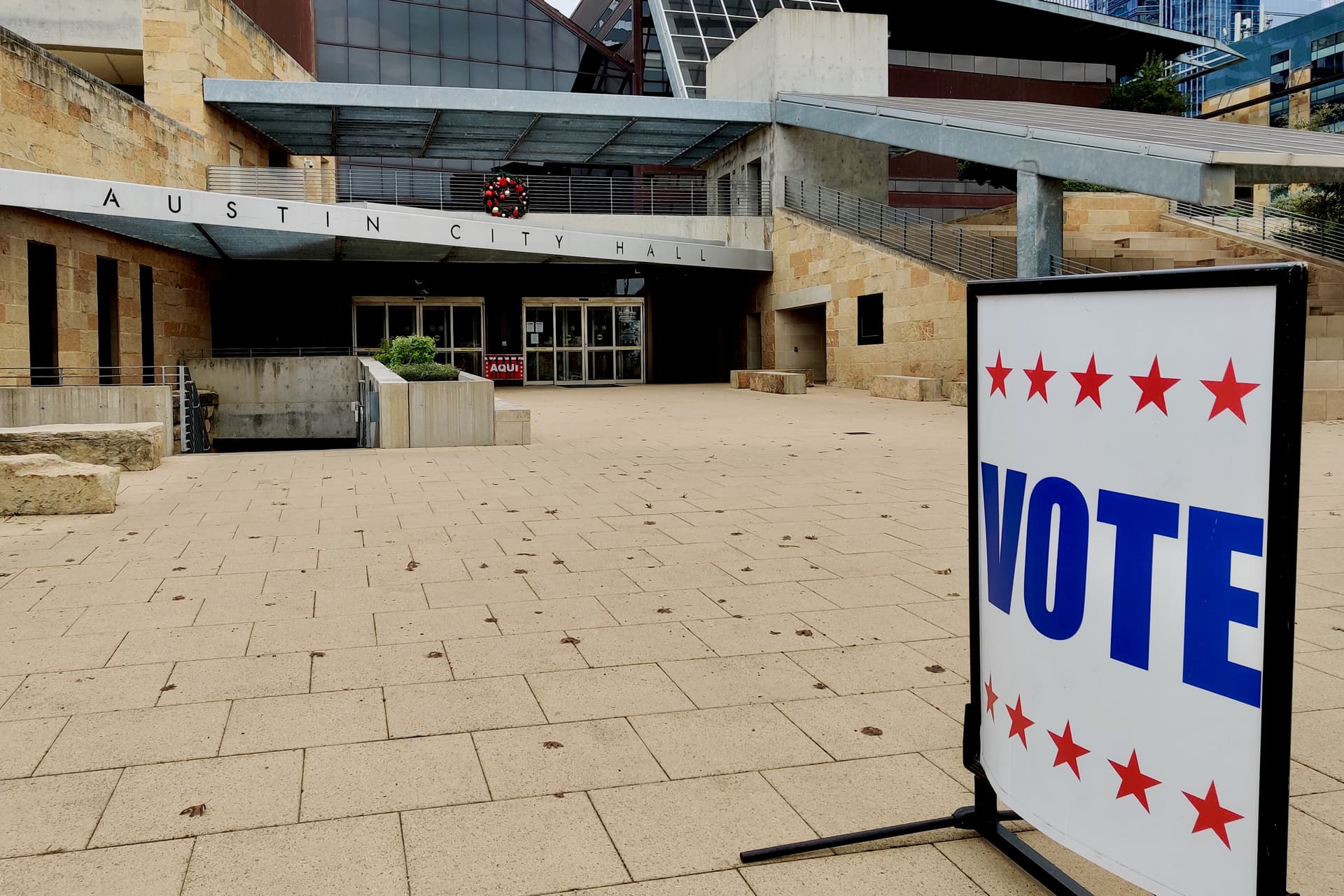
Austin officials are looking to expand the city's affordable housing offerings to lower income brackets. (Ben Thompson/Community Impact)
Austin leaders are looking to adjust the city's approach to creating new affordable housing, both in response to a new state law limiting some local affordability programs and to focus more on lower-income earners.
What's happening
Austin planners are now working on new roadmaps for affordable housing policy and economic development. A new policy team led by the city manager's office is outlining current challenges with affordable housing production in town, and ways to expand those opportunities.
The city's work with affordable housing is typically centered around living spaces that are reserved based the local median family income, or MFI. That federally calculated statistic, scaled on household size, was about $134,000 for a four-person family and just under $94,000 for an individual as of last year.
Austin has used hundreds of millions of bond dollars to support new development with apartments or homes reserved for those earning a percentage of the MFI. The city also has several incentive programs that allow private developers to build larger residential projects if a share of the new housing units are income-restricted, typically capped at 60% to 80% MFI.
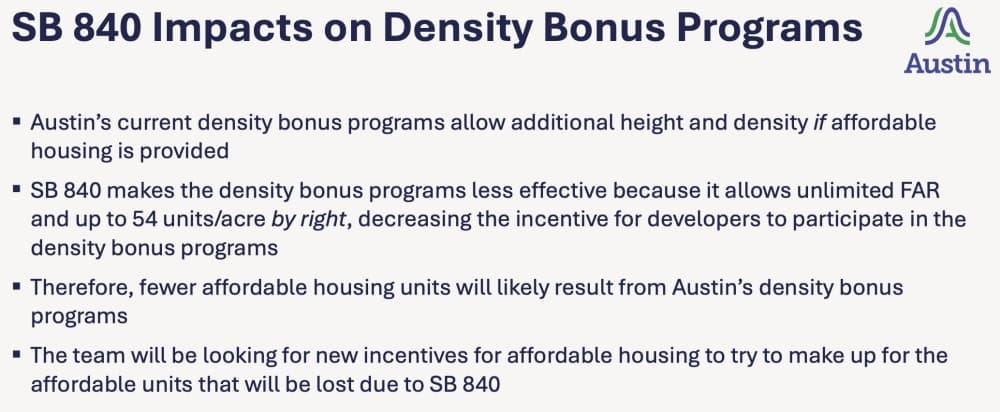
However, Senate Bill 840 approved by state lawmakers last year is affecting how some of those programs function. Under SB 840, referred to as "residential in commercial," multifamily and mixed-use housing projects are now allowed in places zoned for commercial uses. The law also sets new density baselines that go beyond the bonuses offered by the city, making those programs less attractive to use.
Senate Bill 840 has made many of Austin's density bonuses, traditionally used to ensure affordable housing is added with new residential construction, less effective. SB 840 allows for unlimited floor-area ratio, or FAR, and up to 54 units per acre by right. (Courtesy city of Austin)
More than 20% of the income-restricted housing in Austin today was created through density bonus programs affected by SB 840, according to Erica Leak, a housing officer on the city management team. She said the law will likely leave a “significant impact” requiring new approaches to keep up with local needs.
“Because the additional entitlements that used to be granted through density bonus programs are now allowed by right, it has decreased the likelihood of getting as many affordable units through those programs. Therefore, the city manager’s housing policy team is going to be looking at all potential new incentives to be able to create new affordable units," Leak said.
Changes under the 2025 law come after years of sharp increases for the local MFI, attributed largely to an influx of higher-earning residents. The share of Austinites making $200,000 or more annually has jumped around 300% since 2010, Leak said, while the share of those making below $50,000 has fallen.
Many more people can generally qualify for affordable housing under a higher median income. A quickly rising MFI also means residents may face more competition for affordable units, while there's less housing set aside specifically for the lowest income levels. The low-income threshold for a four-person household jumped more than $26,000 from 2020-2025, a 33% increase.
Progress tracking for Austin's 10-year Strategic Housing Blueprint adopted in the late 2010s shows the city remains behind its overall decade-long goals to add tens of thousands of new affordable units. The most progress has been made in the 60% to 80% MFI range and above, but much less housing was created for 30% to 60% earners. For those earning below 30% MFI, just a few hundreds units of a 20,000-unit goal were added.
Paul Peninger, principal with city real estate consultant BAE Urban Economics, noted that households with members in service and care industries are most affected by Austin's rental affordability gap. Those jobs continue to support the economy, he said, but are not paying enough for workers to secure market-rate housing or even the highest level of affordable units.
“There’s still a very big gap at the lower end of the income range between what folks are earning and what the market is producing in terms of market rate rental rates. And that gap is particularly acute for households that are earning less than 50% of the median family income," Peninger said.
The approach
To reflect changing conditions, city housing staff will be revising the strategic blueprint and planning ahead for the next 10 years of affordable housing goals. That work is being supported by a $750,000 share of a $6.7 million grant awarded by the Department of Housing and Urban Development.
Local officials also have several options to pursue targeted changes on Austin's affordable housing strategy to ensure "growth really does benefit everyone," Leak said. Those could include:
Lowering income limits for density bonus programs
Exploring new financial incentive and financing options for affordable projects
Improving city development reviews and cost barriers for housing construction
Partnering with a wider range of local groups and builders
With changes to Austin's incentive programs in the works, Leak also said staff will be recommending a new citywide development bonus requiring some housing set aside for 50% MFI earners. While that proposal has yet to move through public review to a final City Council vote, Mayor Pro Tem Chito Vela signaled early support for the concept given recent affordability trends.
“We can use density bonuses to get those 80% MFI and 60% MFI units, I think we’ve clearly successfully done that over the last 10 years. We have not used them effectively to get to those much more deeply subsidized units just because of the cost, and then we get so few units and we can get more units outside of that," he said.
Vela also asked about exploring other options, like collecting larger fees from developers to use for city-backed housing instead of requiring affordable units on-site. Given the number of apartments and homes that have been made available at higher MFI percentages, he said the strategy could support more of the missing lower MFI units.
“Yes, you’re going to give me 12% [of units] at 60% [MFI]. But you know what? Write me a check, and I’ll go and get a bunch of 30% units," he said.
Leak said some cities have elected to move more toward collecting development fees instead of requiring residences on-site, while others have sought to ensure affordable units are built with new housing. She said staff and council will have the opportunity to decide that issue alongside further affordable housing policy discussions over the months ahead as new proposals roll out.