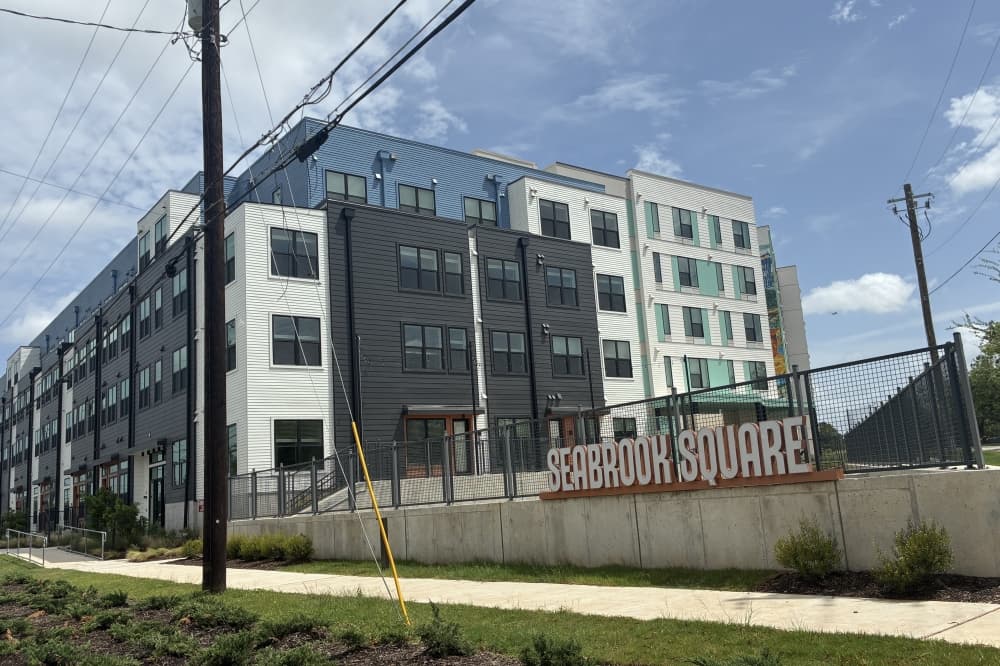
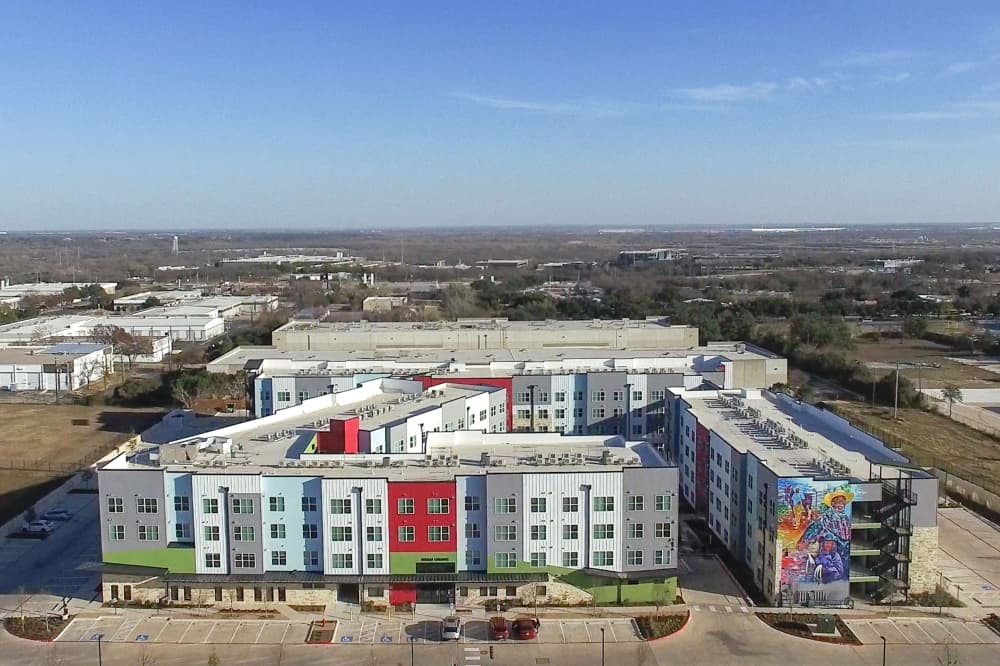
More than 32,000 affordable housing units were built in Austin from 2018 to 2024, representing progress toward decade-long goals established in 2017. However, options for the lowest-income residents remain scarce citywide and many parts of town continue to see relatively few affordable additions.
The big picture
Affordable housing gains in Austin are monitored under the city's 10-year Strategic Housing Blueprint, which includes the high-level aim of creating at least 60,000 new income-restricted housing units by 2028. The blueprint also set goals for individual income brackets and for new construction within each City Council district.
The city plan refers to housing that's affordable based on the local median family income, or MFI, as calculated annually by the Department of Housing and Urban Development. The Austin-area MFI has risen sharply since the blueprint's first year, from $86,000 for a four-person household in 2018 to $134,400 today—a more than 56% increase.
City planners have attributed that jump to the addition of higher-earning residents over the past decade-plus. City staff previously reported Austin saw about a 300% increase in people earning $200,000 or more annually alongside a declining share of lower-income residents since 2010.
Affordable housing is generally available to those earning below the "low-income" threshold of 80% MFI and below. The Strategic Housing Blueprint called for new construction across the housing spectrum, including the 60,000 income-restricted units and more than 70,000 market-rate units for median- and higher-income residents.
New data covering the first seven years of blueprint progress show "significant gains" in some parts of town, Austin Housing Director Deletta Dean reported. But many areas of Austin remain off-target and little housing has been built overall for extremely low-income residents.
"As we move past the midpoint in the Strategic Housing Blueprint’s ten-year timeframe, productive gains have been made toward reaching the goals set out in 2017, but much more work remains as unified community efforts are needed to achieve the Blueprint goals," Dean wrote in a memo.
By the numbers
Austin already passed its decade-long goal of adding at least 15,000 new units for 61%-80% MFI earners. Awais Azhar, executive director of HousingWorks Austin—a housing advocacy nonprofit that tracks blueprint progress—said that "exciting" result was boosted by private development in addition to publicly supported projects, allowing the city to reserve funds for more deeply affordable housing.
He also noted Austin's strides toward preserving existing affordable housing, as well as the successful concentration of units in accessible community centers and along active corridors as called for in the Imagine Austin comprehensive plan.
As of 2024 however, housing for the lowest income brackets continued to lag. That trend may continue through the rest of the 10-year blueprint timeframe, Azhar said, thanks to larger market forces.
“We might not actually have as robust production because we’ve already entered a very difficult and challenging market. And likely as we’re crunching data for ‘25, we’re going to start seeing those really difficult pieces of the market pop up more," he said in an interview.
The 2024 blueprint scorecard noted almost no progress toward Austin goals for housing at 30% MFI and below, the extremely low-income level that includes tenants exiting homelessness. Azhar said the city will eventually meet another goal of adding 1,000 supportive housing units tied to the homeless response system, with nearly 800 in planning or development, but that their timelines were also extended due to development challenges.
City officials are also now focusing more on lower affordability levels. A new citywide development program may soon encourage the addition of units for 50% MFI earners and below in mixed-use projects, a step below the 60%-80% MFI levels required under similar programs today. Dean also said her department is aiming to use Austin's millions of dollars of remaining voter-approved housing dollars on lower-income development.
“With the remaining 2022 bond money that we have, we are looking at supporting projects, obviously with mixed income affordability. But we are giving preference to projects that have deeply affordable units at that 50% [MFI] and below, particularly that 30%-40% [MFI] range. So that will be the priority with the remaining funds," she said in an interview.
Zooming in
The blueprint strategy also monitors how affordable housing is being dispersed across Austin. Traditionally, more options have been based around the eastern portions of the city while less progress was reported to the west. That trend was maintained through 2024, with some City Council districts in East Austin already passing their 10-year goals and those on the west side remaining well off.
Council districts 1 and 2, covering Northeast and Southeast Austin, were reportedly hundreds of units past their targets as of 2024 with nearly 4,000 more affordable units in development. The neighboring east side District 3 and North Central Austin's District 4 were at 85% and 96%, respectively, with over 3,000 total units under construction.
But no other council districts were more than 45% of the way to their 10-year goals as of 2024, with the fewest additions tracked in districts 6, 8 and 10 that mainly fall west of MoPac. This year's blueprint report noted those areas "remain well short" of the pace of new construction needed to meet the city benchmarks.
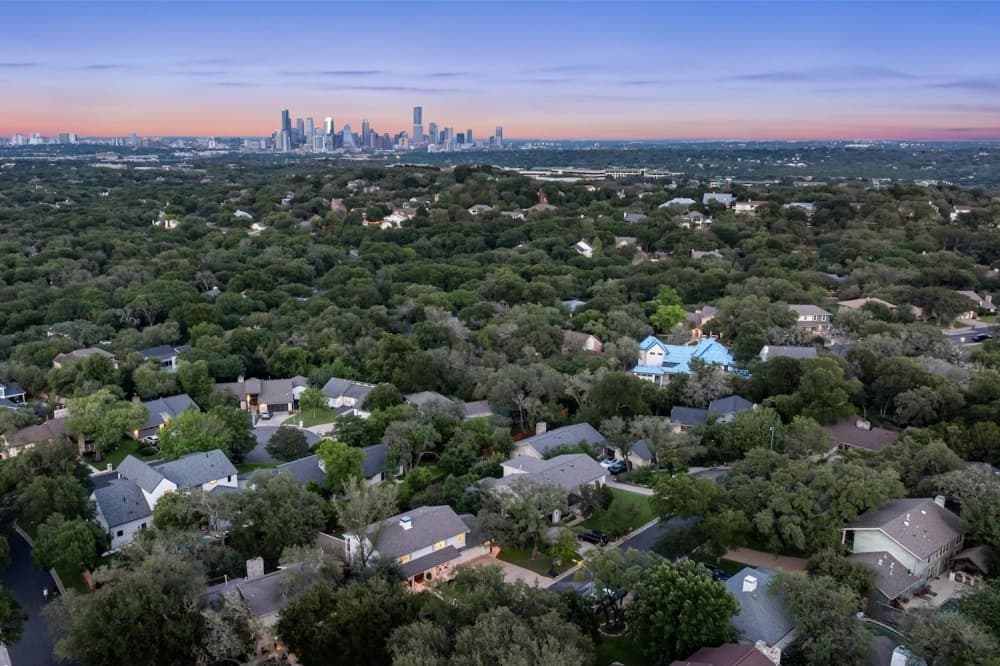
While growth there was slower, Azhar said new mobility and transit infrastructure in Northwest and Southwest Austin has accompanied recent affordable housing additions in those areas compared to the past several years. However, he noted West Austin's District 10 remains the "biggest challenge" due in part to its unique geography and lack of a defined residential center.
Much of West Austin includes "high opportunity areas," a city label referring to places offering residents greater housing, economic, educational, mobility and health outcomes. The blueprint called for one-fourth of all new affordable housing to be built in high opportunity areas, but to date just 11% was.
Housing Planner Principal Rachel Tepper said Austin and The University of Texas at Austin are in the process of revising opportunity area maps to recalibrate city planning and help guide future additions.
“There’s different strategies for different areas of the city. And so I think by having a more nuanced map that they’re proposing, maybe we’ll have archetypes of the different areas so that we know what type of development is appropriate in different types of high opportunity areas," she said.
What's next
Austin Housing reports annually on progress under the strategic plan, and its latest update covering 2018-24 was made available in early May. The city will release its analysis for 2025 this fall and publish reports in 2026 and 2027 to complete the 10-year process.
Using $750,000 of recent HUD grant funds, the housing department will also be creating a new 10-year blueprint with updated goals, mapping and other changes. That work will ramp up next year so new strategies can be rolled out as the current plan sunsets in 2028.
Officials said the next blueprint will look back at improvements from the current version and likely have more specific goals to track different areas of progress. Dean also said Austin's shift toward supporting lower-income housing, typically more costly and challenging to develop, will likely result in lower but more refined targets.
“We do want to kind of manage expectations," she said. "We may not produce as many units as we have across the MFIs because we’re focusing more on 30%. We’re trying to shift it from always focusing on quantity, to what’s really helping those most in need.”