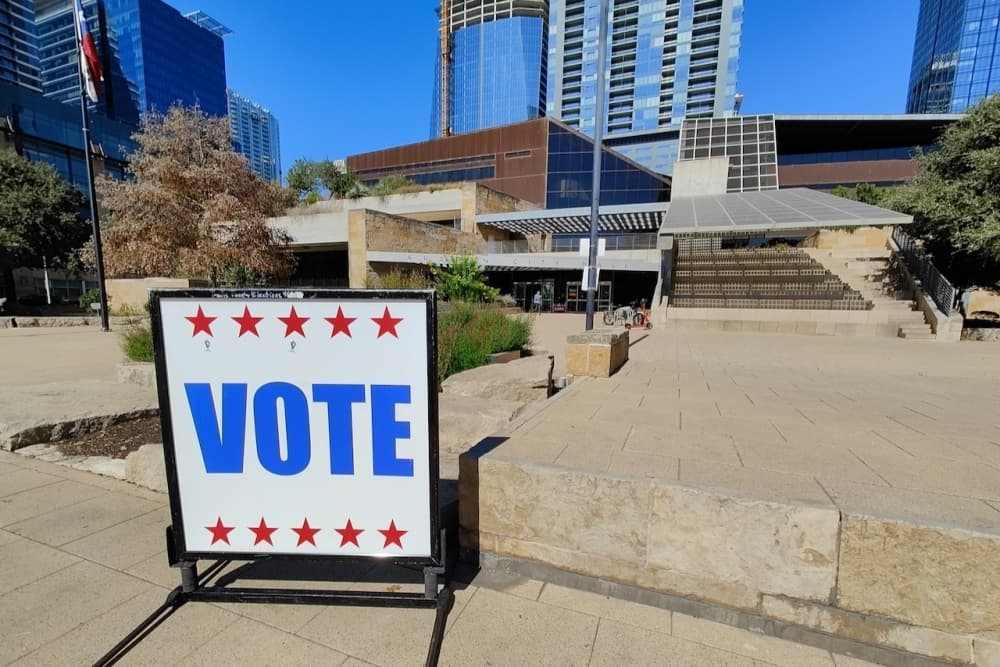
Austin voters will decide on ten ballot propositions this fall, including two bond measures totaling nearly $300 million. (Ben Thompson/Community Impact)
Austin voters will consider 10 ballot propositions in this fall's election.
The other eight propositions would amend Austin's charter, the local government rulebook likened to a civic constitution. Seven of the eight propositions were developed through city processes, while one—Proposition I—was forwarded by the political group Save Austin Now.
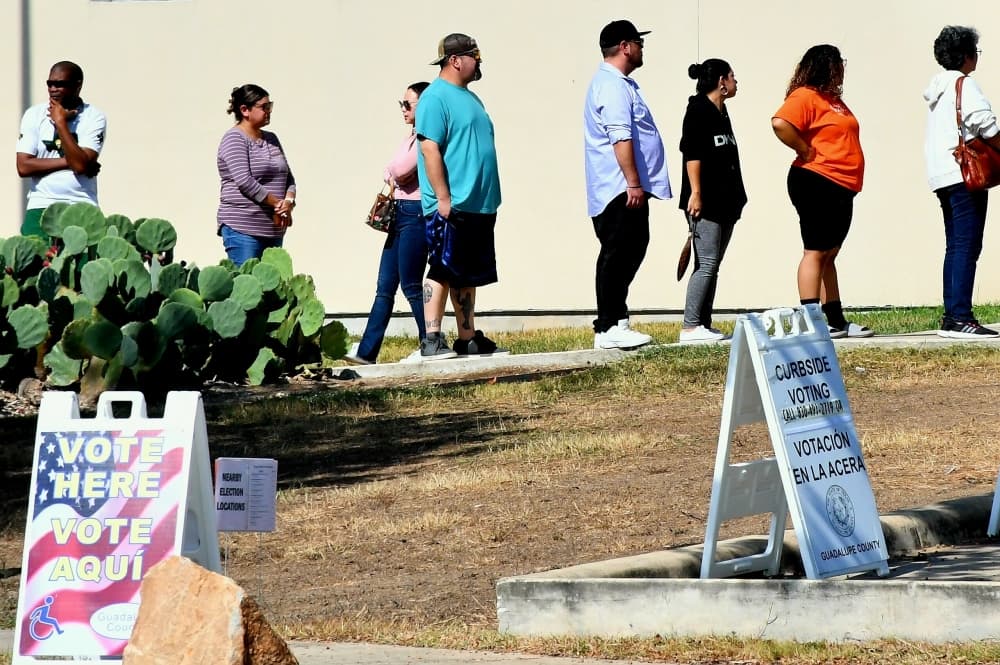
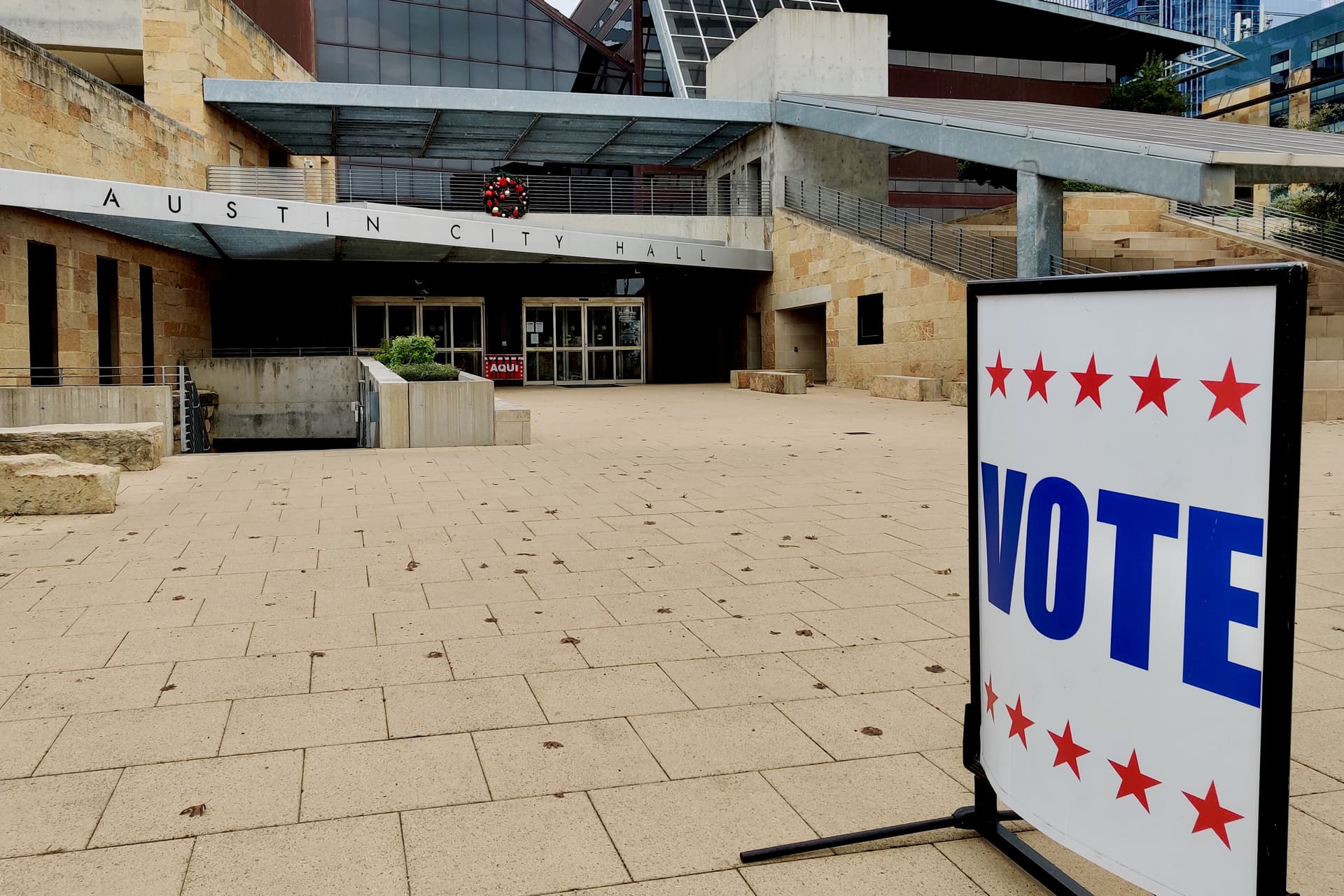
Early voting runs from Oct. 19-30, and Election Day is Nov. 3. More information on voting and polling locations is available through county websites and www.votetexas.gov. For more election coverage, visit Community Impact's voter guide.
Bond propositions
The two bond measures were placed on the ballot after more than two years of planning and deliberation. While other funding areas were considered, city officials narrowed the proposals to cover only parks and library funding in anticipation of larger bond packages in 2028 and 2034.
This November's election includes:
Proposition A, a $260 million parks bond
Proposition B, a $35 million libraries bond
Proposition A would fund named parks projects and general citywide improvements with $65.5 million for Austin Parks and Recreation buildings; $65 million for parkland improvements; $65 million for aquatics facilities; $35 million to acquire new parkland; and $29.5 million for parkland infrastructure.
Proposition B would fund two library projects: $25 million to improve and expand the Hampton Branch at Oak Hill in Southwest Austin, and $10 million for the development of a future Colony Park branch in East Austin.
This year's proposed amendments stem from a charter review launched by City Council in 2023, which had originally centered on election issues like requirements for resident-initiated petitions.
The Charter Review Commission eventually proposed several changes, including some related to election rules. More than a dozen items from that commission as well as city staff were moved onto the November 2024 ballot. However, a court order halted that vote over council's potential violation of state law in calling the election, and the charter items were shelved until this year.
Officials decided to place just eight of those recommendations on the November ballot, including the Save Austin Now measure, given the number of races and other propositions voters are facing. They include:
Proposition D, removing an existing requirement for City Council to hold weekly meetings. Today, council typically meets every other week and cancels other meeting dates on its annual schedule adopted in a public meeting.
Proposition E, removing an existing requirement for City Council to set its rules via ordinance. Today, officials operate under procedures set through a formal ordinance adopted in a public setting.
Proposition F, clarifying the timing of campaign finance limits ahead of an election. The change would set those limits for a full calendar year on Jan. 1; today, they're set during the city's summer budgeting process.
Proposition G, requiring resident petition and charter amendment elections to be held on the next available November election date in an even-numbered year. Today, certified resident-proposed petition measures are placed on the next available election date and not tied to higher-turnout options.
Proposition H, giving City Council authority to hire and fire the city attorney. Today, the head of the city's law department is appointed by the city manager while council members may authorize assistant city attorneys.
Proposition I, the Save Austin Now proposal to mandate a new, recurring "Independent Affordability and Efficiency Initiative." The political group's concept would be enshrined in the charter—meaning it can only be changed via elections every two years or more, not by city officials—and would follow council's adoption of a similar audit program this year that's already in progress.
Proposition J, a series of charter edits described by the city as making "non-substantive corrections of typographical errors, punctuation, and sentence structure" as well as adjusting language that's "moot or unenforceable" under new state law or court orders. Changes cover the charter's provisions on elections, annexation and the city's retirement systems; more information is available here.
The city's description of all eight charter amendments is available online, including a Proposition I fact sheet.
Breaking down Proposition I
Save Austin Now's audit requirement is unique among the eight charter amendments as it's the only one resulting from a voter petition drive.
The group petitioned Austin voters on its "Independent Affordability and Efficiency Initiative" concept for months and collected more than 21,100 signatures in favor. At least 20,000 people are required to sign on in support for resident proposals to land on the ballot; a city clerk review determined Save Austin Now gathered at least 20,051 valid signatures this year.
Its effort came after City Council already adopted a recurring, citywide audit program with a similar structure. After a public solicitation for a third-party auditor, officials authorized a more than $5 million contract with Pennsylvania-based Public Works LLC to conduct that assessment over several years. Unrelated to the new auditing effort, Austin also already receives annual third-party financial reports that are publicly available.
City leaders including Mayor Kirk Watson have repeatedly stated their support for their version of a citywide audit as established by council. They've said it's more practical and independent than Save Austin Now's proposal for several reasons, raising concern with:
The inflexibility of a permanent charter standard that can only be modified through infrequent elections, not allowing for changes as needed
A requirement that the third-party contractor pay for its project through city budget reductions, potentially incentivizing broader cuts and leaving any savings decisions to the vendor rather than a public process
Preventing a tax rate election, or TRE, from being called unless an efficiency assessment was completed within the preceding year
Different timeframes, deadlines and total costs for audit projects
Additionally, information gathered through the Proposition I audit may not be automatically publicly available. The city also estimates it could cost more than $9 million in a single year versus the current audit's roughly $1 million annual cost.
The city maintains that Proposition I could result in third-party audits that are more expensive than the existing program, and with unclear results.Courtesy city of Austin
Concerns about spending and transparency under Proposition I have been raised this fall by the "Don’t DOGE Our Austin Coalition"—referencing the federal Department of Government Efficiency led by Elon Musk that was found to have reported inaccurate information with lacking transparency. The local coalition is made up of dozens of local nonprofits and workers' groups with support from some elected officials, and maintains that Save Austin Now's version of a third-party audit would improperly incentivize "dangerous and unnecessary cuts" to city services at a cost of millions of dollars.
Proposition I's author—attorney and former Travis County Judge Bill Aleshire—has said the measure includes transparency requirements and safeguards against the potential rollback by future councils as a voter-approved charter amendment. Aleshire said the coalition is largely made up of supporters of last year's failed tax increase election Proposition Q, and that it's engaging in a "boogeyman media strategy" against Proposition I to avoid publicizing findings of government waste.
"They obviously did not get the message that Austin’s taxes and fees are already too high and are making Austin more and more unaffordable. The opponents can tolerate the City Council’s self-audit ordinance because they believe they can control that audit and keep it narrow and hide the research and results from the public and have Council kill the audit at any time," he said in a statement.
Proposition I follows a separate 2018 ballot proposition for a third-party citywide audit that was rejected with nearly 58% opposition.