Several amendments to Austin's charter are set to be placed on the November ballot, capping off a process that was first launched by city leaders more than three years ago. Voters will also decide on a separate charter requirement, a citywide audit measure conceived by the political action committee Save Austin Now.
The setup
The charter, which serves as the city's legal rulebook for government structure, can only be revised in an election. Charter amendment elections can't be held sooner than two years after the most recent changes were approved by voters.
Charter amendments may be proposed either by city leaders or through a resident petition process that earns enough public support. In Austin, at least 20,000 registered voters must sign a petition to advance an amendment to the ballot.
In early 2023, City Council voted to create a new resident commission to reconsider local election rules and propose changes to the charter. That process partially resulted from recurring resident-initiated petition elections, and views held by some council and community members that rules for those contests were too lenient compared to other Texas cities.
The 2024 Charter Review Commission spent months reviewing possible changes to the city charter. The commission produced several, and with some additions from city staff, more than a dozen amendments were forwarded for voters to decide. However, a district court judge found city officials likely violated the Texas Open Meetings Act when calling that 2024 charter election, putting the propositions on hold.
The action taken
Earlier this year, council members revived that group of charter amendments for consideration on the November ballot. On July 30, seven of the previous recommendations and Save Austin Now's citywide audit amendment moved forward. An election will be formally ordered in August.
The measures now heading toward a public vote this fall would:
- Clarify the responsibilities and membership of the Independent Citizens Redistricting Commission, the resident board that redraws council district boundaries every 10 years, and ensure college students are eligible to serve
- Delete an existing charter requirement for weekly City Council meetings; officials now typically meet biweekly and cancel other scheduled sessions for compliance
- Delete an existing charter requirement for City Council to set its meeting rules and procedures via ordinance
- Clarify that local campaign finance limits be set annually Jan. 1, rather than through budget adoption in the summer
- Set all elections resulting from resident petition campaigns for the next November in an even-numbered year, rather than the next open election date
- Give City Council the power to appoint and remove the city attorney, currently appointed by the city manager
- Update the charter with various "non-substantive" language changes
As Save Austin Now successfully petitioned its charter amendment for a government efficiency audit, the city must add that proposition to the ballot despite already advancing a council-approved third-party audit. Mayor Kirk Watson has maintained the existing version would be more effective and less problematic than the PAC's due to its structure, approach and funding.
“We’re bringing in professionals because we want professional analysis, not political analysis," he said. "Our responsibility as elected officials is to insist on independent accountability, not to script independent accountability."
Council members rejected, or didn't take action on, the following previously proposed amendments to:
- Raise the signature threshold for petitions to recall a council member from 10% to 15% of their constituency, while maintaining a 10% bar for mayor. Watson moved to keep the 10% limit for all elected positions, and sought to require petition circulators to sign affidavits that their materials are true, but officials voted down the edited measure.
- Align resignation provisions for municipal court judges seeking elected office with state standards
- Update city financial practices
- Change the employment classification of city auditor's office staff
- Allow elected officials to accept donations to cover unpaid campaign expenses before leaving office, a practice that's currently banned
Some or all of those items might return in a future charter election, which could be held in November 2028 at the earliest if any amendments are approved this fall.
Put in perspective
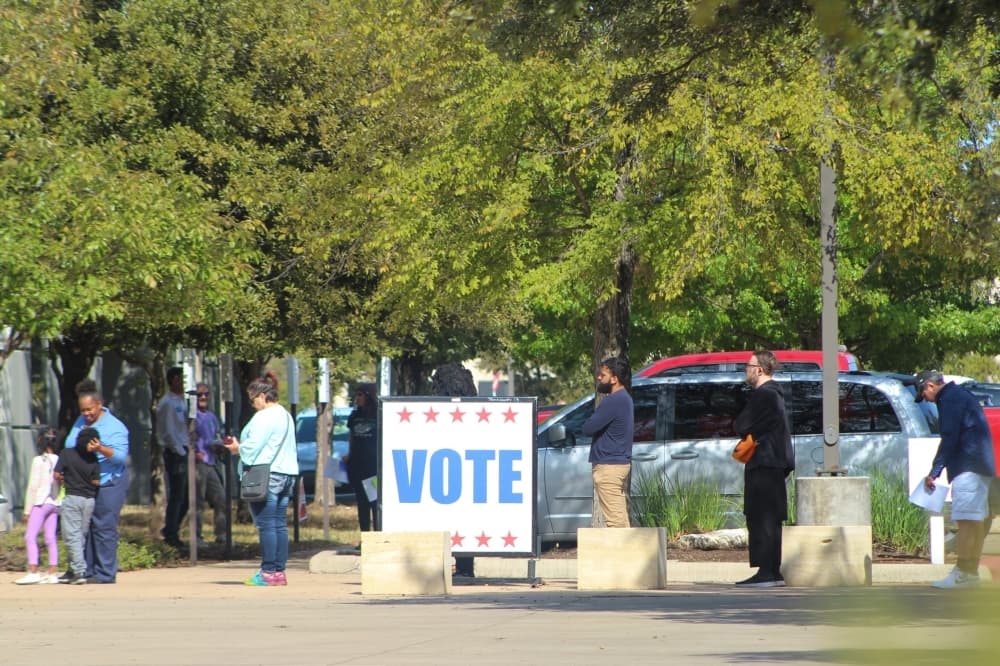
Some officials declined to advance all previously considered amendments based on a concern from council member Mike Siegel about the number of high-profile contests already being decided this November. He pointed to previous reporting that found extended wait times at polling places, which can be caused by lengthy ballots, disenfranchise and disproportionately affect some communities.
“Basically, every minute we add to the ballot will inevitably reduce the number of people who vote," Siegel said July 28. "My concern is that I don’t see any amendment here that is worth potentially discouraging folks from voting this November. Several of them sound good in the abstract and are good technical fixes. But to me at least, I don’t see anything worth longer lines on Election Day.”
Council members heard public testimony about most of the proposed amendments before their July vote. Resident Betsy Greenberg, a member of the recent charter review body, said officials should strike the requirement for petitions to only be voted on in even-numbered years. Following previous discussion on the 2024 charter commission, she said the rule would allow less aware Austinites to decide on propositions.
“The council only wants citizen-initiated ballot questions considered at the elections with the highest turnout. Some would say this also means the elections with the highest turnout of uninformed voters," she said.
Council member Paige Ellis noted that calling elections as soon as a petition is certified often results in an off-cycle contest, which greatly reduces turnout and can cost the city hundreds of thousands of dollars to administer. And council member Ryan Alter, who sponsored the 2024 charter review process, backed the amendment with the view that civic propositions should be decided democratically with more people participating.
“Saying that some voters are not as worthy as other voters because they’re not as educated as other voters, I think, is very denigrating to those voters and does not give credit to everyone who takes the time and shows up for an election," he said.