Fort Worth City Council approved its budget and the ad valorem tax rate for fiscal year 2026-27, which starts Oct. 1.
What happened?
The total $4.35 billion budget was passed unanimously, but the ad valorem tax rate passed by a 7-4 vote with Charlie Lauersdorf, Chris Jamieson, Michael D. Crain and Macy Hill voting against it. Lauersdorf and Jamieson represent northeast Fort Worth in districts 4 and 10, respectively.
The tax rate will be $0.70565 per $100 of appraised valuation, a 5.26% increase. The owner of a home valued at the city average of $232,925 will see their tax bill decrease by $8.19 to $1,643.64 annually. The decrease is due to lower estimated home values, according to the presentation.
“I was elected to represent the people of District 4, and at our budget meeting and talking to people in person, social media, you name it … we got some District 4 residents here right now,” he said, pointing to the audience. “Not a single one of them supported that tax rate increase. Therefore, I was elected to represent them and that’s exactly what I’m going to do.”
What you need to know
The operating budget for FY 2026-27 is $3.33 billion, an increase of 10.81%, according to a news release. Several programs slated for reduction or cuts were restored following guidance from City Council in past meetings. Those include the Alliance PetSmart Charities Adoption Center at 2901 Texas Sage Trail, restored employee positions to avoid service-level issues and employee pay-for-performance increases in the 4%-4.5% range, which will be paid in April 2027.
The total cost to restore those services and positions was $4.09 million, according to the news release.
The cuts were made as the city faced a $94 million shortfall in revenues compared to expenditures in part due to lower-than-expected tax rolls, according to previous reporting.
The Tarrant Appraisal District has not reappraised residential property since 2024 following a change to the reappraisal plan. There was also an increase in property tax protests, according to previous information provided at budget work sessions. At the Aug. 11 meeting, TAD Chief Appraiser Joe Don Bobbitt told council members there were about 2,000 lawsuits filed against appraisals this year and to expect a 10% increase in protests next year. He said TAD expects a 15% increase in values when appraisals happen in April 2027.
The budget eliminates 114 vacant positions, freezes 31 positions for half the fiscal year and 61 for the full year.
City Manager Jesus “Jay” Chapa said if the ad valorem tax rate was not passed, city staff would have had to find a way to reduce the expenditures by an additional $34 million.
Zooming in
Salaries and benefits account for $797.6 million of the $1.1 billion in the general fund budget, according to city documents. The entire $0.3565 property tax rate increase will support the general fund.
Lauersdorf asked about some of the items in the budget, such as leadership training, six-figure contracts he called "questionable" and costs in the city’s employee health fund that saw a large increase in glucagon-like peptide-1, or GLP-1, treatments.
The general fund reflected a $14 million increase in the contribution to the city’s employee health fund, which is a separate fund. If there is a shortfall, the general fund revenue is used to cover it, Chapa said at the May 12 work session.
During a previous work session, Chapa said there was a projected $30.6 million shortfall for the more than 11,000 employees on the health program. The shortfall was a combination of higher charges for emergency room visits, imaging and prescription weight-loss medication.
“What I've seen our incredible staff do time and time again is find the right answers,” Lauersdorf said. “Never the easy answers, but the right answers.”
Quote of note
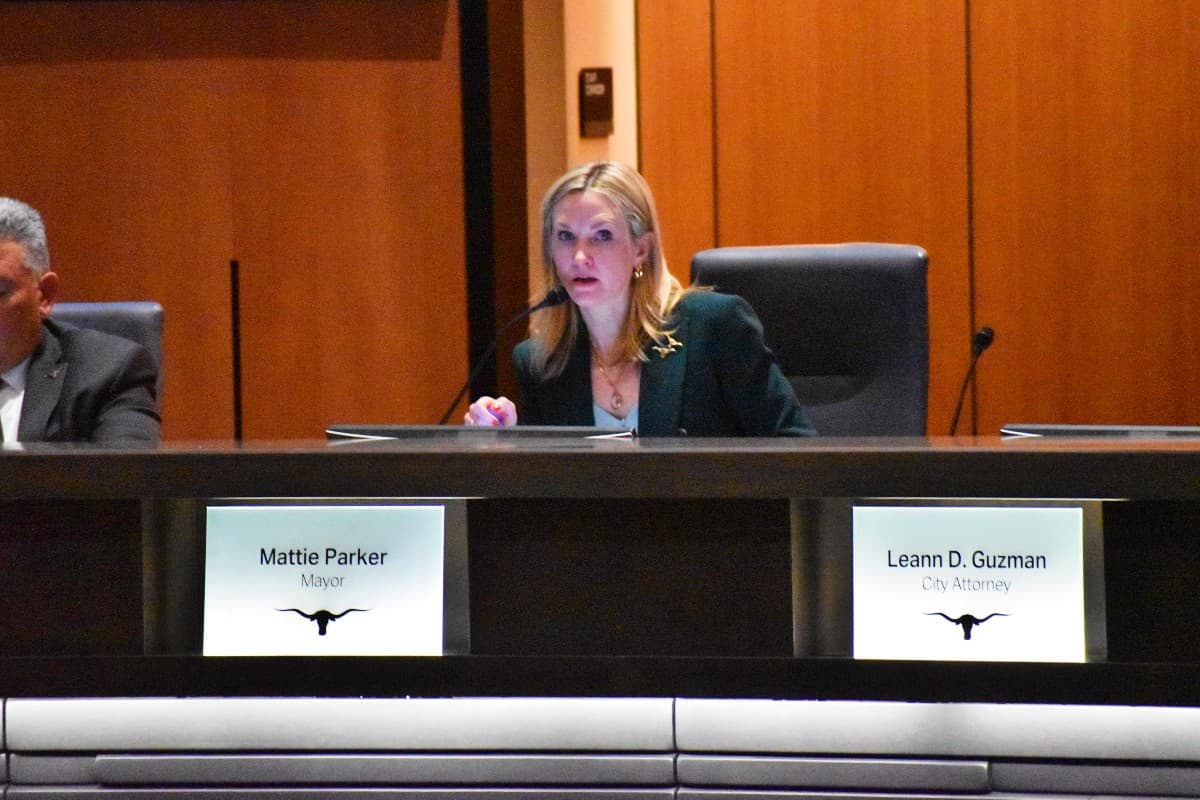
“Fort Worth is different than other large cities,” Mayor Mattie Parker said. “I have spent hours and hours away from my family and anything fun to make sure this budget is exactly where it needs to be. No one on this dais wants to raise one penny additional in taxes, because it's a difficult story to tell. It's incredibly complicated and nuanced to explain why TAD only appraises every three years. How a tax rate increase actually, for most homeowners, will still mean your tax bill goes down because of appraisals being stagnant?”