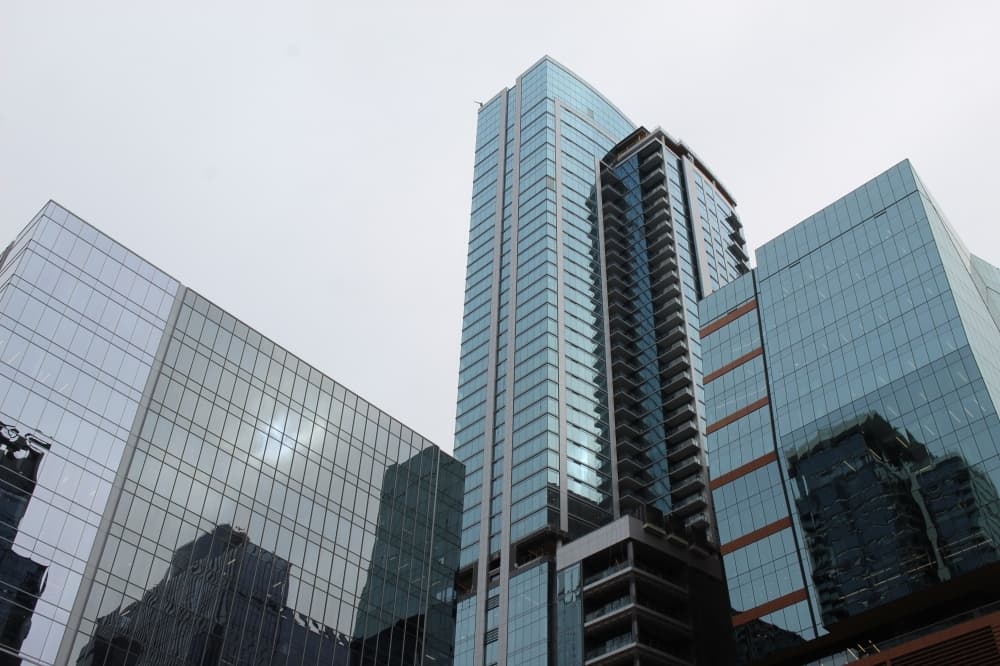
The pace of new additions to Austin's skyline is slowing as the downtown market normalizes, according to new reporting from the Downtown Austin Alliance. (Ben Thompson/Community Impact)
The downtown market is normalizing after years of growth and is contending with both challenges and opportunities tied to a series of major infrastructure projects now affecting the area.
The big picture
Downtown Austin is seeing fewer new developments and record office vacancy rates following a wave of major projects around the city center. At the same time, public and private investments are continuing, and the area is home to a rebounding retail scene and an established resident base.
Those findings and more were detailed in the latest annual report from the Downtown Austin Alliance, the nonprofit advocacy group representing downtown property owners. The analysis of downtown market trends and outlook for the area's future were presented by DAA President and CEO Davon Barbour, who shared optimism about the district at the organization's Future of Downtown event May 12.
“Coming from other markets, I see how good we have it here. We are in a strong position, and other cities are begging for investments like we have here in the city of Austin. Austin is still the place to be," he said. "We are in a special time. The actions that we take now are critical to the future, and we are in a rare and unique position to actively shape the future of our downtown.”
By the numbers
Downtown Austin is now home to just under 14,000 people, more than 14,100 residences and more than 131,000 employees, according to the DAA.
Downtown's resident count dropped by about 1,350 since last year while nearly 1,500 new housing units were added. The employee count remained about the same as reported in 2025.
After several major projects were added to the downtown landscape in recent years, an ongoing development slowdown has been noted and fewer high-profile updates are now on the horizon.
About 6.63 million square feet of new space were under construction last spring with a further 11.54 million square feet planned at the time. Now, about 2.94 million square feet of space is under construction while the DAA projects 8.22 million square feet of planned new development.
"Encouragingly, in 2026, the market began to register positive absorption, while a slowdown in new projects breaking ground allowed existing inventory to be more effectively absorbed. These trends support long-term stability and are expected to continue over the next few years," the DAA report stated.
Barbour also pointed to the "phenomenal growth" of downtown's taxable value over the past decade to about $21 billion, representing nearly 10% of citywide property value.
Zooming in
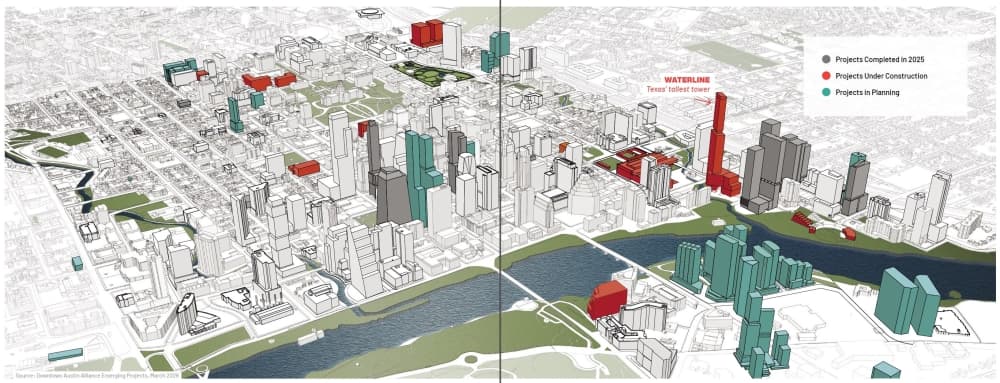
The skyline's most high-profile addition is the 74-story Waterline off Rainey Street, now nearing completion after topping out last summer. The mixed-use tower will open its doors with concepts like 1 Hotel Austin and the Mexican restaurant Alteño, followed by office and residential stages on higher floors.
The expansion of the Texas Capitol complex, the Austin Convention Center redevelopment and the waterfront One Lady Bird Lake project are also progressing. Much of the area's future growth is now expected south of Lady Bird Lake, where several notable mixed-use projects are planned throughout the South Central Waterfront district.
Millions of square feet of new construction are planned around downtown Austin. (Courtesy Downtown Austin Alliance)
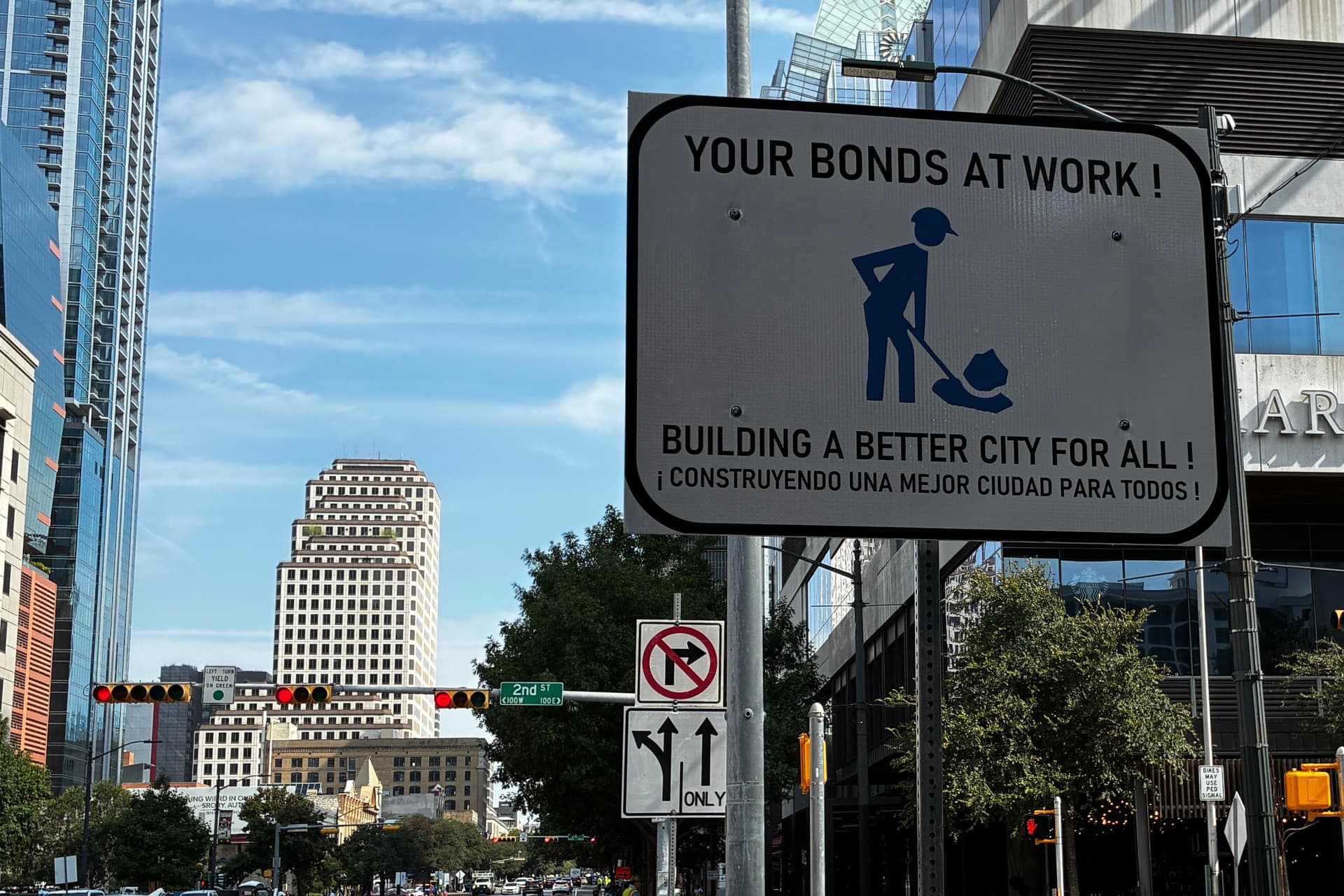
The DAA and Mayor Kirk Watson also noted the billions of dollars of large-scale infrastructure projects that are already impacting the area. In addition to the convention center, those include:
The revitalization of East Sixth Street business and possible city roadway updates
The redesign of Congress Avenue between Lady Bird Lake and the Texas Capitol
The extension of the Waterloo Greenway park system
Watson highlighted those initiatives as part of necessary efforts to improve the downtown area and maintain its vitality for all residents and visitors.
“To have a healthy downtown means we have a healthier city," he said. "As mayor of Austin, it’s important to me to see that the growth in downtown benefits everybody. At the core of the health of our city is ensuring that Austinites can participate in and enjoy all that prosperity regardless of how long they’ve been here, where they live in other parts of the city."
What else
While downtown office vacancies remain at an all-time high of over 20%, the DAA reported that trend reached a "plateau" and is expected to rebound in the near future.
“Developers and owners report a bullish outlook on downtown, with indicators pointing to a continued drop in vacancy rates over the coming years," the report stated.
The DAA also projects residential vacancies will begin to drop after peaking closer to 18% in 2024 and passing 15% last year, while the downtown condo market remains "healthy and growing."
The hotel market is reportedly seeing "modest decline" in part thanks to the convention center's multi-year closure, but the DAA noted that hoteliers are adapting during that disruption alongside major events like South by Southwest.
The organization also touted downtown's retail market as a strength with more than 740 active storefronts, led by drinks, entertainment and fast food establishments. The DAA credited an already vibrant nightlife and expanding culinary scene as staples of commerce in the area. Annual consumer spending in the city center totaled more than $2.5 billion, a slight dip from 2024.