Texans interested in casting their midterm election ballots before Election Day can do so from Oct. 19-30, the state's early voting period.
Registered voters can visit any polling place in their county during early voting. They will receive a ballot with federal, state and local races—from the U.S. Senate and Texas governor to city and school district officials.
During the March primary election, more Texans voted early than in recent primaries—and the state also saw "the highest voter turnout for a primary in Texas history," Community Impact reported. At the time, Republican data analyst Ross Hunt said there was “some certainty” that voter enthusiasm would extend to the November election.
Keep reading to learn about voting early in Texas, including what to bring to the polls, what to do if there are issues with your voter registration and what's on the ballot. To check out candidate Q&As and review all races on local ballots, visit communityimpact.com/voter-guide.
How it works
All registered Texas voters are eligible to vote early, although voting must be done in-person unless an individual qualifies to vote by mail.
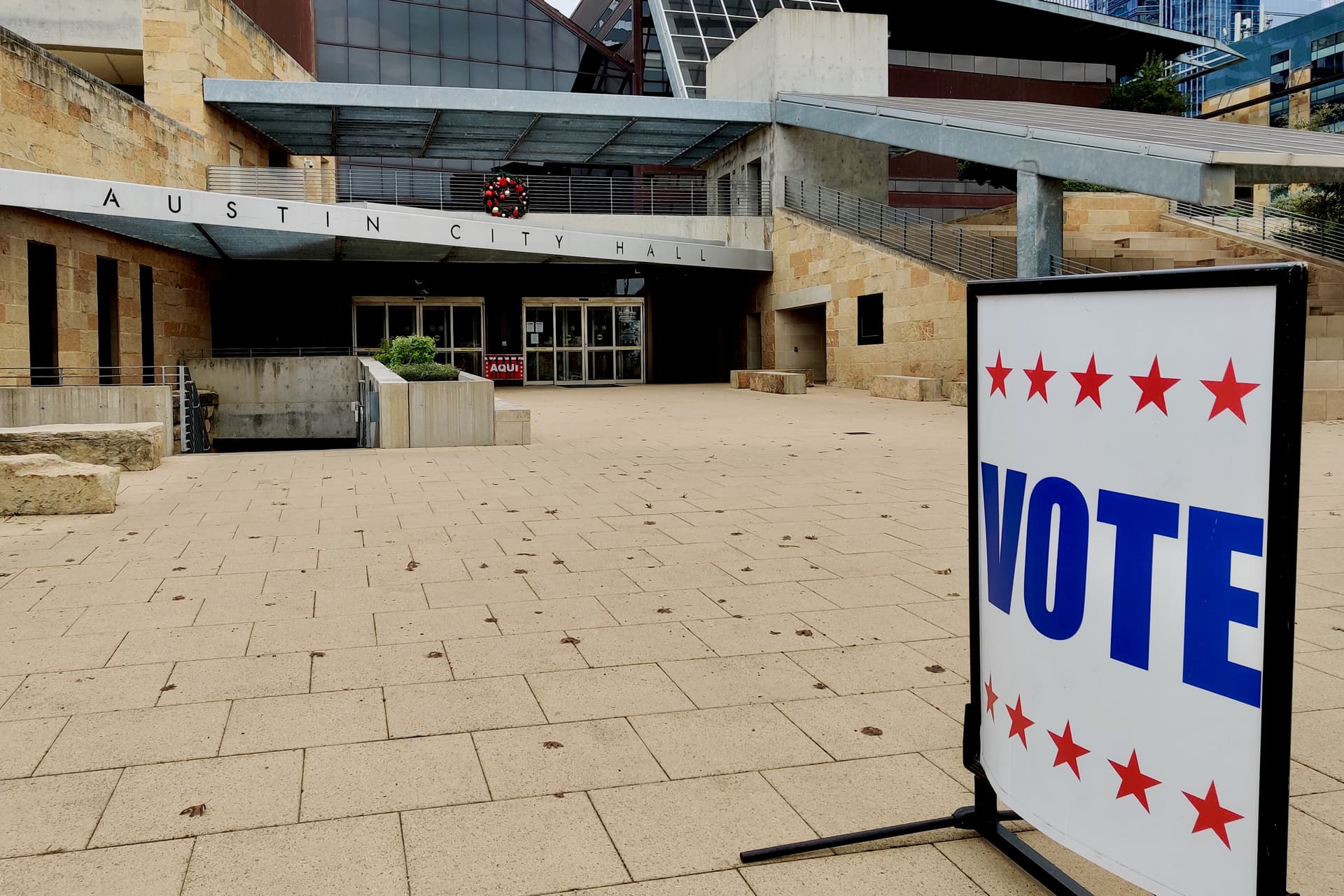
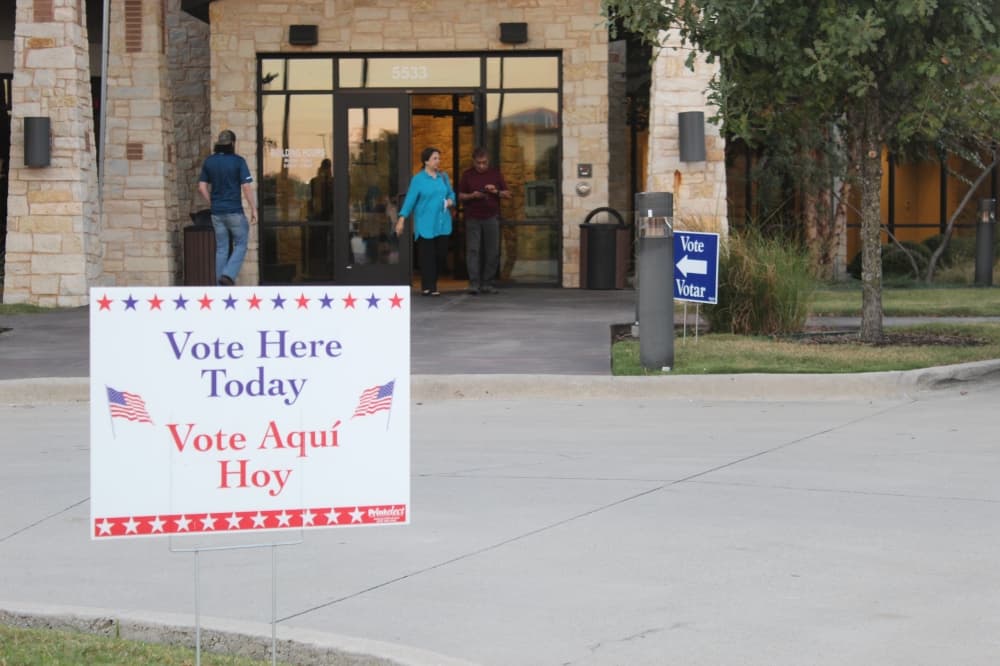
Voting is county-based. During early voting, registered voters can go to any polling place within their county of residence, according to the secretary of state. Voters can search for polling locations through the state voter portal or contact their local election office.
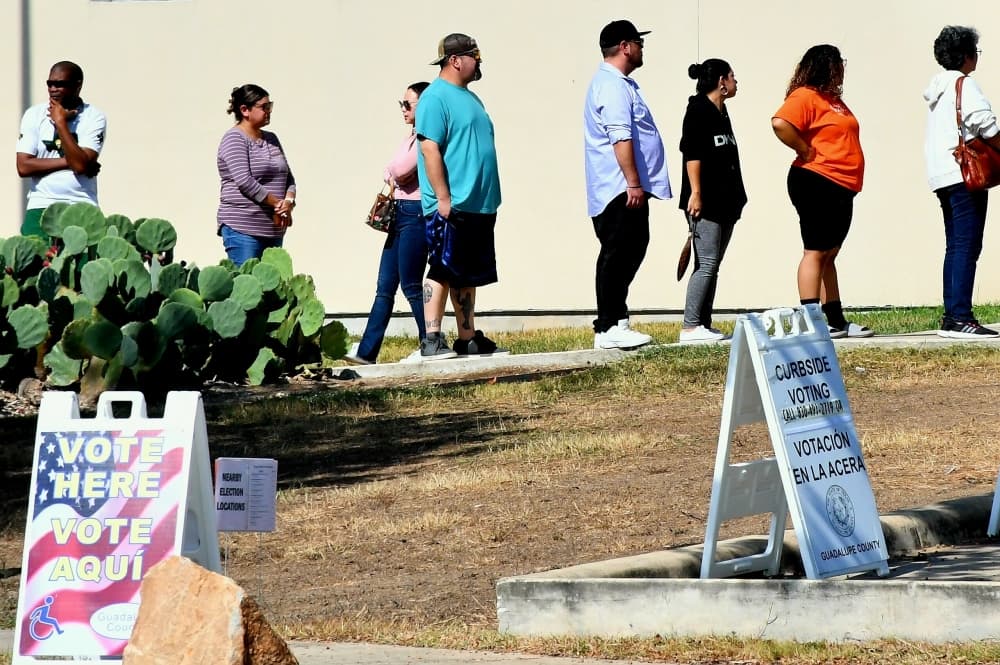
Per state law, each polling place must include at least one parking space for curbside voting, which is reserved for people who are "physically unable" to enter the building due to a disability or injury. Voters may also receive assistance marking their ballot if they are blind, have a disability or cannot read or write; and may use an interpreter if they do not speak English.
More information about the rights of voters who have a disability or need assistance at the polls is available here.
Keep in mind
The deadline to register to vote or update a voter's registration ahead of the midterm election was Oct. 5. Registered voters can review their registration at any time here, and others can register for future elections here.
Some voters may see their registration status listed as "suspense," which means county election officials need confirmation of their address. Those on the suspense list can still vote by completing a "statement of residence" form when voting by mail or in-person, per the secretary of state.
Texans who moved counties since the last election and did not update their registration may be eligible to vote with a limited ballot, which will include "candidates and measures in common between your former and new county," such as federal and state-level races. Limited ballots are only available during early voting and cannot be cast on Election Day.
Local election officials are also working through a backlog of voter registrations after the Texas Department of Public Safety failed to send some registration records to counties, according to previous reporting. Texans who registered before the Oct. 5 deadline but do not appear on the rolls can still cast a provisional ballot, per the secretary of state.
Dates to know
What to bring to the polls
Voters must bring one of seven forms of identification to the polls:
A Texas driver's license (issued by the Texas Department of Public Safety)
A Texas personal ID card (issued by the DPS)
A Texas handgun license (issued by the DPS)
A Texas election ID certificate (issued by the DPS)
A U.S. military ID card with the voter’s photograph
A U.S. citizenship certificate with the voter’s photograph
A U.S. passport
Texans without an approved ID can sign a “reasonable impediment declaration” at the polls and present an alternative form of identification, such as a birth certificate, a current utility bill or a paycheck. More information about voter ID requirements is available here.
Voters may bring written materials, such as notes and sample ballots, to the polls to help them cast their votes, according to the secretary of state.
Texans cannot post or distribute written materials within 100 feet of an entrance to a polling place, as this is considered campaigning or electioneering under state law. Guns and wireless devices such as cellphones, tablets and smartwatches are not allowed at polling places.
On the ballot
Dozens of federal, state and local races will appear on Texans' ballots. The federal and state seats up for election include:
A U.S. Senate race featuring Libertarian Ted Brown, Republican Ken Paxton and Democrat James Talarico
The race for governor, including Republican incumbent Greg Abbott, Libertarian Pat Dixon and Democrat Gina Hinojosa
The lieutenant governor race, featuring Libertarian Anthony Cristo, Democrat Vikki Goodwin, Green Party candidate Kevin McCormick and Republican incumbent Dan Patrick
The Texas attorney general race among Democrat Nathan Johnson, Republican Mayes Middleton and Libertarian Tom Oxford
The Texas comptroller race, featuring Libertarian V. Alonzo Echavarria-Garza, Democrat Sarah Eckhardt, Green Party candidate Shehla Faizi and Republican Don Huffines
The race for Texas land commissioner, including Republican incumbent Dawn Buckingham, Democrat Benjamin Flores and Libertarian Neill Snider
The Texas agriculture commissioner race, with Libertarian Austin R. Kelly, Republican Nate Sheets and Democrat Clayton Tucker
The Texas railroad commissioner race, featuring Republican Bo French, Libertarian Arthur DiBianca and Democrat Jon Rosenthal
All 38 U.S. House seats (by congressional district)
Four seats on the Texas Supreme Court (statewide)
Three seats on the Texas Court of Criminal Appeals (statewide)
Three seats on Texas' 15th Court of Appeals (statewide)
16 state Senate seats (by legislative district)
All 150 state House seats (by legislative district)
Eight State Board of Education seats (by SBOE district)
Republicans currently occupy all 18 statewide offices on the ballot. No Democrat or third-party candidate has won a statewide office in Texas since 1994, election records show.
All state and federal races may include one Democratic candidate, one Republican candidate and third-party candidates. Democratic and Republican voters selected their party nominees during the March primary election, while Texas' Green and Libertarian parties selected their candidates during April nominating conventions. Independent and write-in candidates may also appear on the ballot.
Nonpartisan races, such as city council and school board seats, may include several candidates.
Also of note
Voters in the Dallas-Fort Worth area may also see special elections on their ballot after two state lawmakers resigned from their seats earlier this year:
Republican David Cook and Democrat Amy Martinez-Salas are running to represent Texas Senate District 22, which covers a portion of Tarrant County and several other counties. Former Sen. Brian Birdwell stepped down in May to become an assistant U.S. defense secretary.
Republican Alan Blaylock is seeking to represent Texas House District 93, which covers a segment of Tarrant County, after his opponent, Democrat Ericka Lomick, suspended her campaign. Former Rep. Nate Schatzline resigned in July after being appointed a senior adviser on election policy for Gov. Greg Abbott.
Those elected to complete Birdwell and Schatzline's terms are unlikely to be involved in policymaking, as they will serve for just two months before new legislators are sworn in for full legislative terms on Jan. 12, the first day of Texas' 90th legislative session. Sens. Taylor Rehmet, D-Garland, and Brett Ligon, R-Conroe, were not appointed to interim legislative committees after being elected during similar special elections this year, according to previous Community Impact reporting.
The candidates in the above special elections are also running for full terms in the Nov. 3 election, and residents of their districts will have the opportunity to vote in both races.
Voting by mail
Registered voters who plan to vote by mail must ensure their county elections office receives their application by Oct. 23, per the secretary of state. Eligible voters can submit their applications in person, by mail, by email or by fax.
To vote by mail in Texas, individuals must be at least one of the following:
65 years or older
Sick or disabled
Expecting to give birth within three weeks before or after election day
Living outside their county of residence from Feb. 17-March 3 (including college students)
Civilly committed under Chapter 841 of the Texas Health and Safety Code
Confined in jail but otherwise eligible to vote
Changes made to the U.S. Postal Service's rules late last year mean that mail, including applications to vote by mail and mail-in ballots, may be postmarked days after being dropped in a mailbox, Community Impact previously reported. To ensure a same-day postmark, customers can go to their local post office and request that their mail be hand-stamped for free, according to the USPS.