The Richardson ISD board of trustees unanimously approved a $20.8 million deficit budget for fiscal year 2026-27 at the June 4 meeting.
The budget includes district-wide raises for teachers and staff as well as $25.7 million in budget cuts through staff reductions and secondary school schedule changes.
In addition to the general fund budget, the board also approved budgets for RISD’s debt service fund and child nutrition fund.
The big picture
RISD is expecting $403.8 million in revenue and $427.7 million in expenditures in FY 2026-27, as well as $5.85 million in recapture costs, which transfers a portion of local tax revenue to the state.
The general fund is almost entirely driven by student numbers, said David Pate, assistant superintendent of finance and support services. RISD has seen declining enrollment since the COVID-19 pandemic, and current projections show further declines of roughly 400 students per year, he said.
Districts across the state are also reporting budget shortfalls and enrollment declines amid limited state support.
The board is not set to approve a new tax rate until September, but staff estimated a total tax rate of $1.1452, an increase from this year’s rate of $1.1052.
The tax rate increase comes from the passage of the district’s 2025 bond, which will increase the interest and sinking tax rate from $0.35 to $0.39. The maintenance and operations tax rate is expected to remain unchanged at $0.7552.
Pate said the district anticipates 0% growth in taxable property value for 2026-27.
Breaking it down
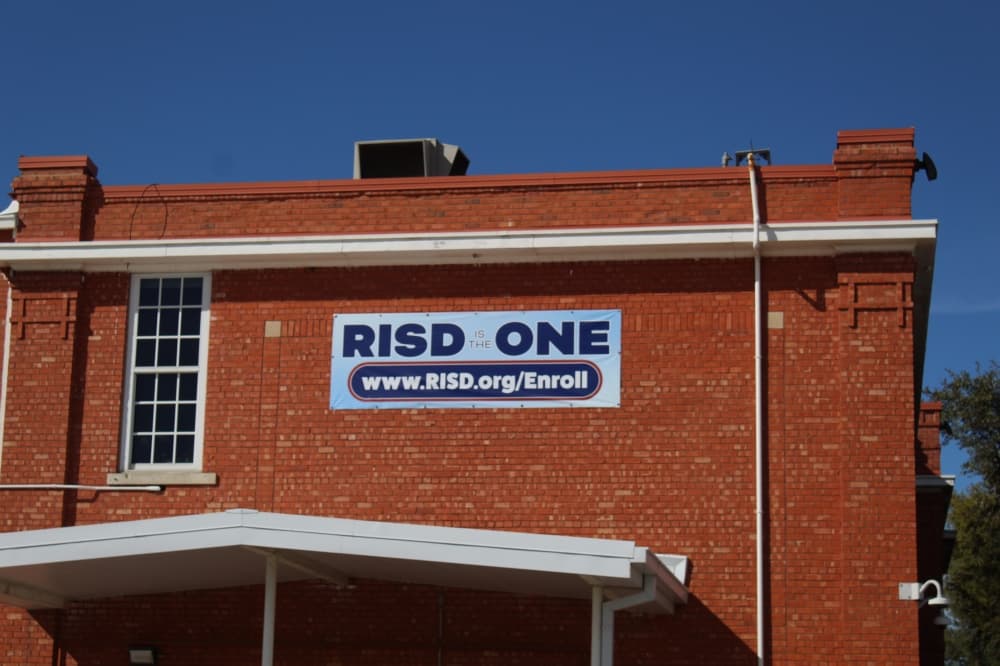
The budget includes $700,000 in new expenditures, including $200,000 earmarked for a marketing campaign aiming to increase enrollment and $273,000 for additional special education teachers and central paraprofessionals. Smaller increases include phone bills, insurance, UIL fees, fine arts supplies and an additional district crossing guard.
The board also approved a transfer of $9 million to the general fund budget from the district’s local permanent school fund, which Superintendent Tabitha Branum referred to at a previous meeting as a “rainy day” fund.
The local permanent school fund transfer will cover $8.9 million in district-wide raises for teachers and staff.
RISD approved $25.7 million in budget cuts for FY 2026-27, primarily through cutting 95 full-time central office and campus support positions and reducing food, travel and non-payroll expenses. The district will also end block scheduling at its secondary schools and transition back to a traditional schedule in the 2026-27 school year.
Even with the budget cuts, RISD will have a $20.8 million shortfall in its general fund budget. The district’s ending fund balance will decline but will remain above the district’s target for the year, Pate said.
A closer look
The board also approved the budget for RISD’s child nutrition fund, which covers school breakfast and lunch. The budget includes raises for staff in line with the district-wide compensation plan but no changes to the free and reduced lunch program or to student paid meal prices.
The district will reduce equipment purchases in FY 2026-27 and is expecting an increase in federal revenue, reducing the program’s shortfall by close to $3 million.
The board also approved the FY 2026-27 debt service fund budget, which covers the payments the district makes on its bonds.
The debt service fund is projected to bring in $132.9 million in revenue and have roughly $148.7 million in expenditures, although Pate said he expects the budget to be revised in the fall with a reduced shortfall.
Looking ahead
RISD has been working to find efficiencies in the budget for several years, Branum said at a past meeting. The district has reduced expenditures by nearly $42 million in three years, she said, but the cuts have not been enough to right size the budget.
“In August, we’re going to be working to find another $20 million worth of budget reductions so that we can move closer to a balanced budget,” Branum said.
The board is set to adopt the new tax rate in September.