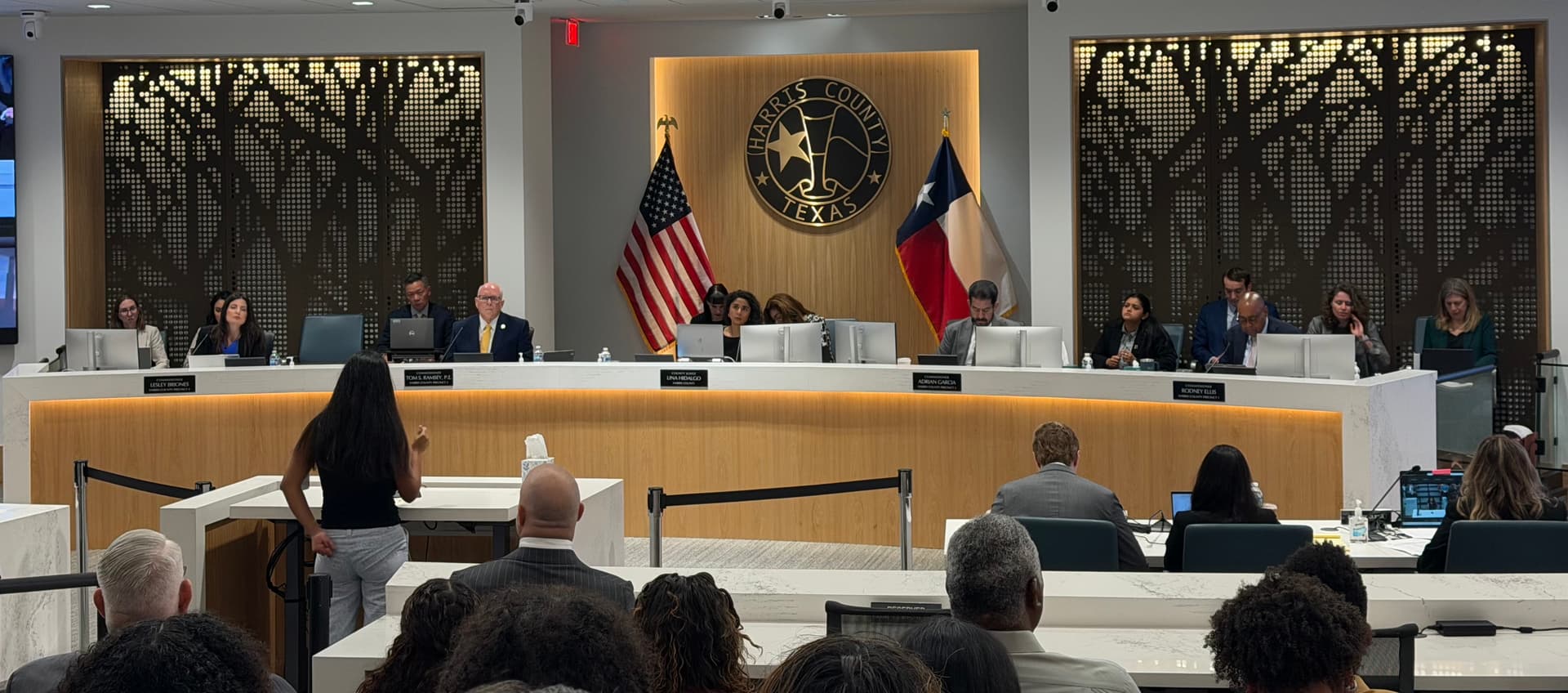
Harris County commissioners on May 28 renewed a contract for the Harris County Sheriff's Office's use of license plate readers to assist with criminal investigations. However, more than a dozen residents spoke against the renewal before the court's vote, sharing concerns about surveillance, data privacy and improper targeting.
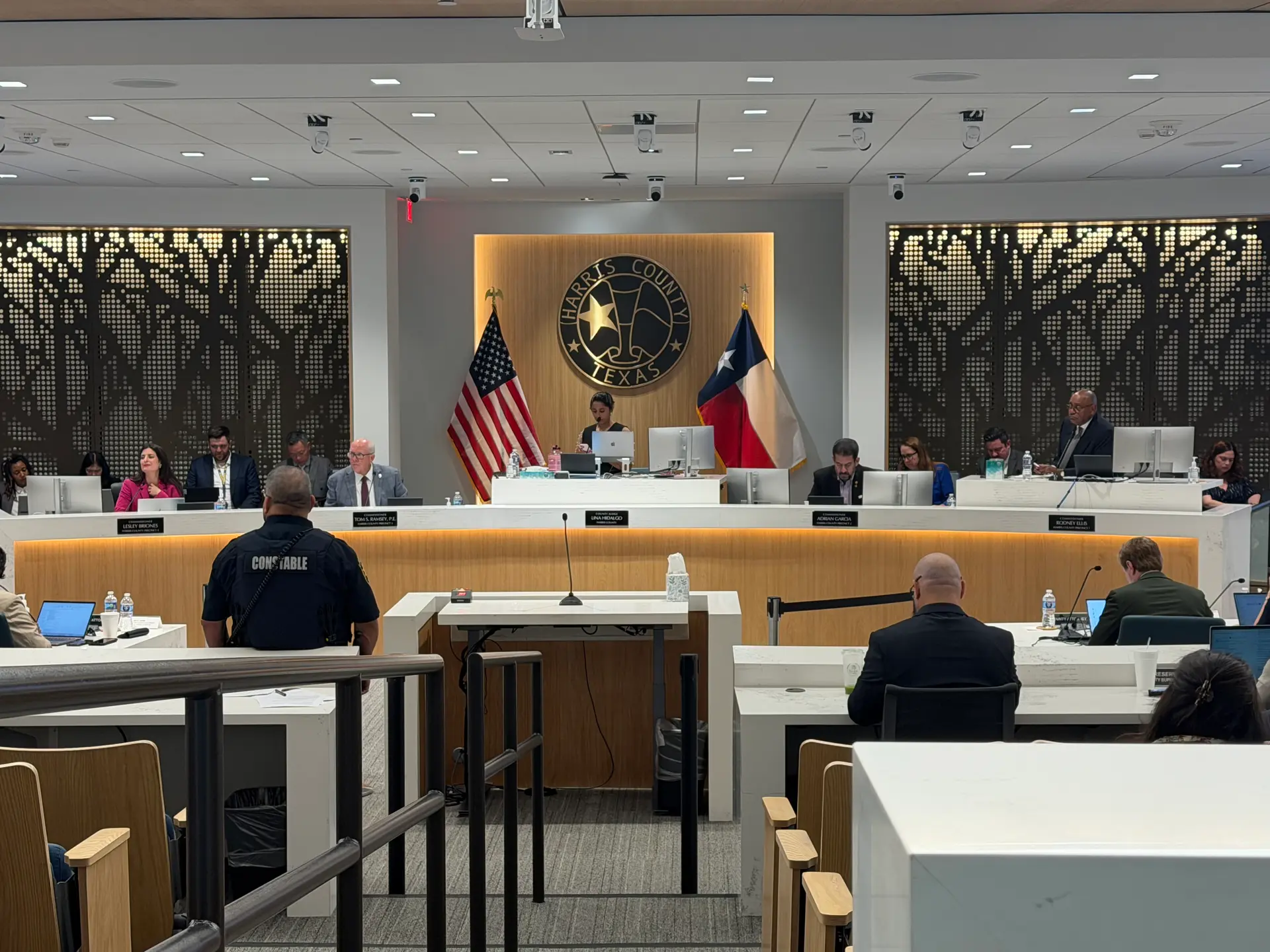
The vote followed more than an hour of public comment and discussion about the contract—an unusual occurrence for the county's business court meetings, which typically consist of routine and uncontroversial agenda items.
What you need to know
Commissioners renewed a $868,975 contract with public safety technology company Flock Safety to continue the use of license plate readers, or LPRs, as well as a sound detection system that identifies sounds such as gunshots, screeching tires and breaking glass, according to agenda documents.
With a June 6 contract expiration approaching, Harris County's four precinct commissioners voted in favor of the renewal with the possibility to revisit the agreement during a future Commissioners Court meeting. The court has the authority to cancel or amend the contract at a later date with a majority vote, county staff said.
County Judge Lina Hidalgo abstained after pushing to move the business court item to a special-called meeting or regular Commissioners Court meeting to allow for more public discussion. However, commissioners ultimately moved for a vote May 28.
More details
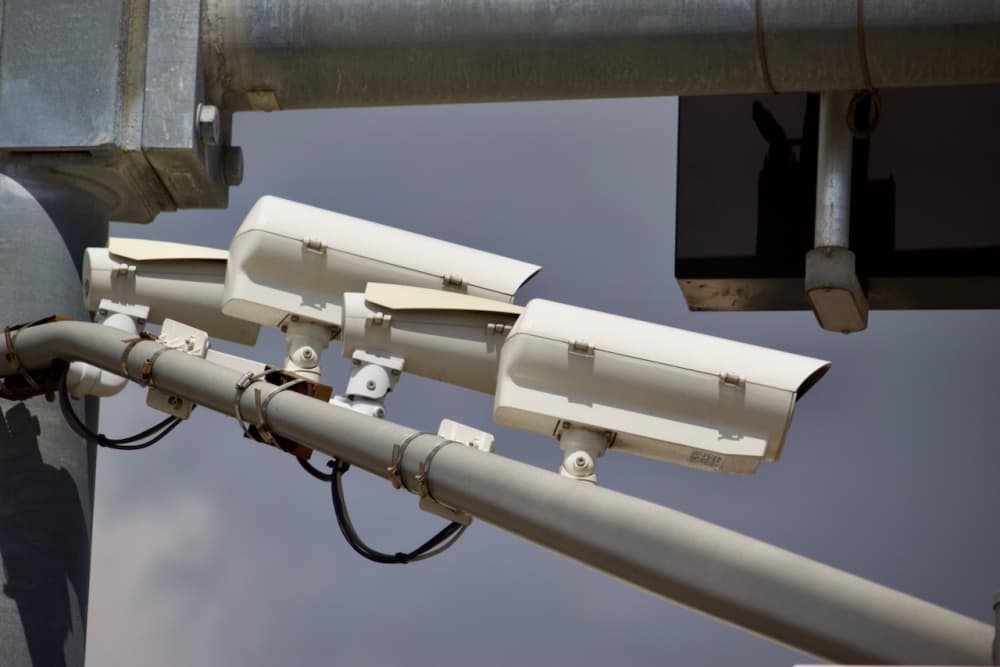
Flock's LPR cameras send real-time alerts to law enforcement if license plates are associated with stolen vehicles, homicide, kidnapping and other serious crimes, according to information from HCSO sent to Community Impact.
Additionally, the system notifies officers about plates linked to AMBER and Silver Alerts, according to HCSO. Specific information captured by the cameras includes:
- License plate number
- Vehicle make, model, color and body type
- Date, time and general location of detection
Harris County has approximately 480 LPR cameras, most of which are owned by municipal utility districts, homeowners associations and commissioner precincts but administered by the sheriff's office. The technology does not use facial recognition or any biometric data, a Flock spokesperson confirmed in an email to Community Impact.
"Flock is nothing but a picture of the car, and it's of the back of the car," HCSO Major Anthony McConnell told the court May 28. "Ninety percent of the pictures we have, we can't see the driver—male, female, race, none of that."
Public input
Many residents during public comment asked commissioners to vote against the contract renewal, calling the cameras "invasive" and expressing fears about unauthorized data access.
Several also said they're concerned the technology could be used to target more vulnerable members of the community, such as immigrant families or women in domestic violence situations. The cameras received similar scrutiny in other Texas jurisdictions such as the city of Austin, which halted its use of LPRs, Community Impact previously reported.
"We cannot afford to keep spending public dollars on privately owned surveillance systems that harm trust in our communities," Precinct 4 resident Marilyn Allen told commissioners. "We do not want to repeat the same financial predicament as last year by investing in programs that do not address the root causes of violence and instability."
When asked to address data and surveillance concerns, McConnell said the only information that's stored in Flock's system is the vehicle photo. Additionally, HCSO only shares information with other law enforcement agencies that also use Flock, the only federal agency being the U.S. Postal Police, he told commissioners.
According to the sheriff's office, data collected HCSO's Flock cameras may only be used for criminal investigations and automatically deletes after 30 days.
The discussion
Precinct 2 Commissioner Adrian Garcia called the cameras a "very valuable tool" for solving crimes and said he's confident the sheriff's office will ensure they're used appropriately. Similarly, Precinct 3 Commissioner Tom Ramsey commended the technology's part in keeping neighborhoods safe.
Precinct 4 Commissioner Lesley Briones said the county attorney's office had been working with HCSO and the purchasing department to tighten the data privacy terms of the contract, although county staff did not share specific language during the meeting.
"I know this language has been tightened and thoughtfully worded as possible," Briones said. "If and when anyone in our jurisdiction abuses it, they will be held accountable."
Precinct 1 Commissioner Rodney Ellis supported Hidalgo's push to revisit the discussion in a separate meeting but ultimately voted in favor of the renewal after receiving confirmation the contract could be amended in the future.
"I think we're all just making a charade of this," Hidalgo said before the vote. "If we're really open to accountability, then we wouldn't be trying to ram this through."
Going forward
Harris County may discontinue Flock's contract with 30 days notice if amendment terms cannot be reached, county staff said.
Any amendments or cancellations must appear before commissioners for a vote. The next regular Commissioners Court meeting is June 11.