Carroll ISD’s phone ban on school buses will remain in place while the board of trustees continues to discuss the policy.
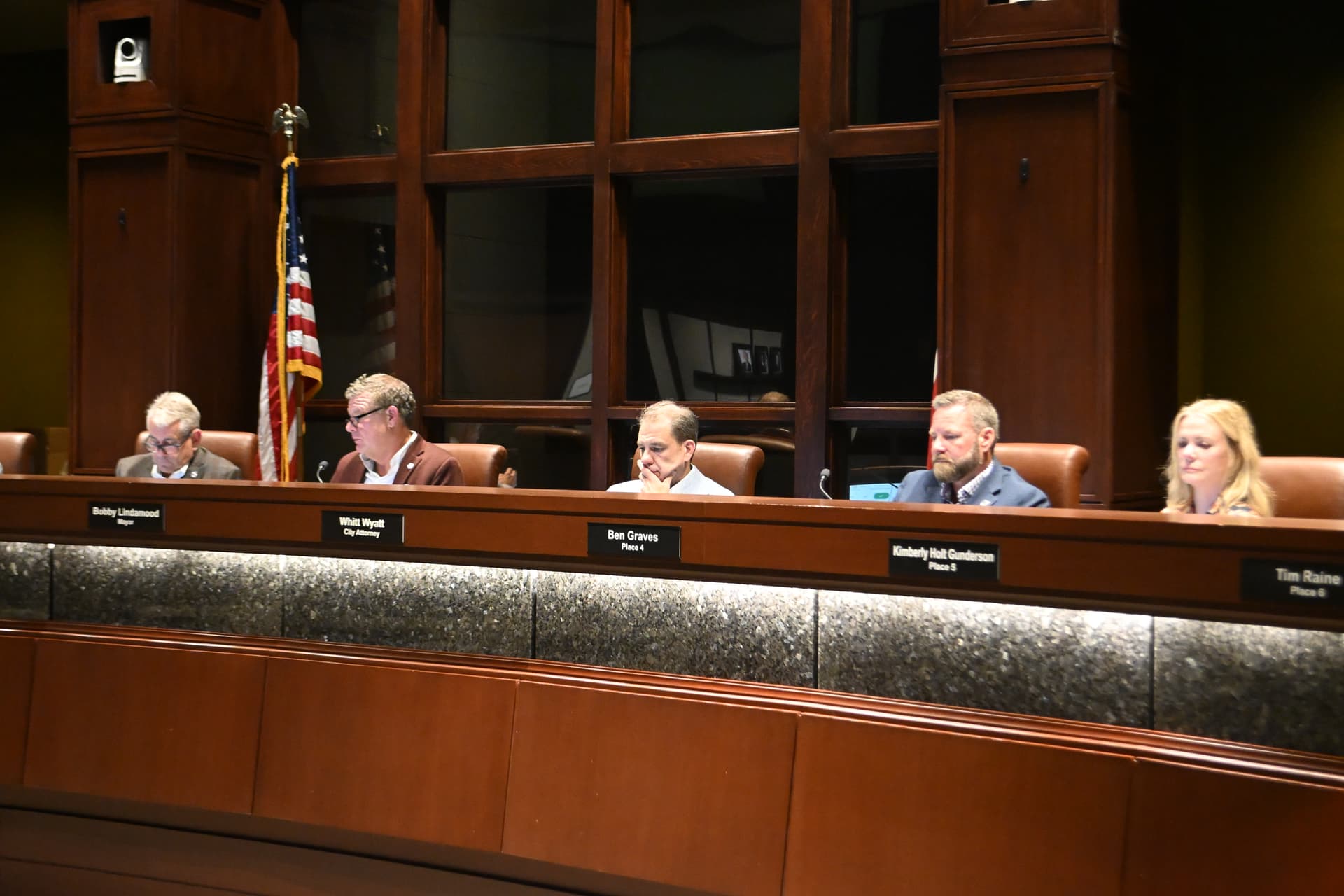
The motion to table the item, which would have removed the phone ban on buses, was approved unanimously at the April 20 board meeting.
What’s happening?
The CISD board of trustees adopted a phone policy after state lawmakers passed House Bill 1481 during the 89th Texas Legislative session, which required public school districts to implement a phone policy that prohibited students from using phones during the school day.
The board of trustees banned the use of phones on school buses, which was not required by state law, trustee Christy Stacy said.
“The law actually states that cell phones cannot be used during instructional time, so it doesn't really include the bus,” she said. “The only thing is [that] we do shuttle during the school day for the upper schools and I do believe that is instructional time. That’s [a] transition period. Same thing with lunch. I think we might need to revisit what [this] looks like.”
The issue of phones being banned on buses was brought forward by parents who thought it was unfair that their student was disciplined for using their phone on the bus, CISD Superintendent Jeremy Glenn said.
“Parents felt like we were disrupting their ability to actually get instruction during the day because [students] get in trouble on the bus and then it becomes a consequence at school,” he said. “The parents felt like we were extreme in the leveling of the law.”
Glenn also said parents wanted their kids to have phones on the bus to communicate when they could be expected home.
The discussion
The district's policy committee—made up of administrators, teachers and community members—discussed the phone ban and recommended that the board of trustees remove it, Assistant Superintendent for Administration Brian Nickel said.
“I actually spoke with the transportation department and a long-time bus driver that we have here and they stated that continuously having to remind the kids to put away their phones is a distraction [from driving],” trustee Mandy Reece said.
Reece said she did a study of larger school districts and found that most didn’t include buses in their phone policy.
“We created the most difficult policy to follow,” she said. “Some schools actually put in their policy that they were allowed to have their phones on the bus, and the majority just left it blank.”
Reece agreed that the policy needed further review since Carroll ISD shuttles students during the school day.
Four community members spoke at public comment and asked the board of trustees to maintain the ban on phones on school buses.
“I [want to] thank all of our public speakers today because you bring up great issues,” board Vice President Andrew Yeager said. “I can't stand [electronic devices] for kids. I think they're just absolutely destructive. I was very happy that the state did something, but unfortunately, they left a little gray [area] there."
Also on the agenda
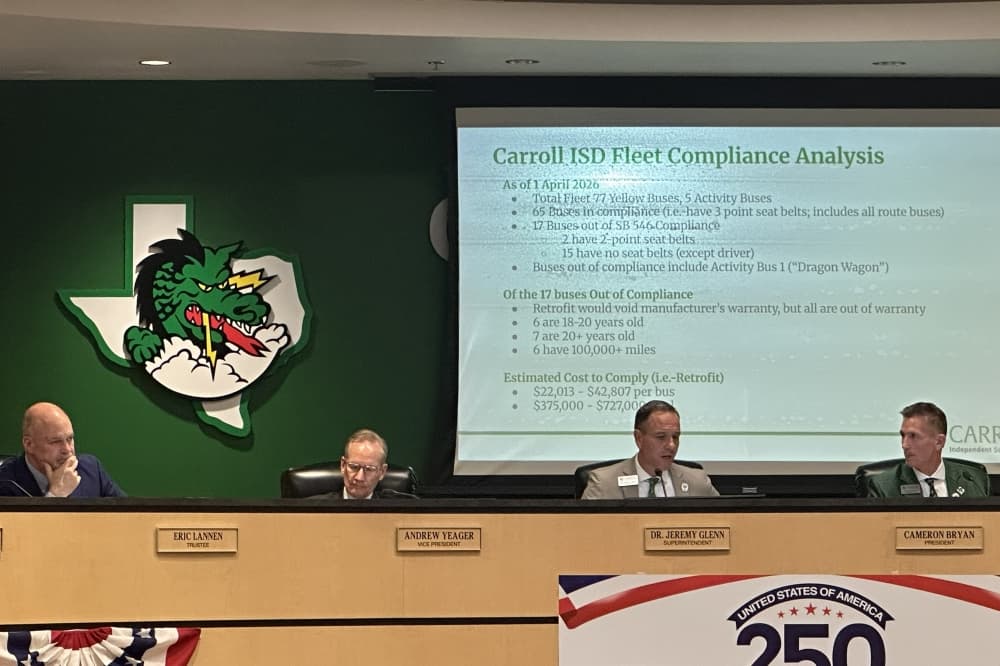
The board of trustees also unanimously agreed to tell the state that the district does not have enough funds to add seat belts to 17 out of 82 total buses that are out of compliance with Senate Bill 546, which requires buses to be equipped with three-point seat belts by September 2029.
Since 13 out of 17 of the buses are older than 18 years, it would cost between $22,000 and $42,000 per bus to retrofit them, Director of Transportation Jim Bennett said. The older buses only sell for around $2,500, so Bennett said retrofitting them would be a poor investment.
Instead, the district plans to sell the 17 noncompliant buses by 2029 to be compliant with the state’s unfunded mandate.
With the loss of the 17 buses, Bennett said the district would need five replacement buses to ensure there are enough during field trips.
“At some point, we're going to need a viable plan and a bus replacement schedule,” Glenn said. “We know that that's something we want to build into the budget.”