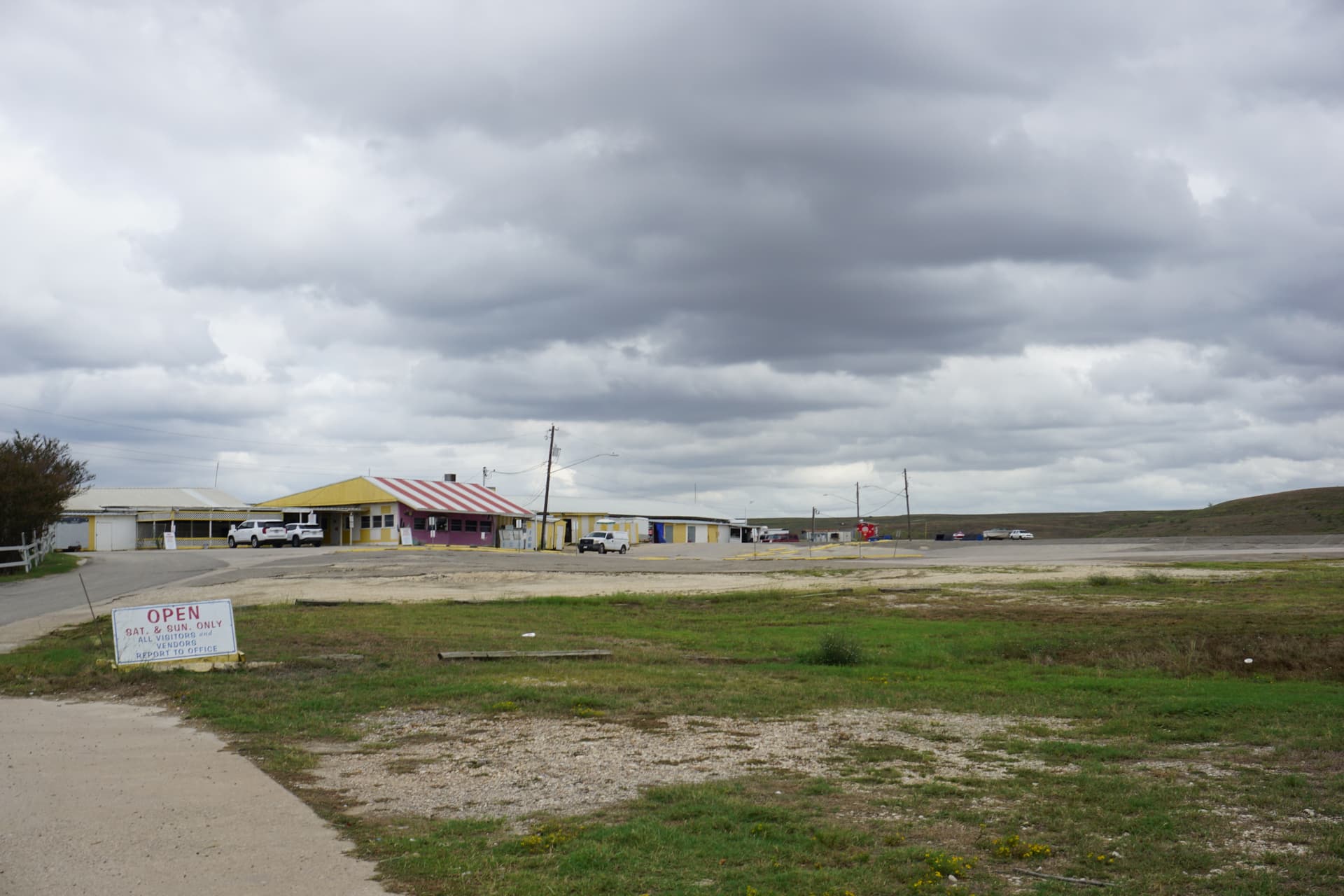
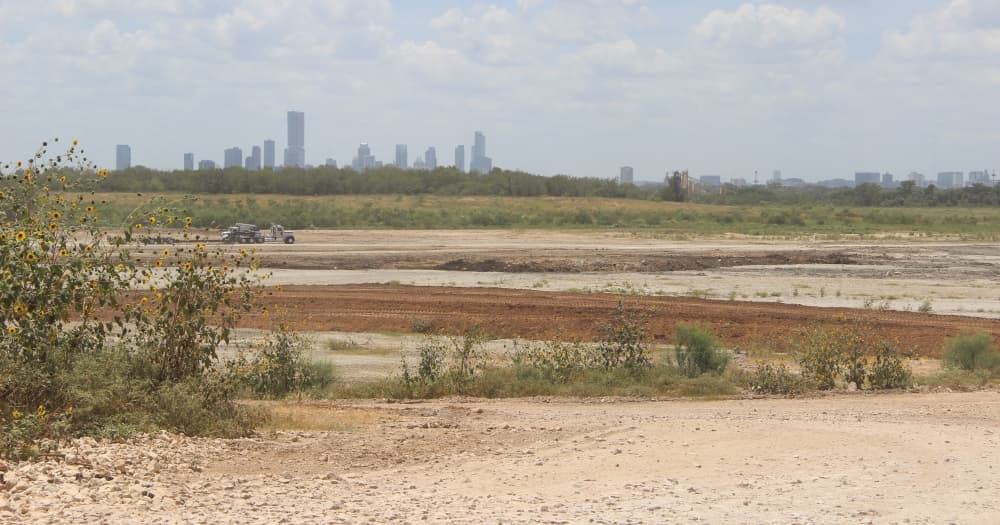
Austin leaders agreed to establish a tax increment financing zone for the Dog's Head area to support extensive public infrastructure additions there. (Ben Thompson/Community Impact)
Austin City Council backed a long-term tax financing plan for infrastructure in the Dog's Head, with added environmental standards and other requirements tied to development in the area.
What you need to know
The creation of a tax increment reinvestment zone, or TIRZ, sets up decades of mixed-use development across the more than 2,600-acre Dog's Head. Council's vote for the TIRZ plan July 23 came two months after they annexed the area into city limits and backed the 45-year agreement with landowner Endeavor Real Estate Group.
Millions of square feet of new development and thousands of residences are expected to be built across the Dog's Head by the early 2060s, boosting the area's value by tens of billions of dollars. New roads, utility lines, flood control projects and other infrastructure would be added as that construction takes place.
Under the TIRZ, a portion of the growing tax revenue in the Dog's Head would be reserved over time to reimburse some of those public infrastructure costs. The remainder of new property and sales tax generated through redevelopment would remain in Austin's budget. After the TIRZ expires in the 2060s, all taxes collected in the Dog's Head would flow directly to local governments.
The TIRZ was established after a series of contentious public hearings, and without Travis County joining the financing plan. County officials may still vote to participate in the near future.
The move came soon after Amazon was revealed as the prospective first major industrial tenant in the district. The corporation plans an advanced robotics facility that could open by late 2027, which prompted the rapid pace of recent city approvals.
“This user would kick-start the project, it would kickstart the TIRZ, and it would allow infrastructure to get built earlier than expected," Endeavor Managing Principal Andy Pastor said in an interview. "It would set the tone for the type of employers who are interested in Austin, specifically this site."
Holly Sullivan, Amazon's worldwide economic development vice president, said the company continues to eye the Dog's Head site after the July votes.
“We're pleased with the outcome of today's hearing and appreciate the City Council’s support. We look forward to continuing to work with the Austin community and Travis County officials as they consider this matter as well," Sullivan said in a statement.
Zooming in
Anticipated development would grow the Dog's Head's value to nearly $27 billion in the coming decades. Austin is projected to draw more than $1.7 billion in taxes by 2061 and Travis County, if involved, could generate more than $1 billion in that time. Tax collections by Del Valle ISD, Central Health and Austin Community College wouldn't be impacted by the TIRZ.
Upgrades across the Dog's Head like roads, sidewalks, and water and power lines would cost more than $5.6 billion to design and build. TIRZ funds could reimburse around $1.5 billion of those costs.
A motion from council member Ryan Alter asked to dedicate more TIRZ revenue to affordable housing efforts and park improvements—a change city staff said could negatively impact future financial conditions.
The TIRZ will be overseen by the directors of Austin Financial Services, Austin Transportation and Public Works and Austin Water alongside three Endeavor representatives.
Council's approval was framed around the possibility that Endeavor would deannex the Dog's Head from Austin if the TIRZ wasn't created. In that case, the city would have no regulatory oversight while being obligated to provide power and water service there. Without tax increment financing, Endeavor would likely build largely luxury single-family communities, officials said, rather than mixed-use projects under city environmental regulations as proposed with some public benefits.
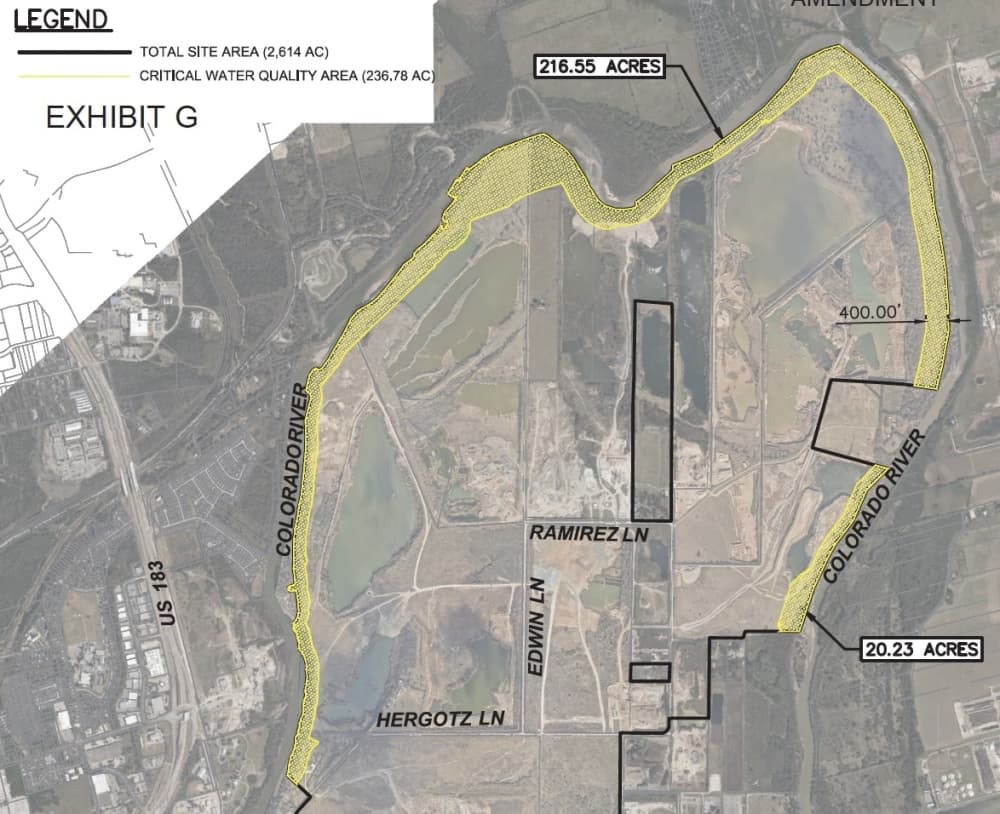
Broadening the Critical Water Quality Zone, or prohibited development area within a watershed, along the Colorado River shoreline
Expanding the amount of required open space, both along the river where a public trail will be built and throughout the Dog's Head overall
Lowering the allowed impervious cover, or surfaces like buildings that don't absorb rainfall, to 79% of the more than 4-square-mile area
Improving flood control infrastructure for the Carson Creek Watershed
Following several worker pay, safety and training standards based on feedback from local labor groups
Funding a $100,000 displacement and needs assessment for the surrounding area, to be conducted by the city
Construction in the Dog's Head will be prohibited within hundreds of feet of the Colorado River under expanded standards to preserve the shoreline. (Courtesy city of Austin)
Officials also asked to reserve affordable housing at lower income levels, require reporting on affordable housing progress every six months, include transit-supportive infrastructure throughout the district, and prioritize flood mitigation projects with early development.
Endeavor will build a more than 6-mile public riverside trail and hundreds of acres of open space. A share of new housing in the Dog's Head will be set aside at affordable levels, and further resources would be reserved for income-restricted housing across Austin in cooperation with the city.
Attorney Richard Suttle, representing Endeavor, stated the firm has "no desire" to bring a standalone data center to the Dog's Head—a concern among many community members—and wouldn't for at least a decade. Large-load facilities, if any, would therefore be planned well after proposed city regulations for data centers go into place.
Votes to update the development agreement and establish the TIRZ advanced 7-3, with council members José Velásquez, Mike Siegel and Zo Qadri against. Siegel said the deal didn't align with resident expectations and criticized the city's transparency, handling of environmental and labor requirements, and financing outlook.
"I agree we can’t send the message that Austin is unready for growth, that we’re unready for innovation or jobs or investment. But what I think city management got wrong is how we responded to this opportunity," he said. "If I had to sum up my belief, it’s that the city negotiated from a place of weakness."
In a statement late July 23, Pastor thanked council members and said their decision represented the beginning of a "thoughtful engagement process."
"Dog's Head will transform previously disturbed industrial land into a project that expands public access to the Colorado River, restores previously mined land, creates jobs, invests in infrastructure and strengthens Austin's tax base," he said. "We appreciate everyone who participated in this process and look forward to continuing to work with the city while engaging with the community as the project moves forward.”
Put in perspective
Several items related to planning for the Dog's Head drew hundreds of people to City Hall July 23. Through hours of testimony, most stated their opposition to Endeavor's development plans and Austin's TIRZ outline.
Opponents largely echoed a series of worries raised about the large-scale initiative since the spring, such as the city's public review process, outreach to neighbors, ecological impacts along the Colorado, planned news streets and bridges and equity concerns. They also spoke out against the use of public tax financing in the Dog's Head, and the effects of rapid growth on city resources.
Others stated support for the expansive plans and, while many didn't testify, those registered in favor of Dog's Head-related agenda items July 23 greatly outnumbered those against. Some residents said they welcomed the chance to bring new opportunities and growth to an underinvested area. And several business leaders suggested civic support for the Dog's Head would have wide economic benefits.
Ahead of the vote, Pastor defended Endeavor's approach as a chance to grow the city and keep it competitive, while pushing back against what he labeled as public misinformation about the plans. He said the real estate firm will ensure the Dog's Head builds out responsibly.
In response to criticisms from the public and the council dais, he and Suttle acknowledged Endeavor didn't sufficiently inform or engage with Austinites this year and committed to improve their efforts moving forward.
Council member Marc Duchen and others suggested that, if they don't see better communications and transparency from the firm, they could move to kill the development deal in the future. He and Alter also pointed to flawed oversight by city leaders, with Duchen saying Austin did an "abysmal job" of keeping residents informed.
"I think this process has not lived up to what it needs to from our side. We should have required more: Required more public engagement, required more public information, and we didn’t," Alter said.