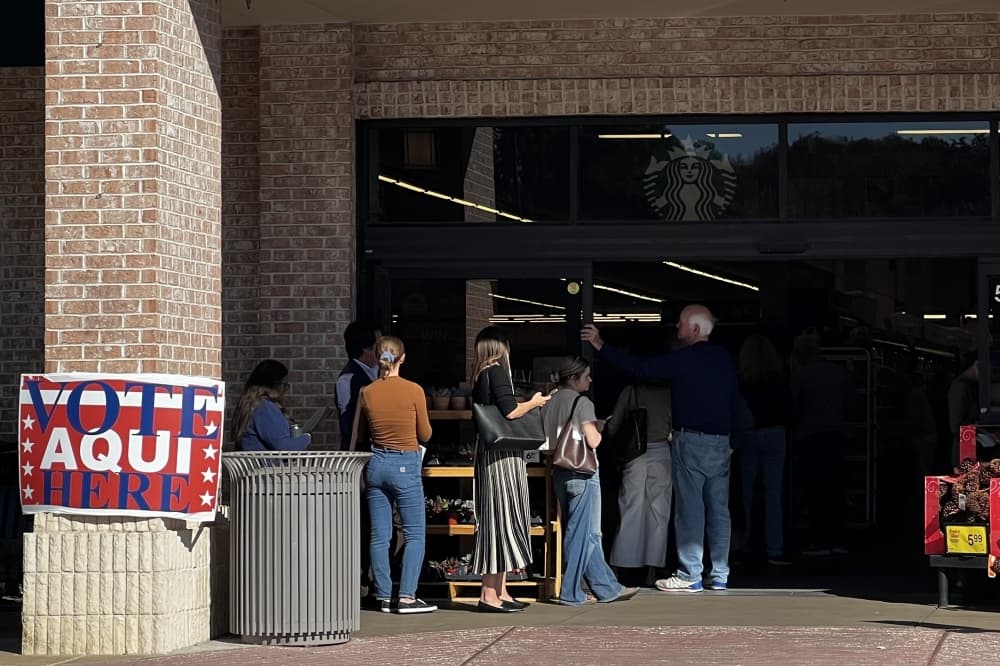
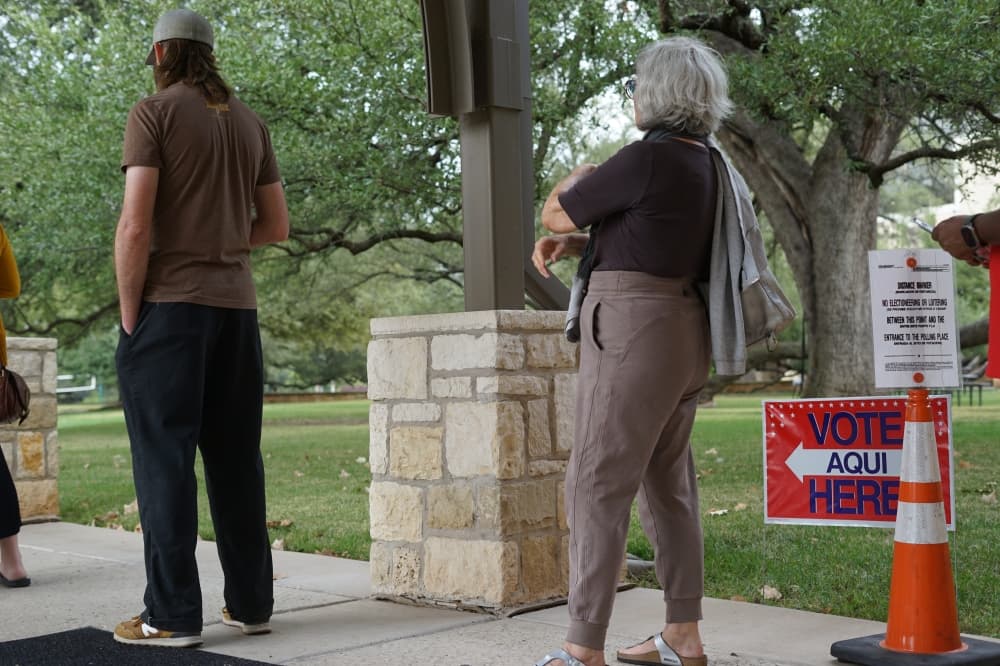
With a few days left to vote early in the March primaries, more Texans have turned out to the polls this year than in recent primary elections.
The increase is particularly pronounced among Democratic primary voters, state data shows, with more than twice as many Democratic votes cast by Feb. 24 than in Texas’ last gubernatorial primary.
Early voting in Texas’ Republican and Democratic primaries runs through Feb. 27, and primary election day is March 3. During early voting, registered voters can visit any polling location within their county of residence—polling locations are available on the state voter portal and through county election offices.
For more details about the contested races on local ballots and over 100 Q&As with candidates, visit communityimpact.com/voter-guide.
What’s happening
As of Feb. 24, over 687,000 Democratic voters had cast early ballots in person or by mail, according to data from counties and the secretary of state’s office. That is 3.68% of all registered voters and more than twice the number of Democratic primary voters at the same point in the 2022 midterm election cycle.
Democratic turnout is also outpacing that of the 2024 presidential primary, when approximately 356,000 Democrats voted early, per state data.
“[Democratic] turnout is ... 50%-60% higher than that of any election in the last four cycles. Democrats are definitely having a moment here in Texas,” Republican data analyst Ross Hunt, who leads Texas-based Hunt Research, told Community Impact.
Over 610,000 Republican voters, or 3.27% of all registered Texans, had voted early as of Feb. 24, trailing behind the nearly 735,000 early Republican votes at this point in the 2024 primary and exceeding the party’s roughly 463,000 votes at the same point in 2022.
Statewide, nearly 1.3 million Texans, or about 7% of the state’s 18.7 million registered voters, cast early ballots through Feb. 24, the eighth day of the 11-day early voting period. This is up from about 1 million early votes at the same point in 2024 and about 754,000 early votes in 2022, according to the secretary of state.
How we got here
Hunt said part of the reason for rising voter turnout is that voting is a “habit-forming activity.”
“The action of going into a polling place is very powerful, and it hardwires people in a way to make them much more likely to vote,” Hunt said. “Factors like enthusiasm, national mood, the way the partisanship of the country is swinging—all these things are very important, but one of the things that drives overall turnout in these elections is just simply [initial] participation.”
Hunt added that once someone votes for the first time, studies show there is about a 25% likelihood of them voting in a future primary election and a 60%-90% chance that they vote in the next midterm or general election.
According to Derek Ryan, a GOP consultant who runs Ryan Data & Research:
- Nearly 11% of people who voted in Texas’ Republican primary through Feb. 22 previously had only voted in November elections.
- 1% of Republican primary voters had no primary or general election history.
- Over 23% of Democratic primary voters had previously only voted in November.
- About 3% of Democratic primary voters had no primary or general election records.
“There’s just general excitement amongst Democrats, and also anger,” said Katherine Fischer, executive director of the Texas Majority PAC, which aims to elect a Democrat to statewide office in Texas. “Texans are, like everyone across the country, really frustrated and concerned about what the Trump administration is doing, what Texas Republicans are doing, and this is their first chance at a statewide level to weigh in. I think what this indicates is that Democrats are already very active in this [election] cycle.”