

The overview
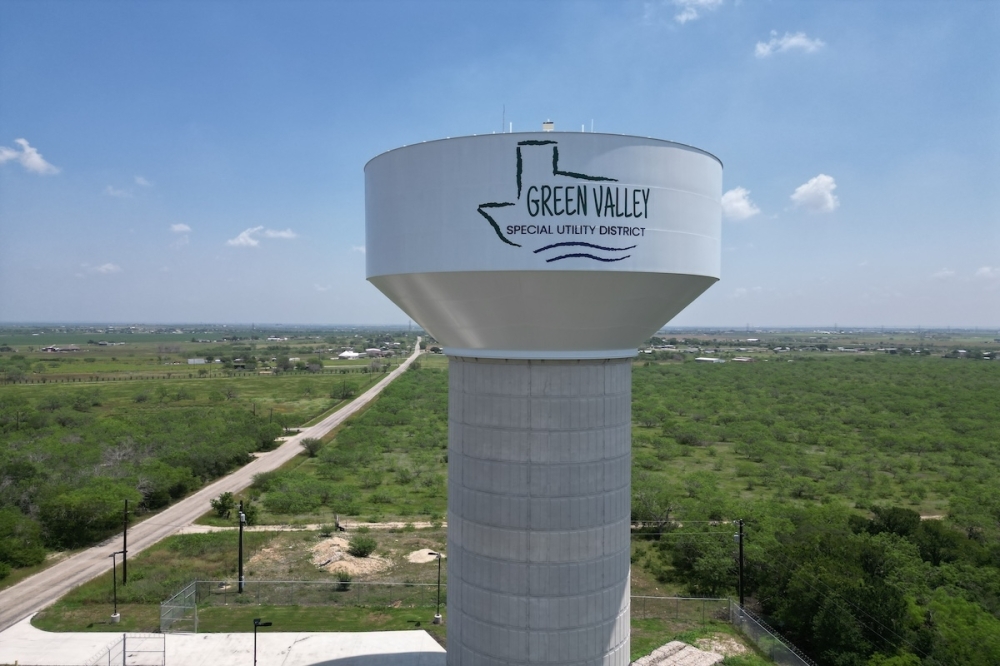
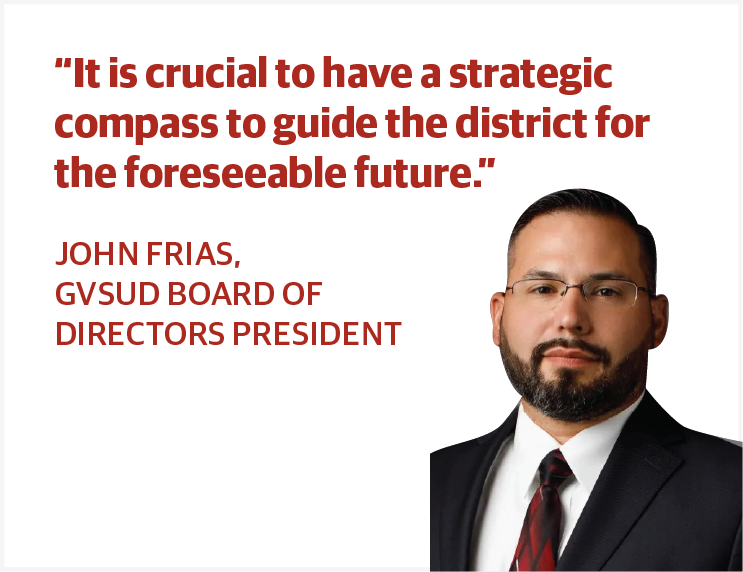
On April 24, the GVSUD board of directors adopted the strategic plan, establishing goals and initiatives for the future of the area’s water infrastructure.
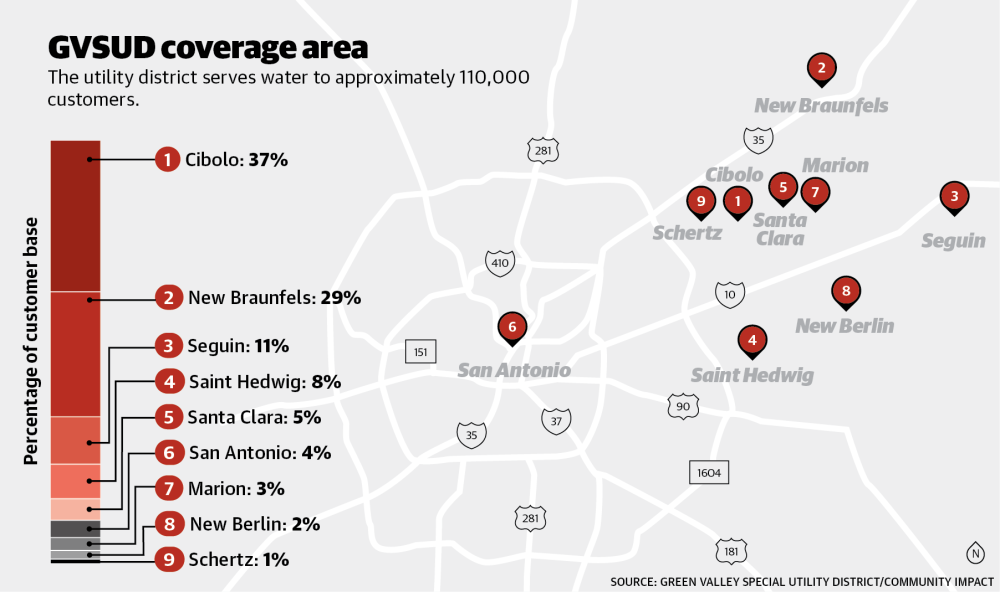
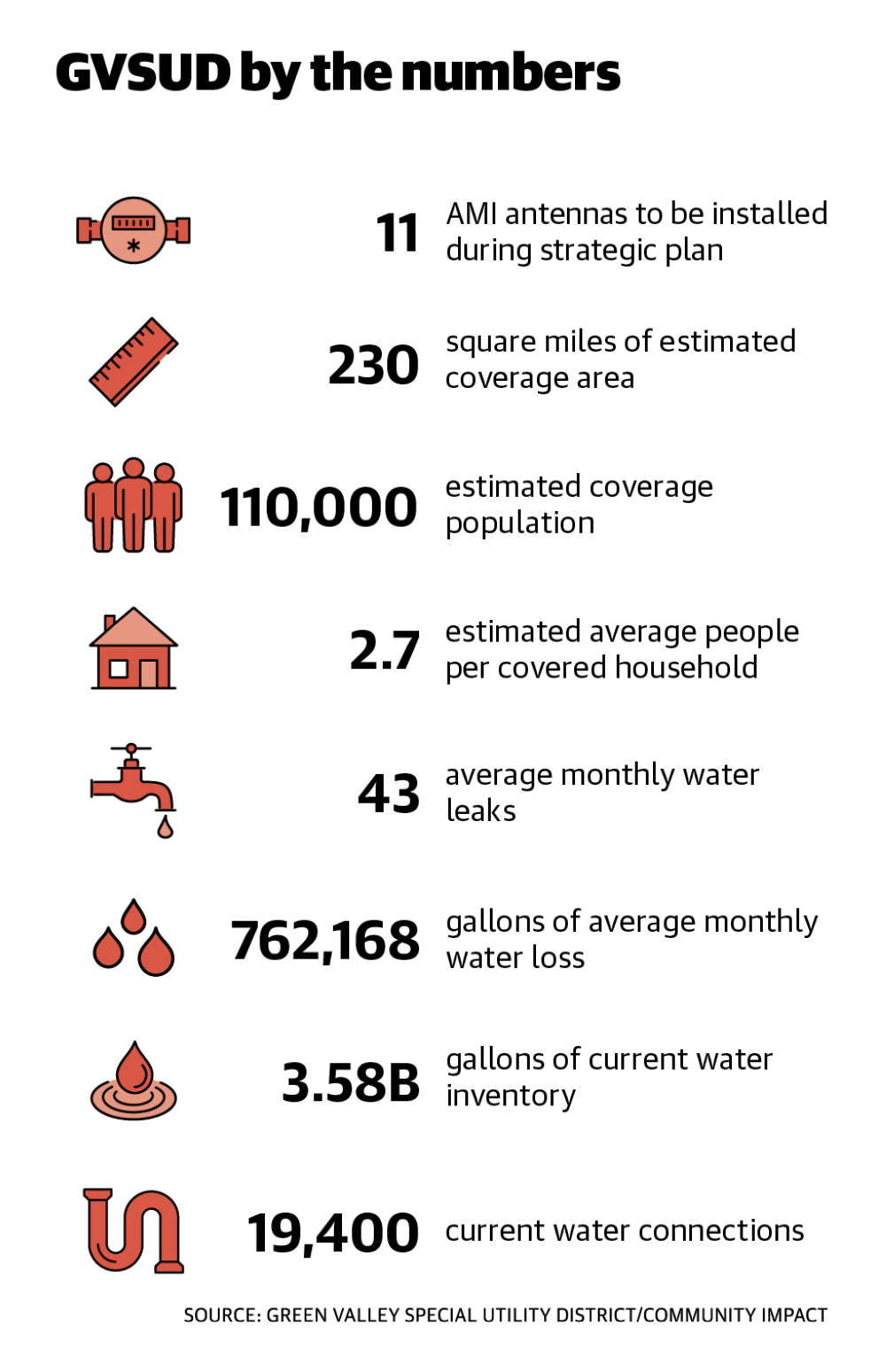
GVSUD’s mission statement, according to the company website, is to provide “sustainable, reliable and efficient water solutions” by connecting customers to its water supply and improving local water infrastructure. General Manager Phil Gage said that the district serves water to more than 110,000 people as a political subdivision of the state.
“Our number one mission in life is [to] deliver treated water to our customers the best that we can, as clean as we can, and also do the same thing with the environment when we’re treating [our] water,” Gage said.
The highest percentage of GVSUD customers is in the city of Cibolo. In November, customers who receive their sewer bill from the city and their water bill from GVSUD will receive a single bill combining both entities.
Utility districts are also responsible for managing water restrictions to combat drought conditions. Currently, customers are under Stage 2 restrictions, which means no watering with a sprinkler or irrigation system is allowed on weekends.
GVSUD’s restrictions coincide with the level of the Edwards Aquifer, which has received 3.13 fewer inches of rainfall than a typical year through October, according to the San Antonio Water System.
The Edwards Aquifer is 3,600 square miles and is the primary water source for the area, according to the Edwards Aquifer Authority.
The specifics
The key infrastructure upgrade for GVSUD is moving toward Automated Meter Infrastructure, or AMI. This gives the district the ability to read customer meters in real time, allowing for better data collection on water usage, loss and leaks.
Currently, five out of 11 AMI antennas have been installed, with two more scheduled for fiscal year 2025-26. Once the transition to AMI is complete, the district will give customers access to a web-based program to track their own usage.
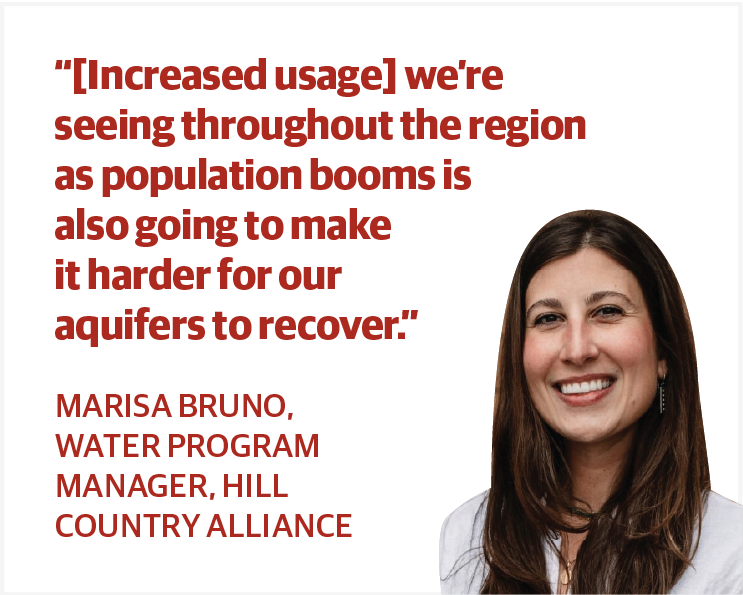
Marisa Bruno, the water program manager for the Hill Country Alliance, said utility districts tend to struggle with enforcing water restrictions, a challenge where automated meters can help out. The alliance is an education and outreach group with a goal to preserve the environment of the Hill Country region.
“[They] might say you can only water once a week or once every two weeks, but it can be difficult to actually enforce that restriction, and so I do think a lot of the burden falls to residents to be following those drought restrictions,” Bruno said.
Offering input
Why it matters
GVSUD is working to upgrade its operations by way of the strategic plan as water shortages remain a concern across Texas. Part of the plan is to invest in alternative water sources, such as Brackish water projects, which the U.S. Geological Survey defines as water with a higher salt concentration than freshwater but lower than seawater.
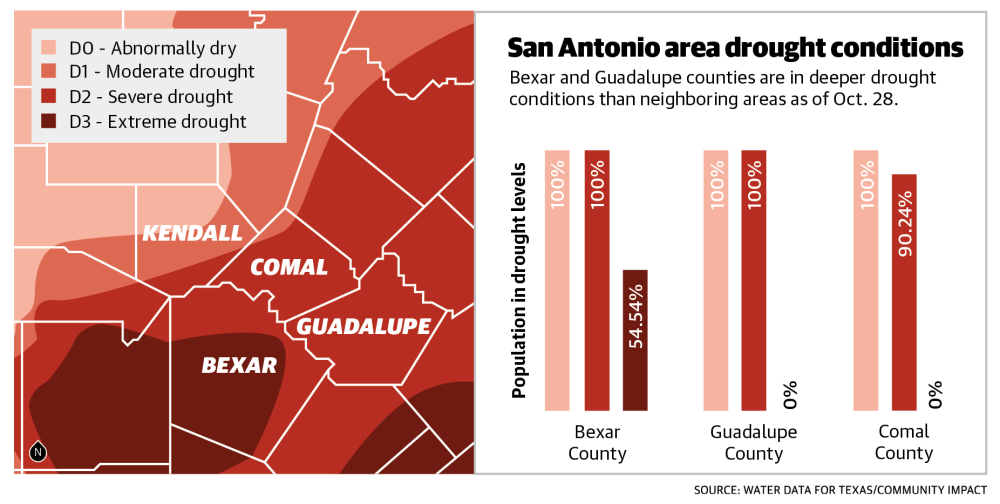
Bexar and Guadalupe counties are currently deep into both agricultural and hydrological drought. According to Water Data for Texas, agricultural drought is a measure of rainfall shortage affecting crop production, while hydrological drought is a measure of a shortage’s impact on water supplies.
According to the Keetch-Byram Drought Index, an index of soil moisture that determines hydrological drought, Guadalupe County is at 610 out of 800 as of Nov. 3, with 800 representing completely dry conditions. Bexar County is at a similarly dry 583 out of 800. Both counties are also classified as being in a majority severe agricultural drought by the U.S. Drought Monitor.
Paul Bertetti, senior director of aquifer science research and modeling at the Edwards Aquifer Authority, said these conditions have been in place since early 2022. Bertetti said current drought conditions are the worst in the area since the mid-1950s.
“The current drought is not nearly as long, but water levels in general are a little bit lower than they were [then], so it’s a significant drought and a concern in that, unless we get more rainfall, it’s likely that [current] water levels and water restrictions will continue for some time,” Bertetti said.
Why now?
GVSUD is currently adapting to drought conditions in its strategic plan. One of the objectives is to complete a drought contingency plan with incentives for individual conservation, targeting a December completion.
“We’re actively looking for how we can incentivize it, whether that’s through a rebate program, whether that’s through xeriscaping,” Gage said.
In early 2026, the district’s board of directors will have an updated assessment briefing on sub-tasks within the strategic plan. These tasks range from the technical, such as completing AMI upgrades and a new Water Master Plan, to the communicative, such as launching a new user-friendly mobile application.