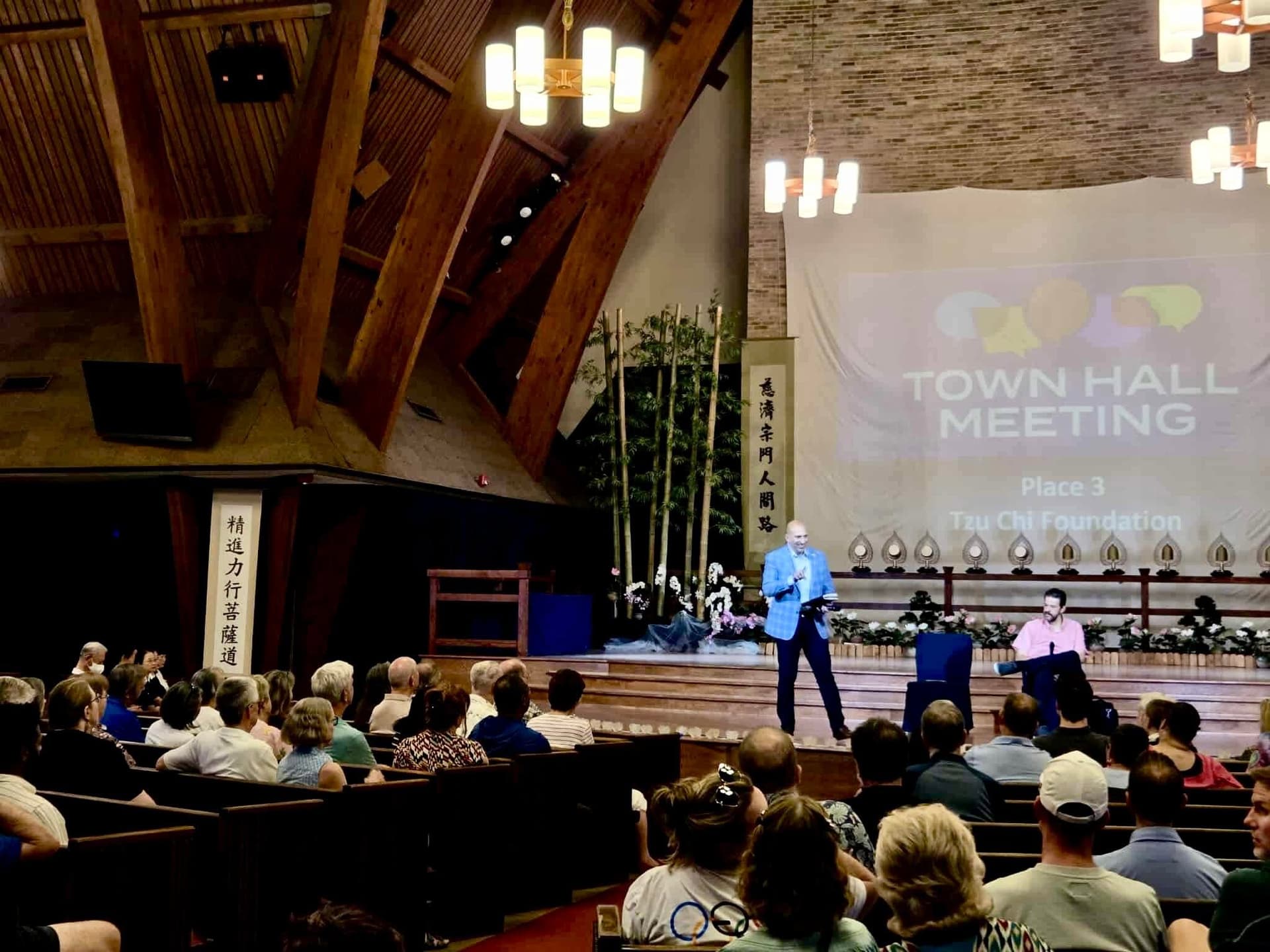
Richardson Police Chief Gary Tittle gave an overview of the police department’s use of Flock Safety license plate reader cameras at the Aug. 10 City Council meeting, including policies on data collection, sharing and searching.
After hearing feedback from council members and concerns from community members, city staff plan to implement further transparency methods to assure residents that the policies are being followed, City Manager Don Magner said.
The overview
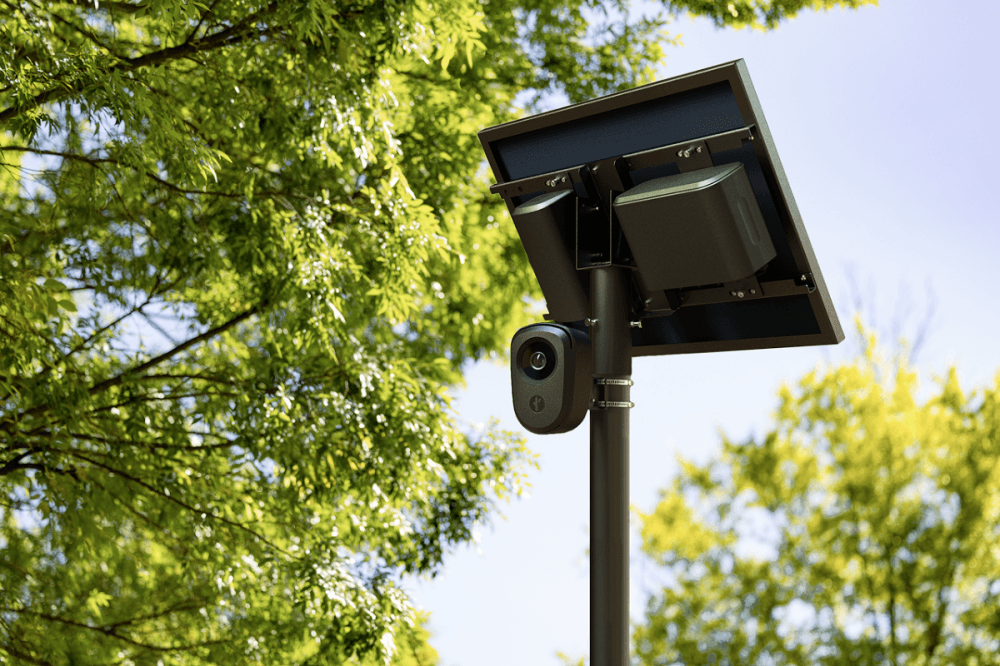
Richardson approved a contract with Flock Safety in early 2024, a cloud-based technology platform that is best known for automated license plate recognition cameras.
Richardson currently has 20 stationary cameras deployed across 14 major intersections in the city, Tittle said.
Several residents spoke at the meeting to express concerns about privacy rights, misuse of Flock cameras and transparency around the data collected by the cameras.
“We still have the right to privacy, and any infringement on that right deserves a measured and thorough public examination to determine if the cost is worth the reward,” resident Ginny Loughlin said.
Magner said that while the city has received concerns from residents about Flock technology as a whole, city staff have not received any complaints alleging misuse of Flock cameras by RPD personnel.
Tittle said RPD has used the Flock system to locate stolen vehicles, suspect vehicles and missing persons. Flock has also been “instrumental” in the identification and arrest of suspects for murder, robbery, assault and other offenses, he said.
“I'm not here to defend a tool. I'm not here to defend a vendor,” Tittle said. “What I'm here to share is that we are following the law. The courts have upheld that this is a lawful tool for the use of law enforcement.”
The city’s current contract with Flock is up for renewal at the end of 2027.
The details
Flock cameras are motion-activated to take pictures of the rear of a vehicle, recording information like license plate, date, time, location and vehicle characteristics, Tittle said.
The data collected by Flock cameras is automatically deleted after 30 days unless it is tied to an active investigation, Tittle said. Data retained for investigations makes up less than 1% of collected images, Sergeant Benjamin Masters said.
Tittle said Richardson’s Flock cameras capture the rear of a vehicle and therefore do not collect:
- Facial recognition
- Vehicle owner information
- Driver/passenger demographics
- Driver/passenger clothing description
- Every move a vehicle makes
Tittle also said that the Flock system cannot be searched for human characteristics like race or gender.
In addition to Flock cameras, Tittle said there are at least 30 other automated license plate reader cameras in Richardson that are privately or independently owned. The city does not have control over the placement or data use of those cameras, Tittle said.
A closer look
Tittle said all Flock data is encrypted to ensure its safety and is only accessible to authorized personnel, which includes sworn RPD personnel and nonsworn investigative personnel. RPD also has control over who the department shares its Flock data with, he said.
“RPD owns 100% of the data and it will not be sold,” Tittle said. “RPD decides who to share the data with, not Flock.”
RPD currently shares its data with 146 law enforcement agencies, which Tittle said are primarily North Texas law enforcement agencies. The only federal law enforcement agencies that currently have access to RPD data is the FBI and U.S. Postal Inspectors, as well as the National Center for Missing and Exploited Children.
All data sharing must be approved by Tittle, the Assistant Chief of Operations or the Sergeant of the Intelligence Unit, he said, and the list of agencies with access to RPD’s Flock Safety data is audited quarterly.
The approach
Tittle said all Flock data searches from RPD or another agency must be tied to a “legitimate law enforcement purpose,” and the officer is required to enter their reason for searching and a case number if applicable.
RPD utilizes AI to review Flock data searches and flag any that need additional review, and supervisors also conduct random audits of employees’ searches to ensure compliance, Tittle said.
RPD detectives and supervisors can also create “hotlists” of suspect vehicles to trigger an alert whenever that license plate is scanned by a camera. Only RPD personnel are able to view these hotlists, Tittle said, and any listed vehicle must be tied to an active investigation. The hotlists are also audited monthly to ensure their continued listing is necessary, Tittle said.
Measuring the impact
There is not a comprehensive list of crimes that RPD has used Flock to solve, First Assistant Chief Mike Bussiere said, but he created a list of roughly 180 examples over the past two and a half years of RPD using Flock data in cases that resulted in charges, arrests or locating a missing person.
Bussiere said Flock has been used to locate and arrest an aggravated assault suspect, identify a child predator, identify a vehicle that ran over an individual in a murder case, locate suspects in a large-scale auto theft ring and build a case against serial burglars. It was also used to help locate people in seven missing person cases, he said.
Mayor Amir Omar requested more comprehensive data on cases that were closed with the assistance of Flock.
What they’re saying
Council member Dan Barrios said he reviewed the contract with Flock and sees “holes” in the agreement. Barrios said that he does not have concerns about misuses of Flock at the local level, but he does have issues with Flock from a national perspective. Barrios expressed concern that Flock could collect more identifying data in the future.
“My objection and the reason I cannot support any further growth of Flock within our city is not because of [RPD],” Barrios said. “It’s just with the company and the fact that there aren’t the protections in place from a federal level to protect us from that. And I don’t trust a private company to put that much data and that much control in their hands.”
Council member Joe Corcoran said that many of the documented cases of misuse of Flock cameras by police officers were uncovered by internal investigations.
“The internal audit piece is extremely critical, and it really is incumbent upon the department to get it right,” Corcoran said.
Council member Jennifer Justice recommended that the department make its audit reports public to show that RPD is complying with the city’s policies on appropriate data sharing and searching.
“I think that that would be something good to give the public some comfort that these audits are occurring and that somebody is certifying that they're occurring on the intervals that we've represented,” Justice said.
What’s next
“We continue to tweak our own practices. Flock continues to tweak what it can do and the tools that it affords us to do and to utilize for audits,” Tittle said. “We continue to amend our policy to make it better and better as we go along.”
Magner said city staff will work with RPD to establish clear requirements governing other agencies’ access to RPD data and look to obtain written confirmation from Flock that data is deleted in accordance with the city’s contract. RPD will also refresh its audit policy and publish it online along with posting audit results on a regular basis.
“We need to figure out what our policy is. We need to put the policy on our transparency website, and then we need to figure out how we can assure the public that these audits are happening in compliance with the policy,” Justice said.