Richardson aims to reduce roadway deaths and serious injuries through an action plan that targets high-crash areas of the city.
The overview
Safer Streets Richardson is a data-driven set of road projects aiming to create a “safe, accessible and comfortable transportation network," said Daniel Herrig, assistant director of transportation and mobility, at an Oct. 12 council meeting. Through the program, the city seeks to cut roadway deaths and serious injuries in half by 2050.
“As we look at quality of life, those are the crashes that are going to have the most impact,” Herrig said.
City staff used police crash report data from 2020-24 to create a “high injury network,” a set of roads and intersections in Richardson that see the most fatal and serious injury crashes.
To fund safety improvements at these locations, Richardson will apply for the U.S. Department of Transportation’s Safe Streets and Roads for All grant. Projects will also be funded by existing budgets and further grants, City Manager Don Magner said.
Richardson City Council unanimously approved the Safer Streets plan Nov. 9.
Zooming in
While the vast majority of all crashes in Richardson involve only motor vehicles, the safety analysis showed that bicycles, motorcycles and pedestrians are much more likely to be involved in crashes that result in fatalities or serious injuries.
“You see a disproportionate impact toward those more vulnerable road users,” Herrig said.
The approach
City staff identified 10 priority road segments and 10 intersections in the high injury network, Herrig said. They analyzed crash types at those locations, such as left-turn crashes and bicycle crashes, and risk factors like speed limits and traffic.
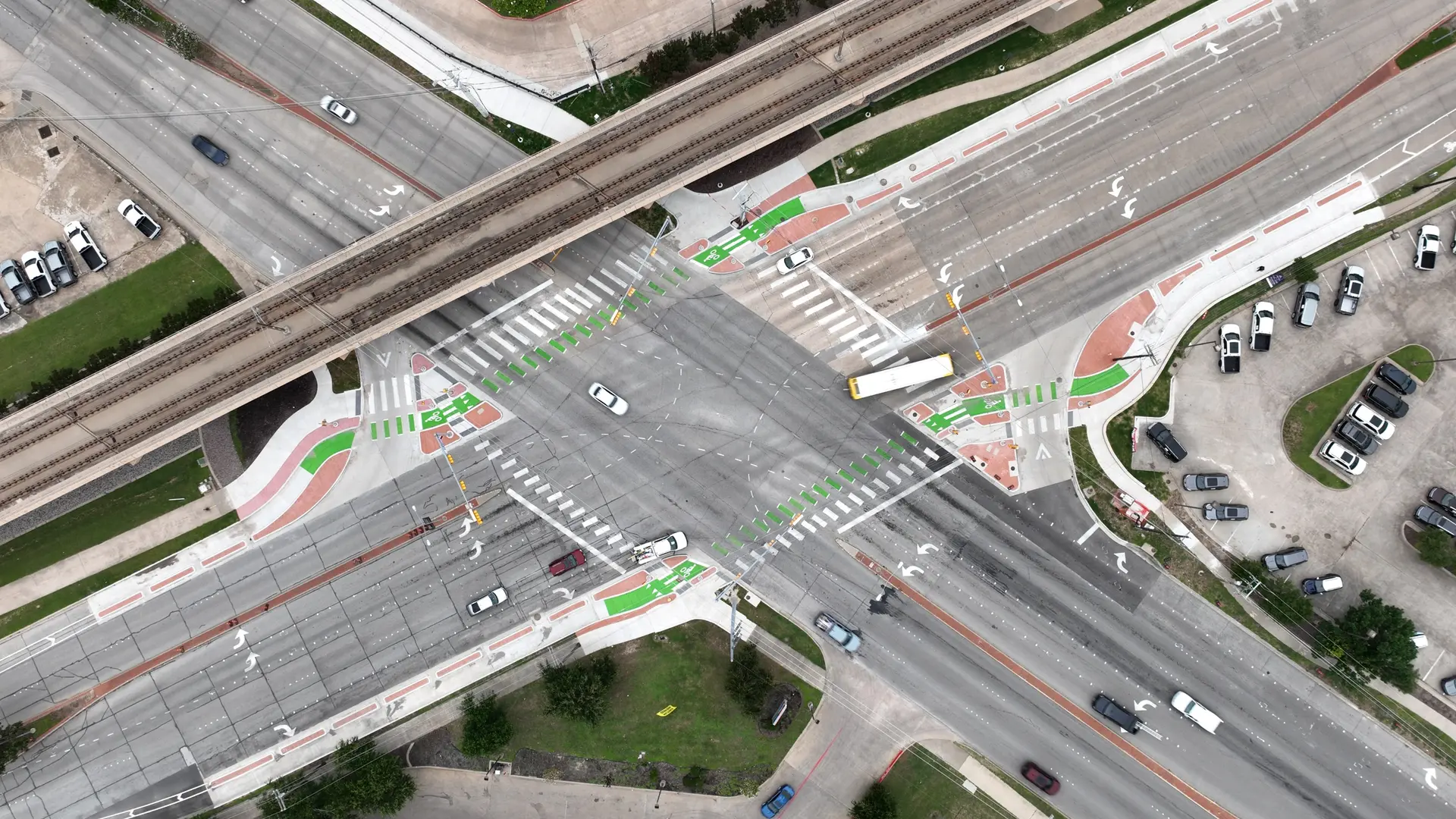
Based on the analysis, Herrig said staff created a “countermeasure toolbox” of safety improvements to implement at each location. The toolbox ranges from lower-cost upgrades like upgrading striping to larger-scale improvements, such as adding speed feedback signs, sidewalks and flashing beacons.
He said staff will determine which countermeasures to deploy based on each project's existing safety issues and needs.
The impact
Many of the Safer Streets priority areas overlap with road projects included in the city's $223.4 million 2026 bond and the recently approved city budget, Magner said. These funded projects will provide opportunities to implement the Safer Streets countermeasures, he said.
“We’ll get a lot done in the next six years just because of the magnitude of the bond program,” Magner said.
Many of the countermeasures aim to adjust motorists’ behavior on the road, he said, like adding speed feedback signs to reduce vehicle speeds.
As Richardson continues to build up its bicycle infrastructure, it takes time for drivers to adjust to sharing the road with cyclists, which creates many of the safety hazards on major roads and intersections, said Mark Witt, Richardson Bicycle Coalition board member.
Stronger infrastructure for cyclists and pedestrians reinforces safety on the roads for all users, said Catherine Nied, another coalition board member.
“You can’t blame a cyclist for being in the bike lane,” Nied said. “That helps the culture a lot. It shows that as a city, we want cyclists to belong."
Looking ahead
Strategies and concept plans from Safer Streets were formally adopted by City Council on Nov. 9. Herrig said the plan is more than just “one-off safety projects,” but a new citywide strategy and culture of safety.
“Once we adopt a plan like this, I like to think of it as part of our organizational DNA,” Magner said.
This includes implementing Safer Streets policies on development review, engineering and construction teams and updating capital projects and design criteria.
Magner said city staff plan to annually review the Safer Streets project and refresh the plan every five years.
“These plans are marathons, not sprints,” Magner said.