The Richardson ISD board of trustees agreed to hold off on a voter-approval tax rate election amid declining revenue and enrollment.
The board also considered investment in a marketing campaign to increase revenue through greater enrollment at the May 14 meeting ahead of adopting the 2026-27 budget in June.
The overview
Despite the $25.7 million in budget cuts that the district announced in April, RISD is still expecting a shortfall of at least $21 million in next year’s budget, said David Pate, assistant superintendent of finance and support services. That shortfall is expected to grow over the next several years.
RISD is facing declining enrollment at the same time that district budgets are becoming increasingly determined by student numbers, Pate said at a previous meeting.
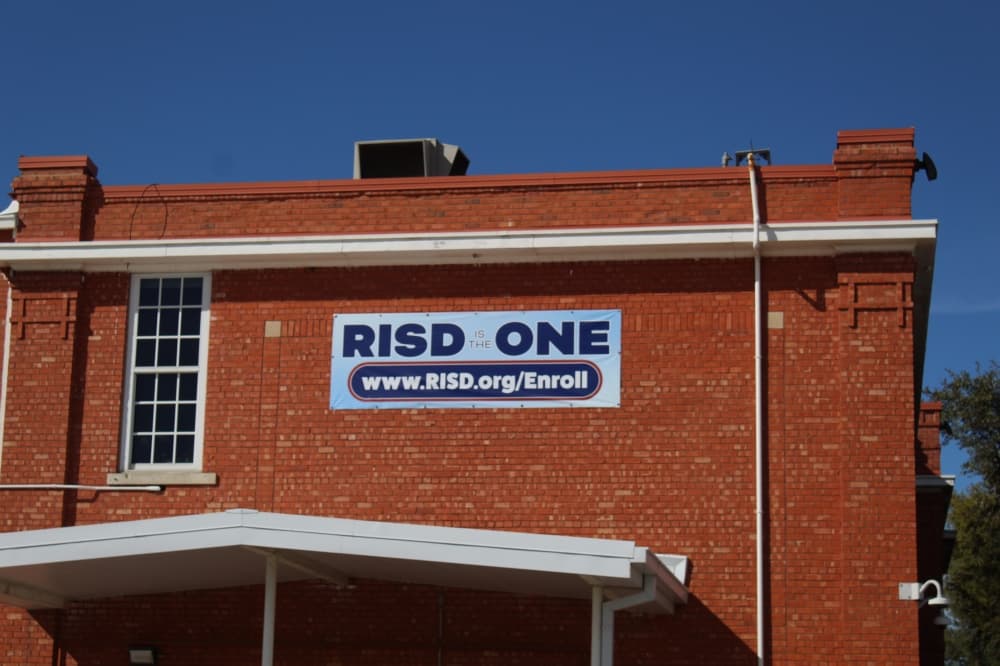
Growing enrollment is the primary method to increase district funding, so the board has been considering a “district awareness campaign” that would involve a partnership with an outside agency and a multichannel, targeted marketing push to recruit and retain RISD students.
While original plans showed the marketing campaign could cost up to $500,000, board members supported a smaller investment with a phased approach.
Board members also decided against holding a voter-approval tax rate election this November, another method to raise revenue through an increase to the maintenance and operations tax rate.
Zooming in
The proposed VATRE would have included a 3.17-cent tax rate increase on the ballot this November, which if approved would provide the district an additional $7.7 million in revenue next year, Pate said.
Trustee Vanessa Pacheco advocated against holding the tax rate election this year, as she said it would be a “big ask” of voters so soon after they approved the 2025 bond and would create a financial burden on the community.
“Economically, our families are going through it, right? They’re already depending on a lot of our free lunches and things like that,” Pacheco said. “I know [a VATRE] brings in money, but it does also bring hardship to our community.”
It would also cost the district money to hold an election in a time when RISD needs to be mindful of additional expenses, she said.
The outlook
Pate warned in a previous meeting that this year could be the last opportunity for RISD to hold a VATRE because the state Legislature could restrict districts’ ability to increase tax rates in the upcoming 2027 legislative session.
However, Gov. Greg Abbott has also advocated for eliminating school property taxes as a whole, which would fundamentally reshape school funding and render a potential tax rate election irrelevant. According to RISD’s website, local funding and property taxes make up roughly two-thirds of district revenue.
“[If] in the legislative session, they take away the ability for schools to be funded through property taxes, have we not then exhausted our community on something that really makes no difference?” trustee Megan Timme said. “We’re going to need some clarity from the legislative session to see if that is a lever that we can pull at all.”
Board members agreed to wait until after next year’s legislative session to consider holding a VATRE.
The approach
In the enrollment push, board President Chris Poteet said the district should be “deliberate” in choosing which marketing materials to invest in. The multichannel options include print ads, direct mailers, digital ads, events and additional methods.
Poteet advocated for a reduced investment—less than the $500,000 maximum—in options that will get RISD “the most bang for our buck.”
“At the end of the day, our goal is to spend less in the district,” Poteet said.
Roughly 75 newly enrolled students district-wide would allow the marketing campaign to break even at full price, with any additional students generating a profit for the district. Timme said the campaign has a “realistic potential” of bringing in enough students to profit because RISD enrolled 210 new students last year without a targeted advertising push through open enrollment.
“We know sometimes you have to spend money if you’re going to try to generate revenue,” Superintendent Tabitha Branum said. “We believe we have an opportunity to invest in marketing and branding—targeted marketing to individuals who we might be able to recover, retain or recruit to Richardson ISD.”
Put in perspective
Trustee Regina Harris advocated for a phased approach to the marketing program so that the district can monitor the effectiveness of the campaign, particularly because the impact of school vouchers on enrollment is not yet known.
“Richardson ISD is not the only district that’s having this issue with low enrollment,” Harris said. “My concern would be, are there kids out there to get?”
Several board members said that the advertising campaign would be crucial not only to recruit more students but also to retain the enrollment the district currently has.
“Here’s the world we live in now—every district is competing for kids,” trustee Eric Eager said. “If we do nothing, that [enrollment] number is going to decline faster because they’re bombarding our kids.”
Branum said a nearby district used an open records request to obtain RISD addresses and send direct mailers to families.
“That changes the game a little bit,” trustee Rachel McGowan said.
Branum also noted that advertising will not address all of RISD’s enrollment loss—she said the majority of student losses this year were from RISD’s Hispanic community, an “anomaly in terms of larger cultural things going on.”
“No amount of money is going to bring those kids back,” McGowan said.
Branum said staff will present options for a reduced marketing investment to the board this summer.
Looking ahead
Branum said the district has done its best to avoid budget cuts that directly impact the student experience, noting that even with the secondary school schedule changes, course and program offerings remain the same. However, she said RISD is reaching a financial position where program cuts could be on the table.
“We cut through the fat the last two years before this. This year, we cut muscle,” Branum said. “Pretty soon, we’re going to be close to the bone because there are less and less options that don’t directly impact the student experience.”
The board is set to approve its 2026-27 budget June 4.