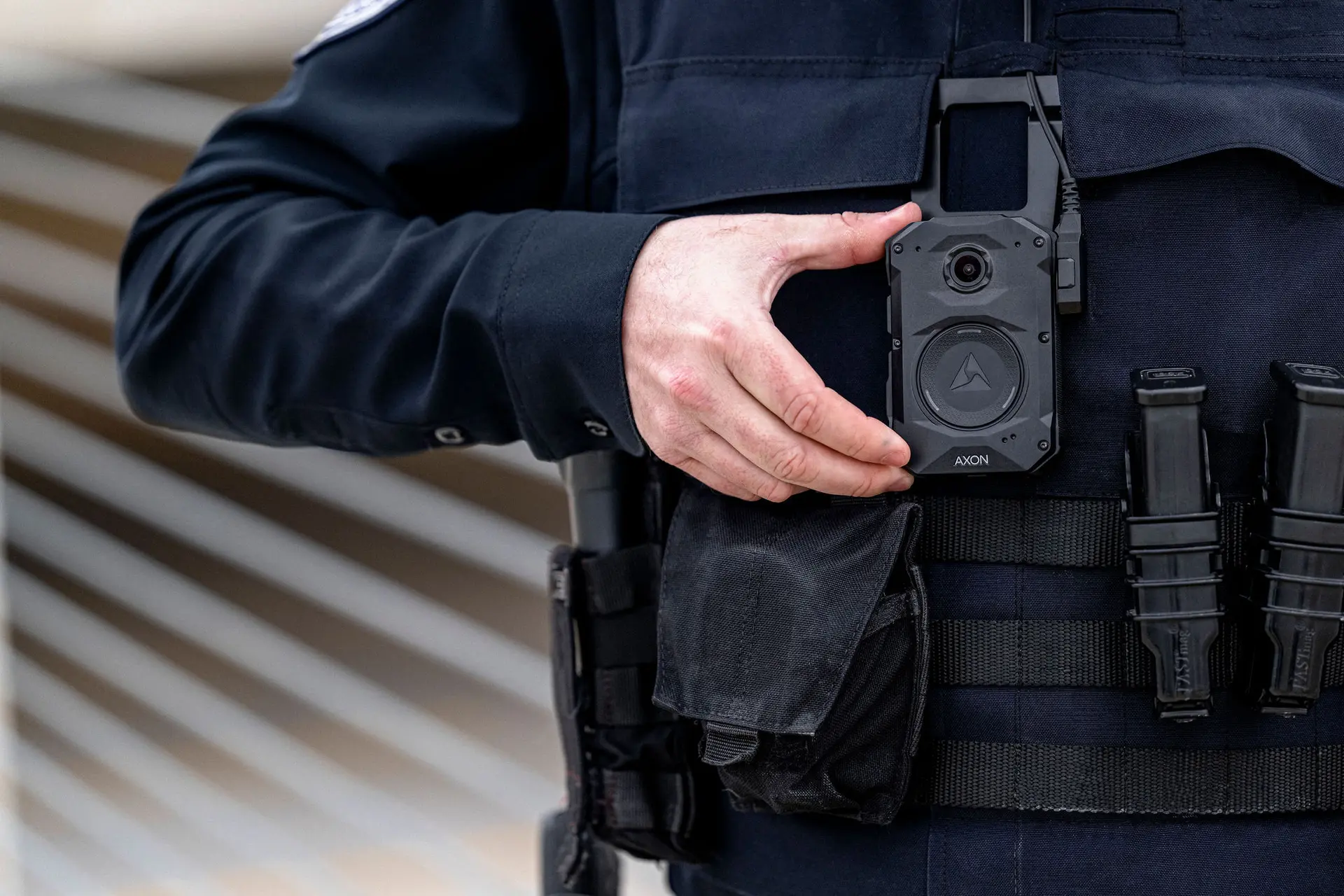
The Celina Police Department is set to get a series of technology upgrades from Axon Enterprise, a public safety technology company.
Celina City Council approved a $9.95 million contract with Axon Enterprise at an Oct. 13 meeting.
The contract locks in 2026 prices for 10 years and includes a growth plan that will provide equipment for 10 new police officers and five new patrol vehicles each year, Police Chief John Cullison said.
Some of the contract covers updated versions of technology CPD already uses, such as:
Other technology included in the contract will be new to Celina, like pole cameras with live feeds and drones that can be used as first responders.
“If you’re going to be a forward-leaning, proactive kind of police department that’s actually addressing crime, disorder and traffic safety, you need to embrace technology, but you can do so in a responsible manner,” Cullison said.
Zooming in
CPD will receive 16 pole cameras that can read license plates, transmit live videos and identify vehicle attributes like a busted taillight, according to Cullison’s presentation.
The cameras can be repositioned, Cullison said. The department plans to use them at high-theft areas, like retail centers or construction sites, and in situations that require an increased police presence like community events.
The 16 Axon Enterprise pole cameras will complement CPD’s 49 existing license plate readers and other cameras from Flock Safety, a different public safety technology company.
CPD maintains a dashboard where the public can see information about the city’s Flock Safety program, including:
How many devices are in use
How long the department keeps data from the cameras
How many times officers have searched the database in the past 30 days
Other law enforcement agencies that have access to CPD’s data
CPD’s Flock Safety cameras only take still images, and the department shares that data with a host of other law enforcement agencies.
The cameras from Axon Enterprise will also be able to stream live feeds, which will not be shared with other agencies, Cullison said.
“Absolutely not,” he said about sharing live feeds. “I think you start getting into some really gray areas with that.”
More details
The contract will provide CPD with two types of drones: three patrol drones and three drones as first responders, or DFR.
CPD already uses patrol drones and has used them for roughly 15 years, Cullison said.
Patrol drones are small aircraft that officers can deploy in the field for missions like pursuing a fleeing subject.
The DFR program from the Axon contract will be a new tool in CPD’s arsenal, Cullison said.
An officer has to make the decision to launch a DFR, and once it’s been deployed, the drone can fly itself to its destination, he said.
The town of Prosper launched a similar DFR program in May 2025, according to previous reporting.
CPD will house its DFRs in strategic locations throughout the city, Cullison said.
The DFRs will be able to scope out the scene of the emergency and give officers a better idea of what they’re heading into, he said.
CPD records when its patrol drones are deployed, what they do and how long they stay out, and will do the same with the DFR program, Cullison said.
Cullison eventually plans to create a public dashboard for the drones similar to the one the department has for its Flock Safety devices, he said.
What else?
In addition to hardware, CPD will get several software tools as part of the Axon Enterprise contract.
One major addition is Fusus, a platform that will integrate the data collected from the city’s Axon body cameras, dashcams, pole cameras and drones.
Cullison described a crowded downtown event as an example of a situation where Fusus could help officers protect the peace.
In his hypothetical scenario, CPD would have a drone deployed to monitor the crowd. If someone committed a crime at the event and attempted to drive away, officers could track the suspect’s car using the drone.
Officers could then pull over the vehicle, which would activate the dashcam in their patrol car.
An officer back at the station could monitor the situation using live feeds from the drone, dashcam and body camera and warn the responding officers if the situation was about to escalate.
Other software CPD will get as part of the contract includes:
AI software that can write reports based on video footage
AI software that can redact videos for public information requests
Virtual reality training simulators
Looking ahead
CPD won’t deploy all of the technology in the contract immediately, Cullison said.
Cullison estimated the pole cameras would take a year or so to deploy, and getting the DFR program off the ground would take an additional year or two, he said.
Public safety technology could help relieve the burden on officers further down the line as the city grows, Cullison said.
For example, Cullison anticipates the city will need to open its own 911 dispatch center instead of routing its calls through the Collin County Sheriff's Office in two or three years, he said.
Once Celina opens its own dispatch center, the contract with Axon Enterprise includes software that can use AI to screen 911 calls, though Cullison and his team are still deciding whether they will choose to use that technology, he said.