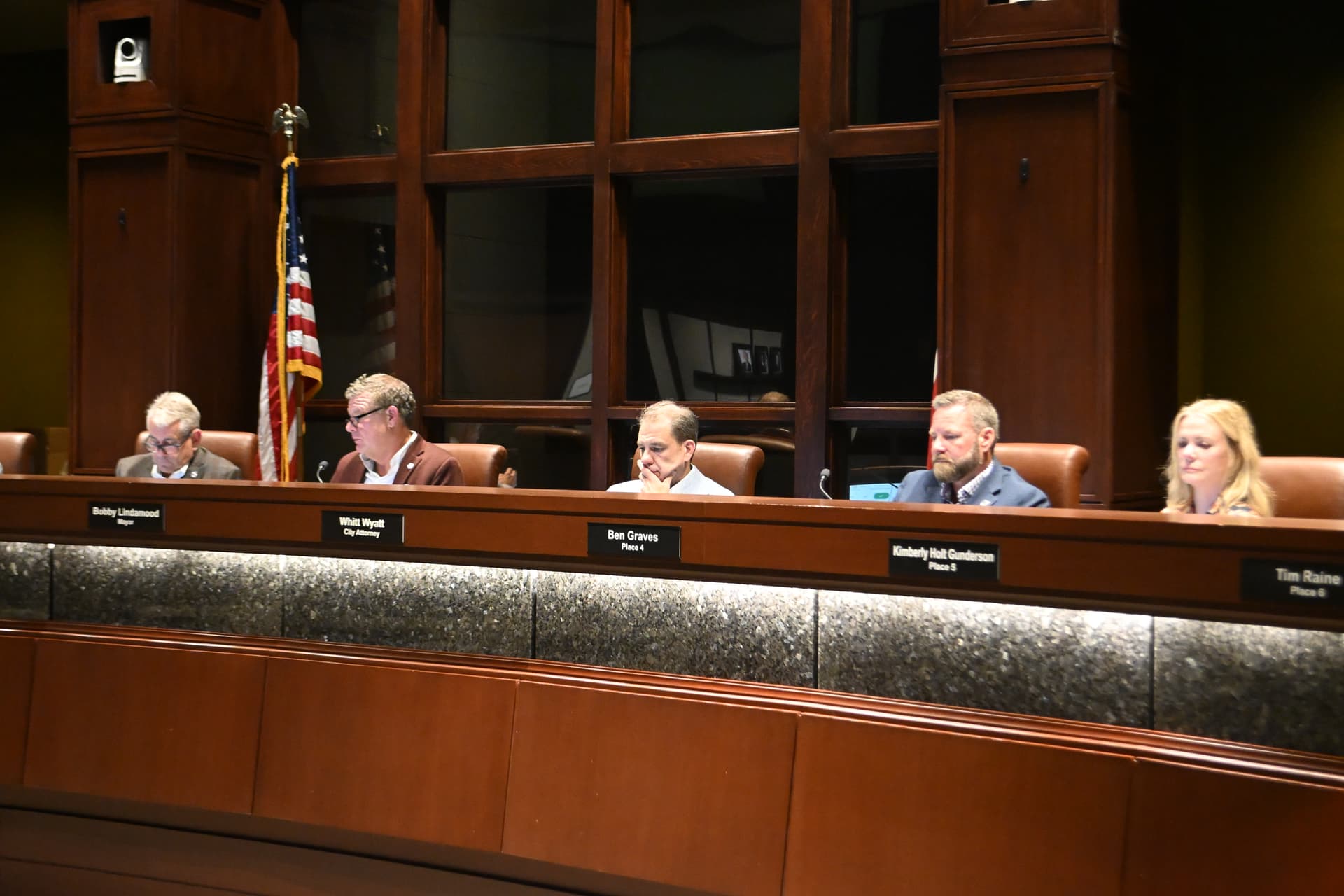
Prosper ISD officials are looking for ways to save money in the 2026-27 budget, Chief Financial Officer Keri Croy said at a July 20 board meeting.
The 2026-27 budget, which was approved at a June 16 meeting, projects a $42.2 million shortfall for the upcoming school year, including an expected $25.1 million shortfall in the district’s general fund, according to Croy’s June presentation.
In June, Croy called the $25.1 million shortfall “the absolute worst-case scenario” and said her team would work to identify possible savings.
According to Croy’s July update, initiatives to cut costs heading into the 2026-27 school year include:
- Department budget reductions
- Contract audits
- Travel freeze for central office staff
- Staffing evaluations
Diving in deeper
PISD is asking departments to reduce their budgets by 10% to help address the shortfall, Croy said.
Departments were already asked to reduce their budgets by 20% earlier in the budgeting process, meaning departments across the district will be expected to cut their budgets by 30% overall for the 2026-27 school year.
PISD staff will also review all of the district’s active contracts and renegotiate contract renewals for better terms where possible, according to Croy’s presentation.
Other savings measures are aimed at the district’s central administrative office, Croy said.
The central office will only fill vacant positions if absolutely necessary, and the district has placed a travel freeze on central office staff, per the presentation. Travel expenditures for central office staff will be reviewed on a case-by-case basis, Croy said. The freeze will not affect student travel.
“We’re having to do without some things,” she said. “If we can absorb the impact here [in the central office] so the campuses don’t feel it, that’s our goal.”
What’s happening
A number of factors are putting a squeeze on PISD’s budget, Croy said.
Texas’s basic allotment, which is the amount of funding school districts receive per student, has not kept pace with inflation, she said.
In 2025, state lawmakers passed House Bill 2 and increased the basic allotment by $55 dollars, although some school leaders said an increase of roughly $1,300 was needed to keep up with inflationary costs, according to previous reporting. After the increase, the Texas basic allotment for public school funding is $6,215 per student for the 2026-27 school year, according to the Texas Education Agency.
HB 2 also included specific funding allotments for teacher pay based on level of experience and the size of the district, which Croy said were helpful but not flexible enough to address PISD’s broader budget needs.
Finally, as a property-wealthy district, PISD pays a portion of the property tax it collects back to the state in a process known as recapture.
This year, PISD will pay $2.5 million in recapture, and that payment is projected to increase to over $6.4 million by 2029-30 as the district’s property wealth per student continues to grow, Croy said.
“[It’s] almost to the point ... where all of our extra revenue goes back to Austin in recapture, even though we are in a deficit year,” Croy said in June.
The impact
These three factors–lagging basic allotments, restrictive funding for teacher pay and increasing recapture costs–come as the additional funding PISD receives from the state is starting to run out.
PISD’s fast growth allotment, which is awarded to districts with rapid enrollment increases, is projected to decrease from $33.6 million in 2026-27 to $15.2 million in 2029-30, according to data from Croy’s June presentation.
The district’s new instructional facility allotment, which supports school districts opening new campuses based on student attendance, is also set to run out completely in 2029-30, Croy said.
Over the next few years, PISD’s budget will continue to feel the strain of increased spending obligations and state funding challenges, Croy said.
For the 2027-28 school year, the district’s shortfall in the general fund is projected to increase to $28.4 million based on current trends, according to her July presentation.
“We’ve got some decisions to make and some work to do,” she said. “We’re about to roll up our sleeves.”
Stay tuned
The district’s budget process will continue through August and September, when officials will set the property tax rate and approve budget amendments, per the presentation.
The board’s next meeting is scheduled for Aug. 17, according to the district’s website.