Keller City Council approved the operating budget, capital improvement program and the tax rate for fiscal year 2026-27 at its regular Sept. 15 meeting.
The details
The budget total is $111.8 million, $582,090 more than the current fiscal year, according to the presentation at the meeting. The new fiscal year will start Oct. 1.
More than $81 million of the budget is tied to the general fund and the water and wastewater fund. The budget also included the previously approved Keller Development Corporation and Crime Control and Prevention District budgets.
The property tax rate of $0.300417 per $100 valuation is below the “no new revenue” rate and up slightly from last year’s rate of $0.28700 per $100 valuation. The approved tax rate is expected to bring in less funding for maintenance and operations, which handles day-to-day needs, than the current fiscal year, according to city documents. The $0.300417 is split, with $0.257403 for maintenance and operations and $0.043014 for interest and sinking, or debt, according to the presentation.
The average Keller home, with an assessed value of $459,668, will pay about $1,381 in taxes, a $7.34 increase compared to FY 2025-26, according to city documents.
Zooming in
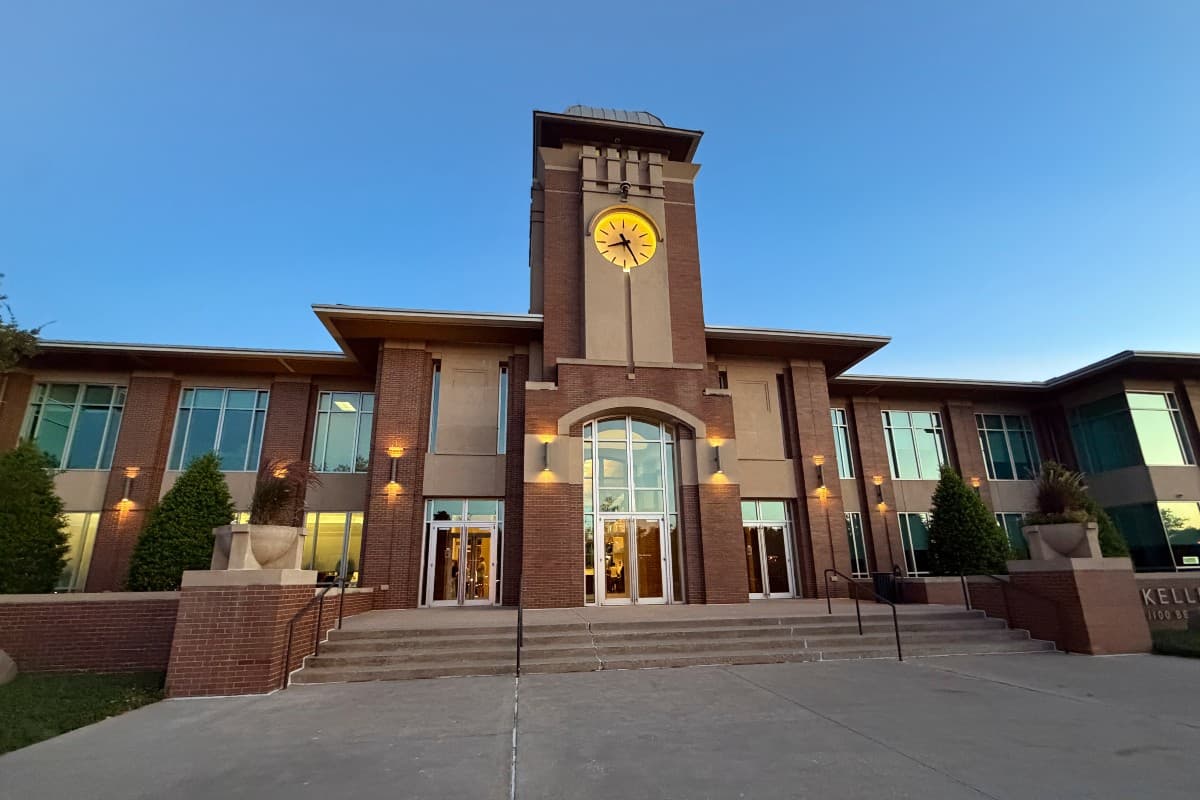
The budget includes several one-time funding items, such as $517,336 for economic development incentives, $500,000 for Keller Town Hall patio repairs and $330,000 for a pothole patch truck. The total personnel count is up 4.25%, including the largest public safety compensation adjustment in 10 years and the hiring of a new full-time employee for the Keller Development Corporation, according to the presentation.
“In addition to the 8% increase in public safety we're doing this year and 4% for the civilians, we're providing $7,500 sign-on bonuses for police,” Mayor Pro Tem Shannon Dubberly said. “Twenty-five percent of our budget is for public safety, providing 60 new tasers, 70 new bodycams, millions of dollars worth of renovations at the police department and employee compensation as a whole for the entire city, increased by 4.3%.”
He added the budget reflects 21 fewer full-time employees—two fewer this year—than the city had more than 20 years ago, when the population was 20% smaller than it is now.
“We're doing more with less,” Dubberly said. “That's because we invest in our employees and we invest in technologies that hopefully empower them to be more effective.”
Also of note
The capital improvement program budget is $9,614,464 and is cash funded, according to city documents.
There are two multimillion-dollar projects scheduled among the 15 capital projects planned, which will cover water and wastewater, street maintenance, the Keller Development Corporation, the general fund, stream erosion repair and drainage.
The Alta Vista waterline replacement is budgeted for $2.6 million and is the largest project, replacing a 40-year-old line. An interlocal agreement with the city of Southlake for the work was also approved at this meeting.
Street reconstruction, the Johnson Road Park playground replacement and restroom renovation, synthetic turf replacement, trail system expansion, sidewalk repairs, water line and wastewater line replacement and wayfinding signs at Keller Sports Park are also listed.
What else?
Residents will see a 4.75% rise in city water costs and a 3.5% increase in water and wastewater fees.
The annual average bill for 14,000 gallons of water will be $93.44, up $4.29 compared to the current fees. The average monthly bill for 6,000 gallons of sewer use will be $51.11, an increase of $1.73 per month, according to city documents.
Also on the agenda
A resolution to enhance public safety guidelines for automated license plate readers, or Flock cameras, was tabled.
According to the agenda, Keller City Council asked to establish clear limits governing who may access ALPR information, the purposes behind searches, the agencies with which Keller-collected ALPR information can be shared, the length of time data may be retained and the manner in which searches will be audited and reported.
Dubberly moved to table the discussion until the Oct. 6 meeting to allow time for public speaking opportunities.