Canopy Cancer Survivorship Center provides resources for survivors such as classes to increase mobility. (Courtesy Canopy Cancer Survivorship Center)
Hospitals in The Woodlands area are adopting new technology and expanding services in cancer care as cases increase.
Justin Kendrick, Memorial Hermann The Woodlands Medical Center’s senior vice president and CEO, said recent technologies in lung bronchoscopy introduced at the hospital allow biopsies to be taken in hard-to-reach places. The Woodlands hospital location is also the first in the area to use the Edison histotripsy machine to treat liver cancer with targeted ultrasound, he said.
Meanwhile, Houston Methodist The Woodlands Hospital is using artificial intelligence-supported tools in radiology to improve early detection, diagnosis and treatment planning, said Kerrie Guerrero, vice president and chief nursing officer.
“These technologies help radiologists identify suspicious abnormalities on imaging studies ... including subtle findings that may be more difficult to detect in early stages,” Guerrero said.
Among other hospitals in the area, St. Luke’s Health-The Woodlands Hospital is also working on updates to its technology and range of providers this year, said Lisa Williams, director of patient care services.
At UT MD Anderson’s The Woodlands campus, Dr. Pamela Schlembach said targeted radiation treatment continues to advance, and multiple weeks of treatment are not always needed.
“Today, in some of our treatments, we could do them as quickly as one day,” she said.
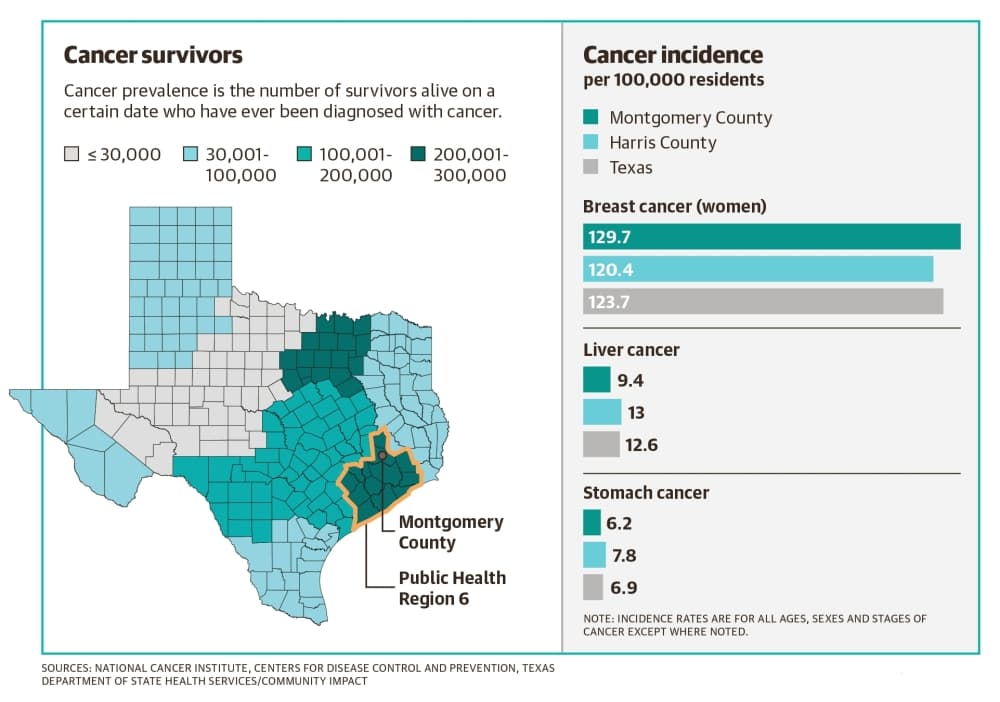
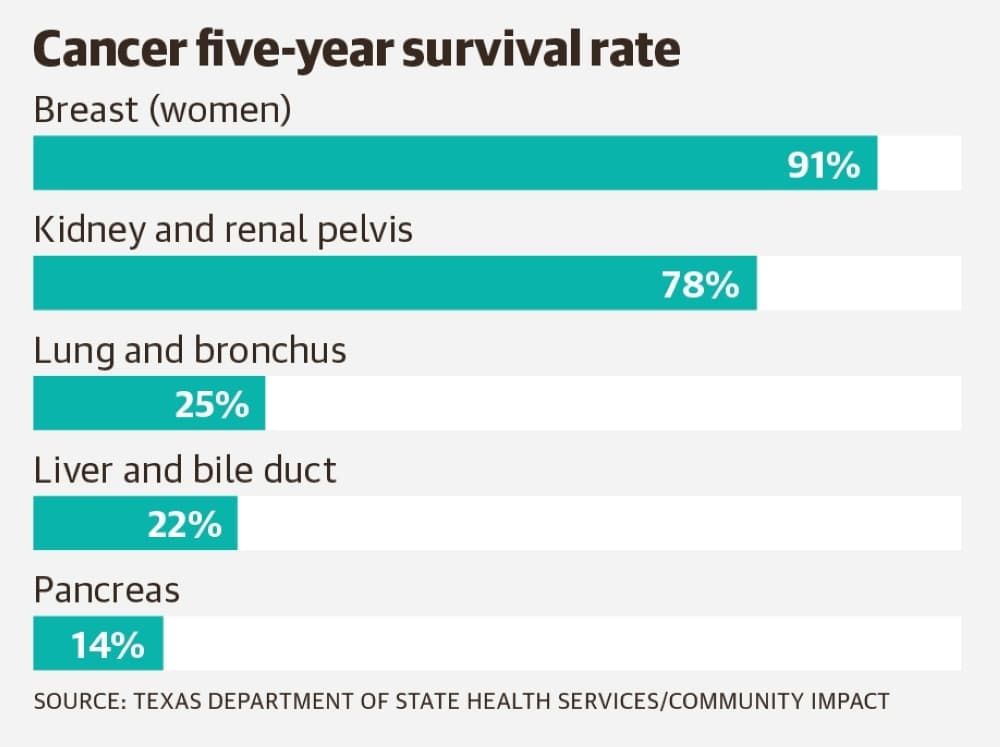
In Montgomery County, the most recent data available—from 2023—shows breast cancer incidence in Montgomery County was higher than statewide and Harris County numbers. Liver cancer, while lower, was rising by two cases per 100,000 people per year from 2018-22, the data shows.
Dr. Faraz Bishehsari, director of the gastroenterology research center at UTHealth Houston, said cancer treatment is generally moving toward patient-specific strategies.
“Our goal is to move toward a more refined form of precision medicine, one that considers not only which treatment to use, but potentially how and when to use it for each patient,“ Bishehsari said.
The impact
Early detection is key, said Jodie Tonn, a breast cancer survivor in The Woodlands.
Tonn was diagnosed at age 35 with invasive ductal carcinoma breast cancer in June 2024 and received care at both Memorial Hermann and Houston Methodist.
She started a support group in February at the Memorial Hermann-based Canopy Cancer Survivorship Center for local survivors age 45 and younger.
“Being able to talk to other young women that are going through the same thing and understand where you are in life was really important,” Tonn said.
What's being done
Cancer patients and survivors can also find local support outside of the traditional hospital setting. Canopy, which offers over 45 programs and group activities for free to cancer patients from any hospital, celebrates its 10th anniversary this summer, Program Manager Marcella Herrera said.
Due to increased patient need, Canopy has expanded its hours on Tuesdays and Wednesdays until 8 p.m., Herrera said.
“We’ve noticed cancer incidence is getting younger,” Herrera said.
Houston Methodist also offers no-cost services for its patients and families at its Health Education and Learning facility. These include various types of oncology support.
Several area organizations, including the American Cancer Society, also provide transportation for cancer patients to appointments. Tracy Guara, director of regional integrated marketing for ACS, said lack of transportation is the main reason people miss appointments.
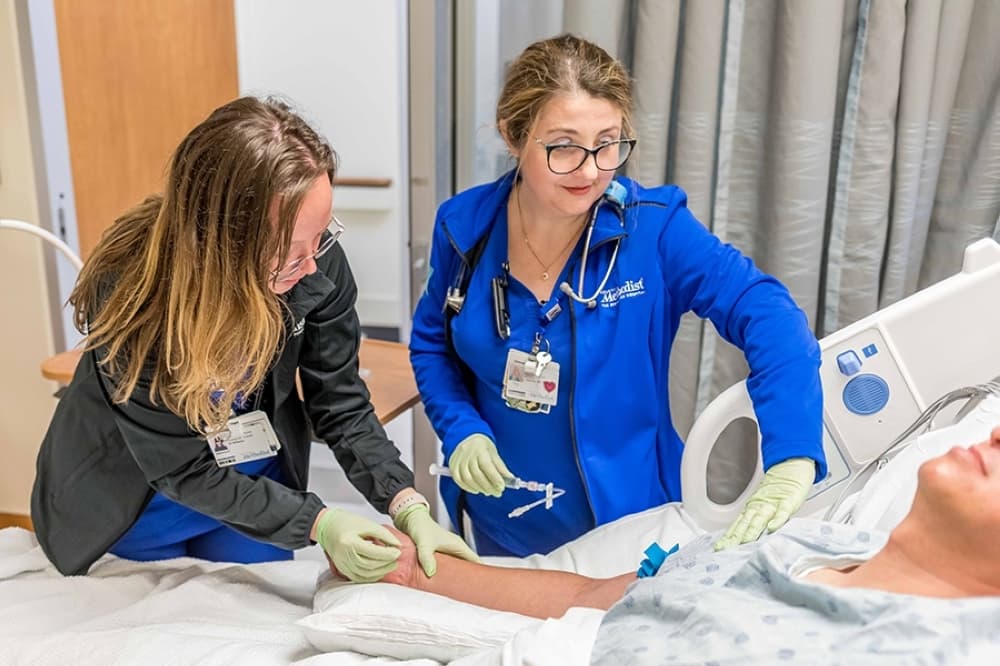
Medical-surgical nurse Tina Vaduva, right, mentors student nurse Madelynn Williams at Houston Methodist The Woodlands Hospital. (Courtesy Richard Carson/Houston Methodist/The Woodlands Hospital)
What to expect
Among local hospitals, Memorial Hermann plans to continue recruiting additional oncologists specializing in stomach, pancreas and liver cancers as those types of cancer continue to rise in The Woodlands area, Kendrick said.
Additionally, Herrera said additional counselors and a nurse navigator are being added to the staff at Canopy.
Houston Methodist has also added oncology staff recently, Guerrero said, as well as other specialists to continue to support cancer patients.
“Recent growth has included expanded subspecialty expertise in breast oncology, gastrointestinal oncology and hematology, along with additional infusion nursing support to meet rising patient demand,” she said.