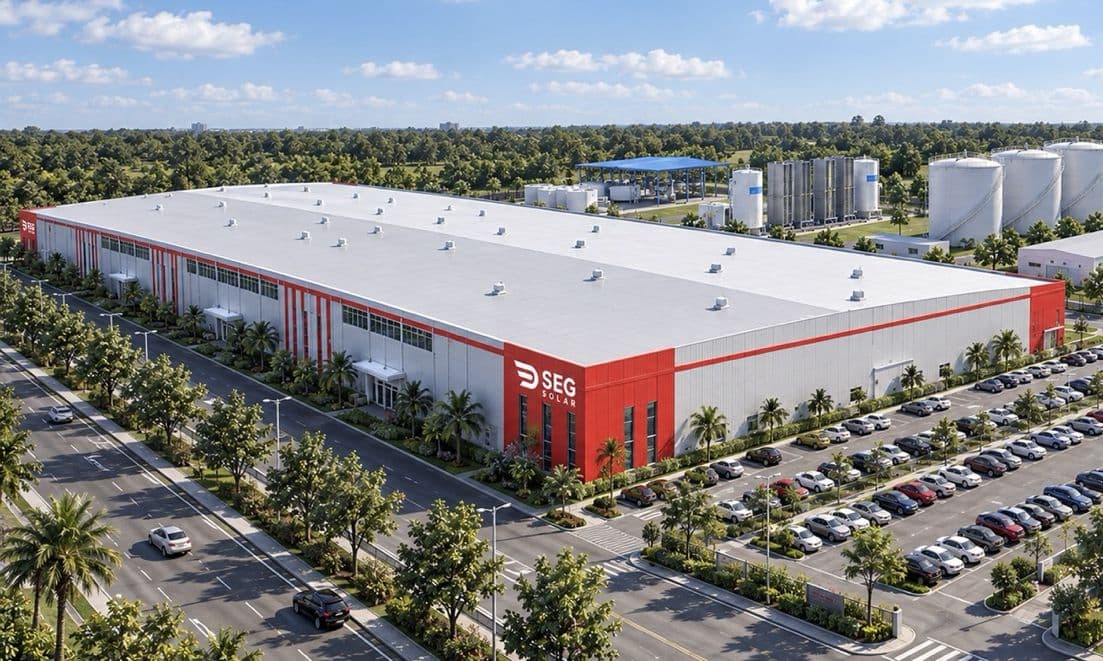
A 544,000 square-foot distribution center could be coming to Seabrook to be located north of Red Bluff Road despite strong community opposition and hours of deliberation across multiple public meetings.
The details
Nearly a dozen residents spoke in opposition to the development at Seabrook City Council’s Nov. 17 meeting before council voted 4-2 to approve a planned unit development, or PUD, that would allow Dallas-based developer Constellation Real Estate Partners to build the complex, which includes two large warehouses.
Council member Angela Cervantes voted against the PUD and council member Guy Rodgers abstained. Council member Jared Sessum was absent from the vote.
The PUD allows the developers to build a 544,000 square foot complex consisting of two warehouses on 59-acres of land located near SH 146 and north of Red Bluff Road, according to city documents.
What residents should know
Because the development borders residential neighborhoods, commercial traffic from Red Bluff Road is prohibited and regular traffic will enter and exit via the proposed Port Houston and Bayport Southern Access Road to the north.
Despite the industrial zoning, the ordinance bans the processing and storage of chemicals, petrochemicals, agricultural products and paper products and forbids rail tracks and permanent outdoor shipping containers.
Groundbreaking for the complex’s detention pond and utilities will begin in Q3 2027 and building construction will begin in Q1 2028 and the project is slated for completion by Q3 2028, according to city documents.
According to officials
Council member Summer Sanford said the complex will add up to $60 million in taxable real estate value. In addition to $500,000 in upfront impact fees, this could generate $1.35 million annually in tax revenue.
Sanford said she felt every resident deserved to be heard, though she felt the tax revenue generated by the project would help the city pay for core services and infrastructure.
“When I look at this project, the question that I think we all need to hear about is what is advantageous for the city on this ... Those kinds of questions are things that I think the citizens deserve to know, and the benefits."
Cervantes said she would vote against the project in part due to the overwhelming citizen opposition to the project and that by approving such a large scale industrial development, it could create an open door for more industrial development to come to Seabrook.
“What I'm hearing from the people is that that money year over year is zero sum compared to the decrease in quality of life and property values,” Cervantes said.
Those opposed
Many residents, who live near the proposed project site, voiced strong opposition to the distribution center’s construction.
Seabrook resident JP Byers said council should defer to the large number of residents who spoke against the development at the meeting and pointed to a petition with nearly 900 signatures.
"If I support the warehouse and I have 800 people that tell me that that's not what they want, I vote no because I didn't get elected to do what I think the people want me to do, I do what the people say they want me to do,” Byers said. “The people have spoken.
Some residents even suggested that the number of signatures garnered exceeded the number of signatures needed to trigger a recall election for City Council offices.
Shane Steiger said many of those on city council had run on campaign platforms to protect Seabrook’s coastal neighborhood character and felt the large industrial development betrayed those promises.
“If you rezone this property and build this huge warehouse, the square foot of the footprint of that warehouse is about 40% the size of the three neighborhoods it's going to affect,” Steiger said.
Other residents like Jeff Gillis said the project and its build process would negatively impact traffic for Seabrook residents.
“You will force local residents, including families with children, to share a road barely wide enough for two cars, with sharp right-angle curves and deep ditches on both sides, with heavy construction traffic,” Gillis said.
In response, the developer said that Harris County stormwater regulations require "zero net fill," meaning all soil needed to elevate building pads above the floodplain will be excavated on-site from two wet-bottom detention basins and dump trucks would not haul dirt from outside.
Quote of note
Mayor Jim Sweeney said because the land is privately owned and existing zoning allows for light industrial development, whether the PUD passed or failed, a developer could pursue commercial and industrial development potential.
“Sometimes these decisions are easy, sometimes they're not, they're difficult,” Sweeney said. “Sometimes they may be unpopular, but popularity alone shouldn't be the measure of whether a decision is the right one for the long-term future of the city."
Next steps
City Council must approve the final reading of the amendment at its Dec. 1 meeting in order for the development to move forward.