After months of standby, Harris County moved forward with a multimillion-dollar initiative to develop long lasting solar energy in low-income and underserved communities countywide.
Commissioners Court on March 19 authorized $88.3 million to fund projects for the Solar for All plan despite the Environmental Protection Agency’s attempted termination of grants associated with the program. Harris County filed a lawsuit against the EPA in October to reclaim the promised funds, and officials said a decision is expected later this year.
Precinct 3 Commissioner Tom Ramsey voted against in the 3-1 decision.
What you need to know
The March 19 vote authorized county staff to execute solar power and battery energy storage projects at approximately six to 10 locations across Harris County, which energy providers will be able to then deploy to qualifying low-income households.
The initiative aims to ease the financial burden of rising energy costs in vulnerable communities and enhance grid resilience during extreme weather events, according to county documents. County officials said exact sites are being evaluated, with a focus on locations that would "generate the most economic benefit" for participating residents.
The county expects to connect approximately 10,000 households to the clean energy sources through retail electricity providers, per the proposal. Electricity use is expected to decrease by about 20% as a result—an estimated $468 in annual savings for qualifying households.
The context
The Texas Solar for All Coalition—composed of officials from Harris County and other state municipalities—was one of 60 applicants to receive grants from the EPA in April 2024 to expand solar energy sources in vulnerable areas, Community Impact previously reported.
The coalition was awarded $249.7 million to fund projects across Houston, Dallas, Waco, San Antonio and Austin. Harris County specifically received $54 million for local energy initiatives.
The EPA awarded the Solar for All grants under the Biden-Harris administration as part of a broader $27 billion Greenhouse Gas Reduction Fund. However, the federal government ended the program in August 2025 after the new presidential administration took office, calling the grants a "massive dilution of money," per the agency’s website.
Harris County Attorney Jonathan Fombonne told commissioners March 19 he is “cautiously optimistic" about their case in the ongoing lawsuit against the the EPA, which includes the argument that the agency does not have authority to unilaterally terminate the Solar for All program. Fombonne said the federal court may not deliver a ruling until the end of the year.
Jesse Dickerman—who served as interim county administrator until March 9—said if the federal grant doesn’t come through, the county could pay off the debt with capital improvement program funds. He also said the county expects to earn revenue from the sale of generated solar energy, which could pay off upfront costs.
Ramsey, who has previously spoken against redirecting funding from other capital improvements, directed county staff to identify the specific projects that would lose funding if Harris County does not secure the grant.
More details
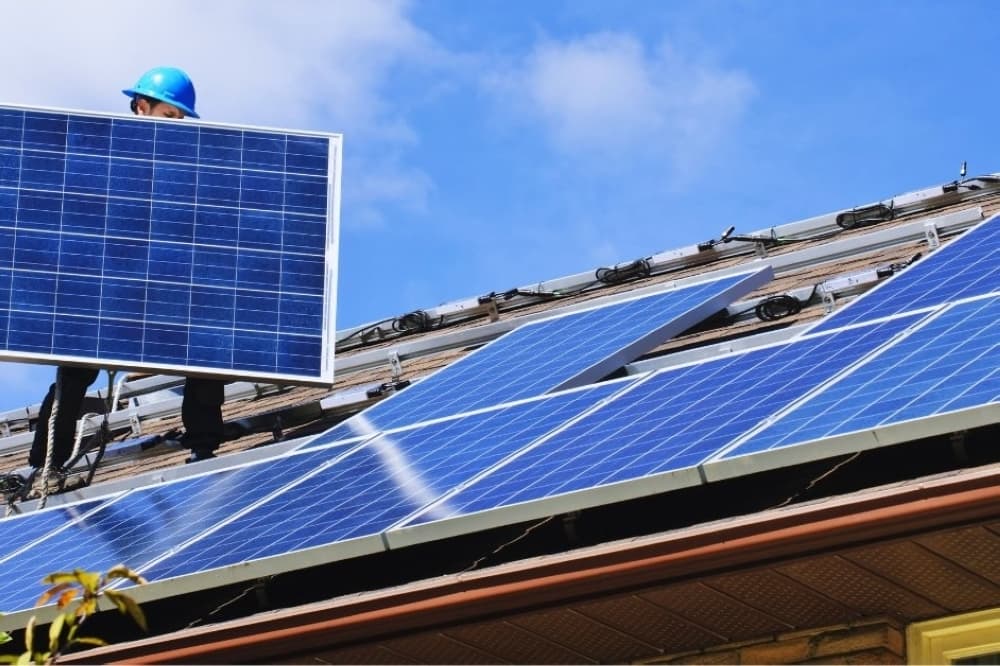
Each site will have a 2-to-5-megawatt capacity, for a total combined capacity of up to 40 megawatts of solar generation and at least 15 megawatt hours of battery energy storage, the documents state. One megawatt of energy requires anywhere from 2,000 to 5,000 solar panels.
County staff are in the process of finalizing agreements with two contractors to deliver the projects, Big Sun Solar and SunGrid Power. The program will bring short-term construction jobs to the area, as well as long-term maintenance and operations positions to oversee the 25-year life of the energy stations, according to county documents.
The $88.3 million upfront investment—plus an additional $5.6 million in commercial paper financing—comes from Harris County’s CIP fund, but officials said they anticipate reimbursement from federal tax credits and the pending EPA grant.
Federal Investment Tax Credits, sometimes called clean energy credits, incentivize local governments, businesses and homeowners to invest in clean energy sources by providing credits for projects in service by 2033. Harris County anticipates a ITC reimbursement of about 40% the total project cost—or approximately $36 million—officials said.
Looking forward
Construction must begin by July 4 for the county to qualify for the tax credits. Representatives from the contracting firms told commissioners they are well on track to meet the deadline.
Harris County plans to have all of the clean energy projects in service by summer 2030, county documents show.
“Our communities can’t wait. We’re moving forward. Solar for All has always been about delivering real, tangible benefits—lower bills, cleaner air and more reliable power for the communities that need it most,” Amy Zachmeyer, executive director of NEW Houston, said in a statement.