Plano Fire Rescue is launching a new program in July to bring blood transfusions to patients before they arrive at the hospital.
The overview
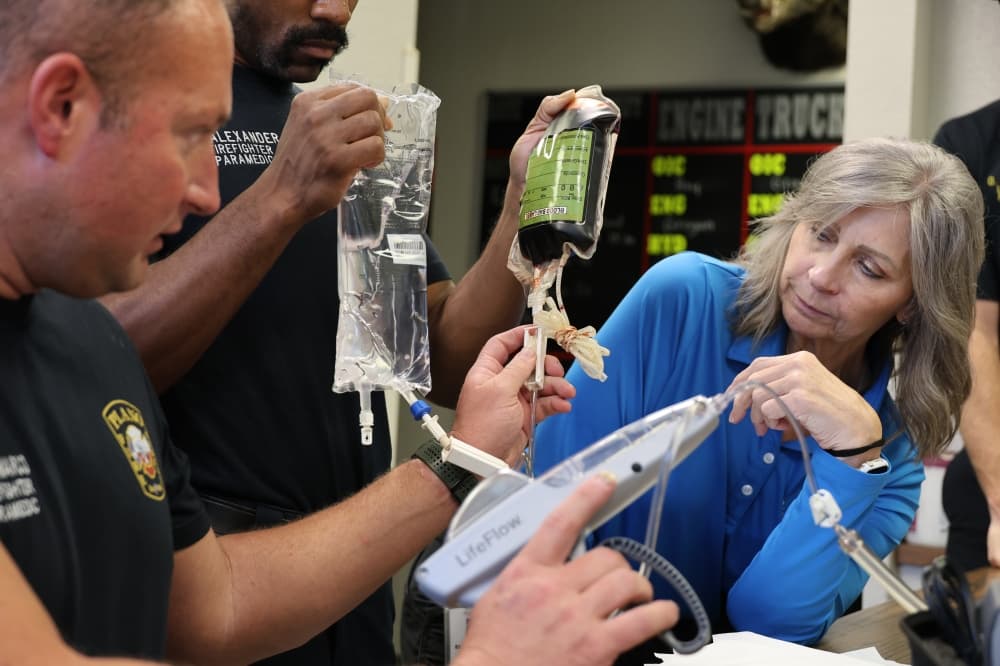
The new Whole Blood Program will allow a team of first responders to carry blood to the scene for patients experiencing blood loss to receive a pre-hospital blood transfusion.
“We are taking hospital-level care to the citizens of Plano in a new way,” Plano Fire-Rescue Medical Director Dr. Mark Gamber said.
Gamber said the program could be beneficial in situations like car wrecks or if someone has been stabbed or shot. He said patients experiencing gastrointestinal bleeding or who are pregnant could also benefit from the program.
Ryan Strutton, Plano Fire Rescue’s battalion chief of emergency medical services, said the fire rescue’s Squad One will now be equipped with a cooler to store blood. He said the team is located in the middle of Plano and can reach almost any area within city limits in around 10 minutes.
Sorting out details
Gamber said the team had to work out logistics and costs before the city could launch the program. He said blood has to stay in a temperature-controlled environment and can be expensive.
“We have the equipment capability to do something that was really difficult to do five or ten years ago,” he said.
The city is partnering with Carter BloodCare and Medical City Plano for its blood. Strutton said the blood will be used by the fire-rescue for the first half of its shelf-life and transferred to Medical City Plano in the second half of its shelf-life to be used in the operating room or emergency room.
Plano City Council also approved new user fees that will help mitigate the cost of the program at a meeting May 26. The city will be increasing its annual ambulance service fee revenue by $35,000, according to city documents. Strutton said medical insurance would typically cover the cost of the fee.
“A unit of blood is $647, and that’s the exact amount that it costs us,” he said. “The same patient would be getting [the charge] at the hospital, but it would just be much more delayed.”
The impact
A patient experiencing hemorrhagic shock is 15% more at risk of dying for every minute that passes where they are experiencing severe blood loss, Gamber said.
“On a day-to-day basis, [Plano residents] may never know about [the program],” he said. “But if they have a friend, a loved one or themselves, if they’re in a wreck, they know there’s now a program that has a better chance of saving their life.”