The Children’s Advocacy Center of Collin County, which exists to provide safety, justice and healing to victims of child abuse, has seen a a shift in where clients are seeking services and increased demand, CEO Dan Powers said.
“Over the past five years, there has been an over 60% increase in cases in the northern part of our county,” Powers said.
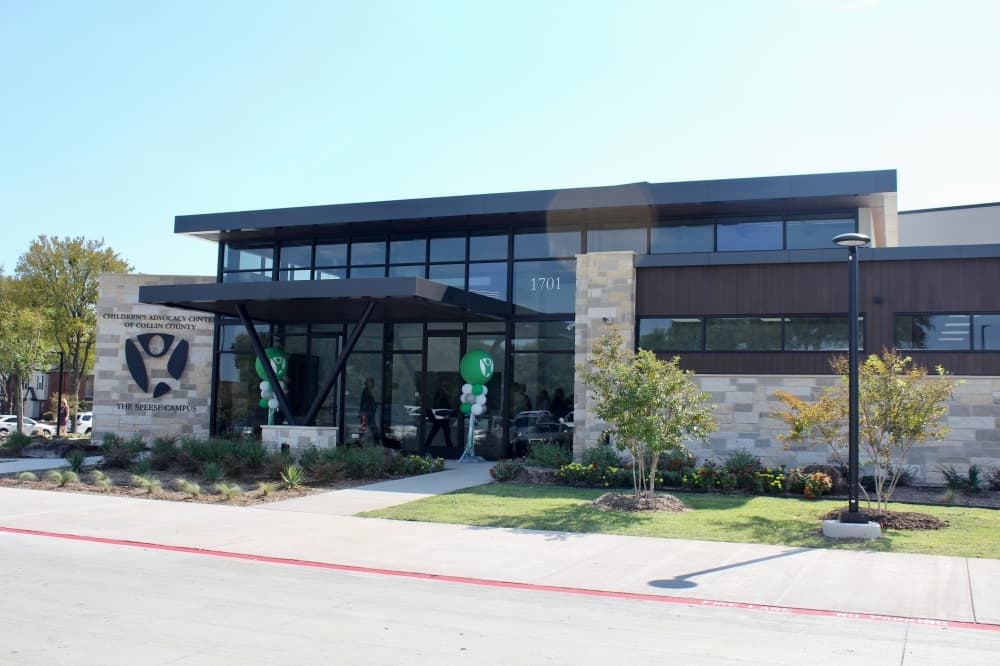
With trauma-informed staff, the organization provides forensic interviews, family advocacy programs and therapy, all at no cost to victims and their nonoffending family members. Since the organization opened the Speese Campus in 2022, its second location and first in McKinney, staff have seen a shift in where clients are seeking services.
The specifics
In 2023, the majority of all forensic interviews took place at the Plano campus, Powers said. However, as growth increases in the northern part of the county, the organization saw more clients at its McKinney campus in 2024 and 2025.
“As the county grows north, we're seeing that shift,” Powers said. “What's happening in Plano is people are staying in their homes and kids are moving away, and so we're seeing a little bit of decrease.”
The advocacy center works closely with local school districts to project area growth and predict how it can best serve the county, Powers said. Every office at the McKinney campus can fit one or two more people, he said.
“We purposely built this [facility] with growth potential,” Powers said.
What it offers
One of the first services a child receives when they come to the advocacy center is a forensic interview, during which trained staff members listen to the child’s experience and collect information that can be used during the investigation, per the organization’s website.
The advocacy center collaborates with law enforcement officers and members of Child Protective Services who watch the interview live from a separate location. This makes the reporting process more efficient and minimizes the number of times a victim has to detail their trauma, Powers said.
“When abuse happens, it doesn't just affect the body, it affects the soul,” Powers said.
The center also provides advocates who guide the child and their nonoffending family members through the reporting process and connect them with resources.
“[Abusers] often control the money or the housing or the transportation, so our family advocates are going to work with those nonoffending family members to identify elements in the community or support systems that we can provide,” Powers said.
One of these resources is the organization’s Rainbow Room, where children can get new clothing, hygiene products, shoes and any other supplies they might need in the event they need to leave their home. The advocacy center also provides free therapy to victims and nonoffending family members.
“What's really special about our program is, once a child comes to us, they are a client for the rest of their life,” Powers said.
Children process trauma in different ways at different developmental stages, so that resource is always available to them, Powers said.
By the numbers
In 2025, the Children’s Advocacy Center of Collin County:
- Served 4,504 total clients
- Facilitated 1,012 forensic interviews
- Provided 728 clients with therapeutic counseling
- Read 7,970 Department of Family and Protective Services reports
- Served 815 clients through the Rainbow Room
- Provided family advocacy services to 2,892 clients
How to help
Powers said people often wrongly assume that child abuse doesn’t happen in more affluent areas, like Collin County.
“Child abuse knows no boundaries with income,” he said. “It knows no boundaries with race.”
He emphasized the importance of parents having regular conversations with their children about abuse and signs to look out for.
“Sex offenders target kids who are vulnerable, maybe disenfranchised, maybe on the fringes,” Powers said. “It’s our responsibility as adults to watch out for those kids.”
Other ways community members can support the Children’s Advocacy Center of Collin County include donating gently used items to one of donation centers and becoming a financial partner.
To learn more or to make a donation, visit www.caccollincounty.org.
Editor's note: This article has been updated to reflect the percent increase in CACCC cases.