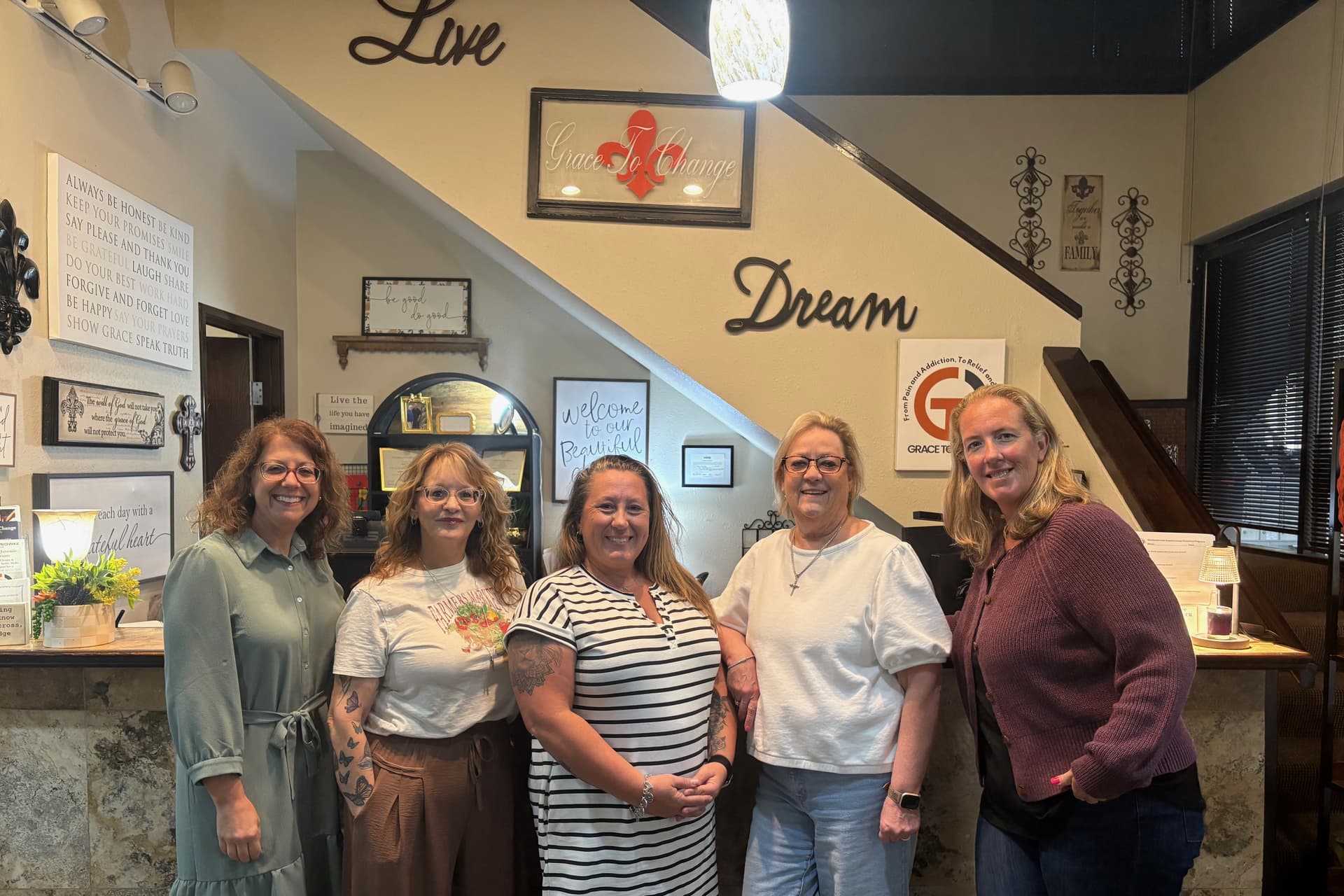
For 15 years, a McKinney-based nonprofit organization has served nearly 1,500 people recovering from addiction.
The big picture
Since its founding in 2011, Grace to Change has helped nearly 1,500 people recover from addiction through its outpatient program, officials at the nonprofit organization said. Grace to Change is one of only two nonprofit treatment centers in Collin County and the only one that serves both teens and adults, Founder and Executive Director Shannon White said.
“My tagline right now is, I say, we’re a dying breed with a growing need,” White said. “Nonprofit treatment centers don’t really exist.”
The organization aims to “break the cycle of addiction” for children and adults by “providing the tools, support and hope for a lifetime of recovery,” according to its website.
Grace to Change estimates that one in 10 adults in Collin County has a substance use disorder, Development Consultant Joy Booth said. Only 20% receive treatment and 60% also experience mental illness, according to data from Grace to Change.
“The scope is evident,” Booth said. “A lot of people think Collin County is very wealthy; Collin County doesn’t have a problem. Every community has a problem but one in 10 is not insignificant.”
Read all about it
Grace to Change operates as a licensed outpatient substance abuse treatment center that provides distinct programs for youth and adults, White said. The organization’s program is split into two parts:
- Intensive outpatient program: 18 group counseling sessions over six weeks plus four one-hour individual counseling sessions
- Supportive outpatient program: 12 group counseling sessions over six weeks plus three one-hour individual counseling sessions
Adults and children are kept separate with counseling sessions scheduled at different times of the day, White said. The supportive outpatient program is a “less-intensive” version of the intensive outpatient program, Booth said.
Clients who graduate from the program have access to the organization’s aftercare support. Aftercare support is included in the initial cost to enroll in Grace to Change’s program and graduates can access it as needed, Booth said.
“Recovery is not linear, and so people come back many times,” she said. “Relapse is part of the equation.”
The cost
Grace to Change receives funding from a variety of sources including private donors, state contracts with Child Protective Services, and funding from Collin County received through LifePath Systems.
It costs the organization about $3,000 to treat each client, White said. For patients who self-pay, the organization only charges $2,500, which is “incredibly low” compared to other treatment centers, she said.
Grace to Change makes an impact by helping people keep their jobs, stay in their homes and with their families, Booth said. The organization can help keep people out of jail and emergency rooms while building a healthy community, she said.
“You want a healthy community and you don’t want people becoming homeless because their addiction has caused a job loss,” Booth said. “Now they can’t pay their bills and they can’t live someplace stable with their families.”
White achieved sobriety in 2007 and returned to school to become a licensed chemical dependency counselor. She completed an internship with a different company where she realized her passion was in treating those who couldn’t afford treatment.
“They cost the most money and they are the sickest and the least capable of paying for it,” White said. “That’s always been my passion and we’ve carried it through.”