

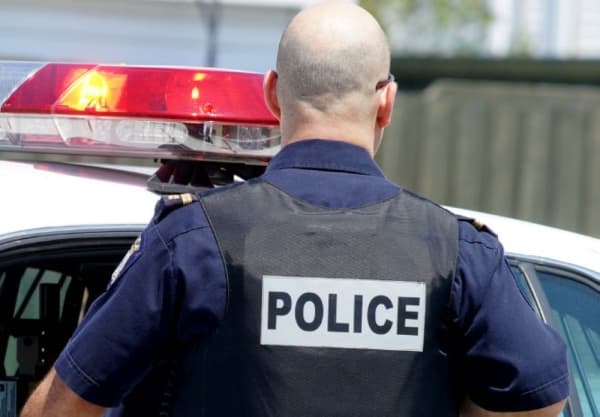
Harris County Sheriff Ed Gonzalez announced a new program Feb. 4 that allows peace officers to issue citations to individuals charged with committing a selection of low-level misdemeanor crimes instead of arresting them.
The program, known as cite-and-release, was first authorized by the Texas Legislature in 2007 and can be implemented at the discretion of individual law enforcement agencies. Under the law, a citation can be issued instead of an arrest for the following Class A and Class B misdemeanor offenses:
- possession of certain drugs, including synthetic marijuana, in an amount less than 4 ounces;
- criminal mischief with damages between $100-$750;
- graffiti with damages between $100-$2,000;
- thefts and thefts of service between $100-$750;
- having contraband while in a correctional facility; and
- driving with an invalid license (only applies if the suspect is not involved in a crash and deemed at fault).
If a suspect qualifies for cite-and-release and a deputy decides not to grant it for any reason, such as if the suspect is deemed likely to not appear in court, that deputy is required to get supervisor approval and provide a report that gives a reason for not offering cite-and-release, according to a Feb. 4 executive order distributed by Gonzalez to all HCSO personnel. The order provided a list of circumstances that would disqualify a suspect from cite-and-release, including being younger than 17, having an outstanding warrant, being on parole, not being a resident of Harris County and being deemed a safety threat.
Harris County has also had a diversion program in place for misdemeanor marijuana offenses since 2017 that allows individuals to avoid arrests and citations if they agree to take a four-hour educational class. Unlike the marijuana diversion program, suspects cited in the new program will still have to appear for a court date.