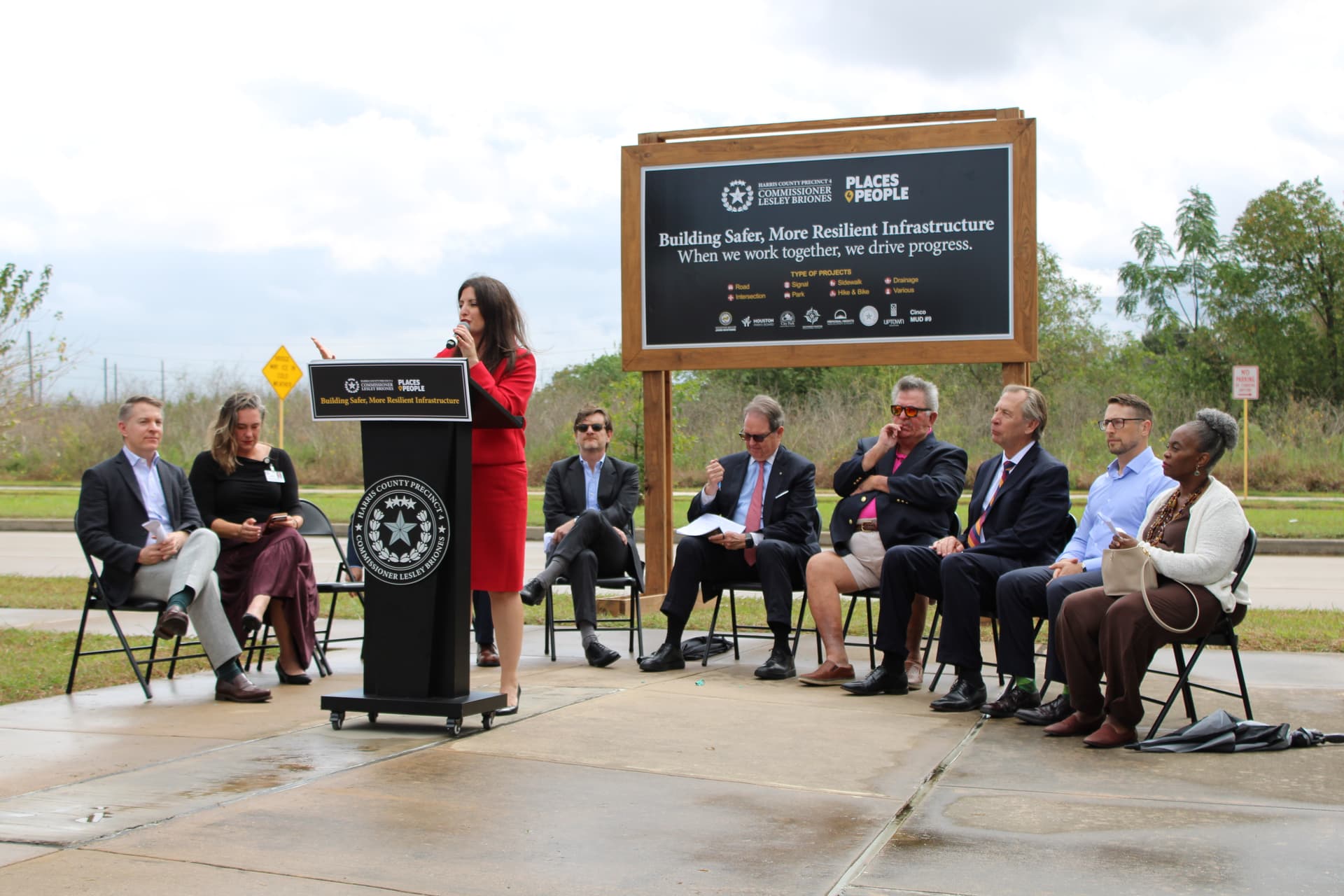
Harris County Precinct 4 is investing $80.2 million in 10 infrastructure projects, Commissioner Lesley Briones announced during an Oct. 28 press conference.
The big picture
The money is awarded through a community development grant process, Places 4 People. The initiative creates a partnership between the precinct and local organizations for community benefit projects.
These include efforts to mitigate flooding, close connectivity gaps, improve access to parks and increase public safety, according to the P4P website. The 2026 projects will benefit 525,000 residents, according to a press release.
The projects focus on infrastructure, including:
This year’s awardees range from local municipal utility districts to the nonprofit Houston Parks Board. All aim to improve safety and quality of life, Briones said.
“This is what it’s all about,” Briones said. “Coming together as a community, coming together as partners to deliver progress, to deliver results, to deliver safety.”
Zooming in
From 2024 to 2026, the initiative has invested nearly $333 million in 69 infrastructure projects, Briones said.
The projects have many partners, some of which match or contribute funding, including:
Cinco MUD No. 9
City of Houston
City Park Redevelopment Authority/TIRZ 12
Houston Parks Board
Memorial Heights Redevelopment Authority/TIRZ 5
MUD 105
Southwest Houston Redevelopment Authority/TIRZ 20
Uptown District/TIRZ 16
One project, roadway improvements along Westgreen Boulevard and West Little York Road, is expected to ease daily traffic and help Cy-Fair ISD students have an uninterrupted route to school.
Kendra Yarbrough Camarena, a Cy-Fair ISD school board member, said the extension project is a “tremendous win for our community.”
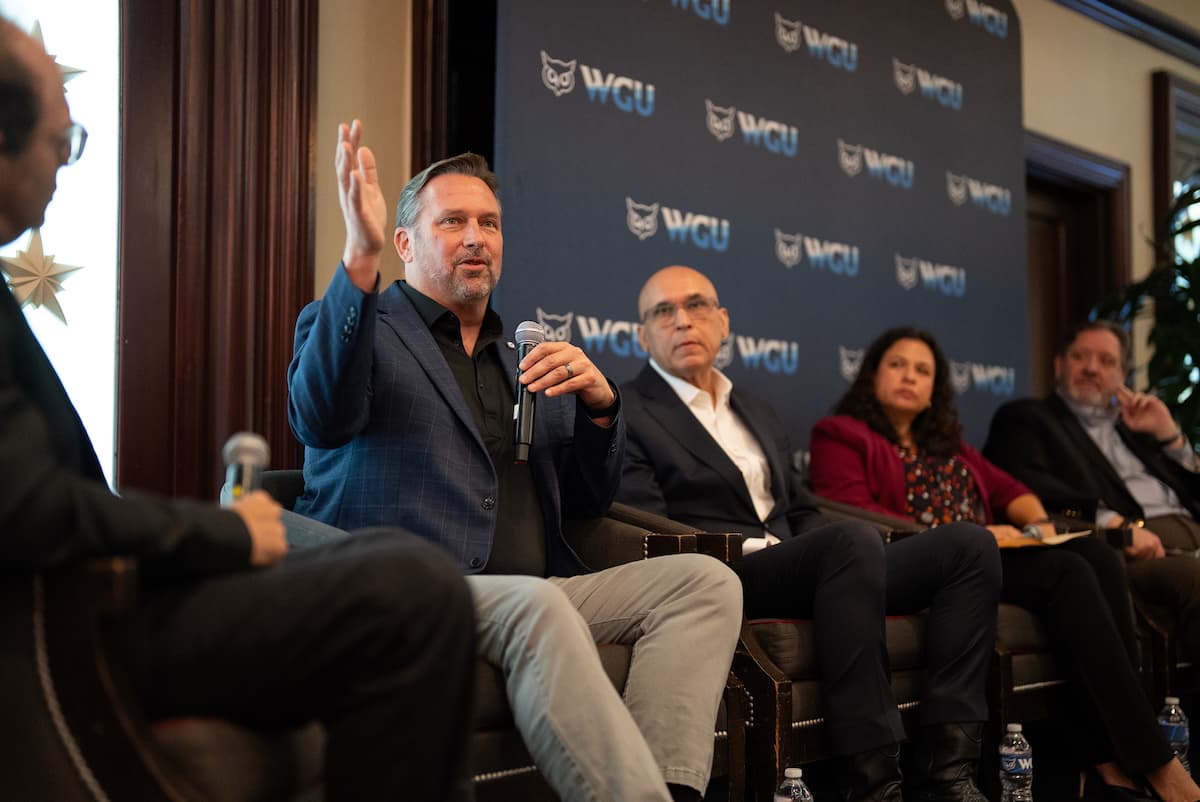
Justin Schultz, CEO of the nonprofit Houston Parks Board, said that as a county taxpayer, he believes the program is appealing because it stretches tax dollars further.
Through the P4P program, Schultz said the Houston Parks Board has worked on 16 projects over the past three years, helping to build 38 miles of trails and renovating three parks for nearly $50 million.
“It is investing public dollars and matching them with other organizations, whether those be nonprofits or governments, to help make more impact with less public dollars needed,” Schultz said. “And if that’s not good, efficient government, I don’t know what is.”