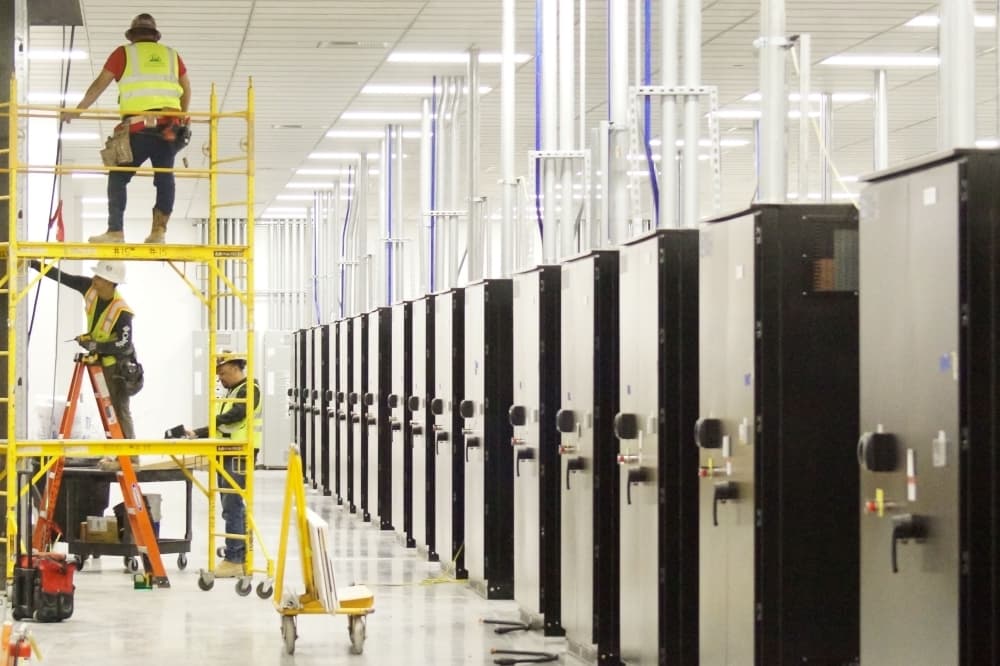
Construction workers prepare one of the server rooms inside Sabey Data Centers in Round Rock in 2024. (Grant Crawford/Community Impact)
Texas lawmakers are considering cutting a decade-old tax break for the state’s booming data center industry, although the cost of the program could continue to grow before next year’s legislative session.
The big picture
A 2013 law waived state sales taxes for certain data centers and the tax exemption took effect in 2014, allowing qualifying companies to purchase electricity, cooling systems, software and related technology infrastructure tax-free. Some data center projects also qualify for additional state or local tax breaks and grants.
Texas spends more than $1 billion annually on the exemption, and the comptroller’s office estimated in 2025 that due to the program, the state will lose about $3.2 billion in sales tax revenue over the next two years.
“I'm sure everyone on this dais can find some uses for that amount of money,” Sen. Charles Schwertner, R-Georgetown, said during a July 27 interim hearing held by the Senate Finance Committee.
And as data center developers rush to establish themselves in Texas, that cost will likely be higher, according to Brad Reynolds, the comptroller’s chief revenue estimator.
“Vastly, vastly more certifications for exemption have been granted since that last estimate was done,” Reynolds told state senators July 27. “I'm sorry that I can't give you a new estimate today, ... but based on the number of certifications granted in the last two years, I would say it's reasonable to expect significantly higher numbers.”
Between 2014 and 2020, a total of 10 data centers were approved for the exemption, Reynolds said. The state was spending as much as $15 million per year on the program, records show. Then, the state’s “explosive growth in data center development” began in 2021.
From 2021-25, 69 data centers were approved for the exemption. In 2026 alone, an additional 59 projects have been certified and officials expect to approve about 10 more exemptions per month, Reynolds said.
Once data centers are approved for the exemption, state law gives them five years to meet job creation and capital investment requirements. This means that certified projects also are not subject to state audits in their first five years—of the 138 data centers that currently qualify for the tax exemption, 20 have been audited so far, Reynolds said. Six of those projects were found to be out of compliance and will have to pay the state back for money it saved under the exemption, according to rules on the comptroller’s website.
What’s happening
The Lone Star State is home to the nation’s fastest-growing data center market, and the Data Center Coalition, which advocates for the industry, has argued that the tax break program is key to maintaining that title.
“Combined with other [policy] issues going on, I do have concerns about long term competitiveness... and what signal it may send,” said Dan Diorio, the coalition’s vice president of state policy.
Senators and members of the public who spoke at the July 27 hearing disagreed.
Sen. Donna Campbell, R-New Braunfels, said that “data centers benefit more from Texas than Texas does from data centers,” while Sen. Carol Alvarado, D-Houston, warned that the data center industry has “failed communities.”
“I have this feeling that if you want to be in Texas because of what we've built here, I think you're going to come without all these incentives, because it's the best decision for your company,” Sen. Lois Kolkhorst, R-Brenham, said.
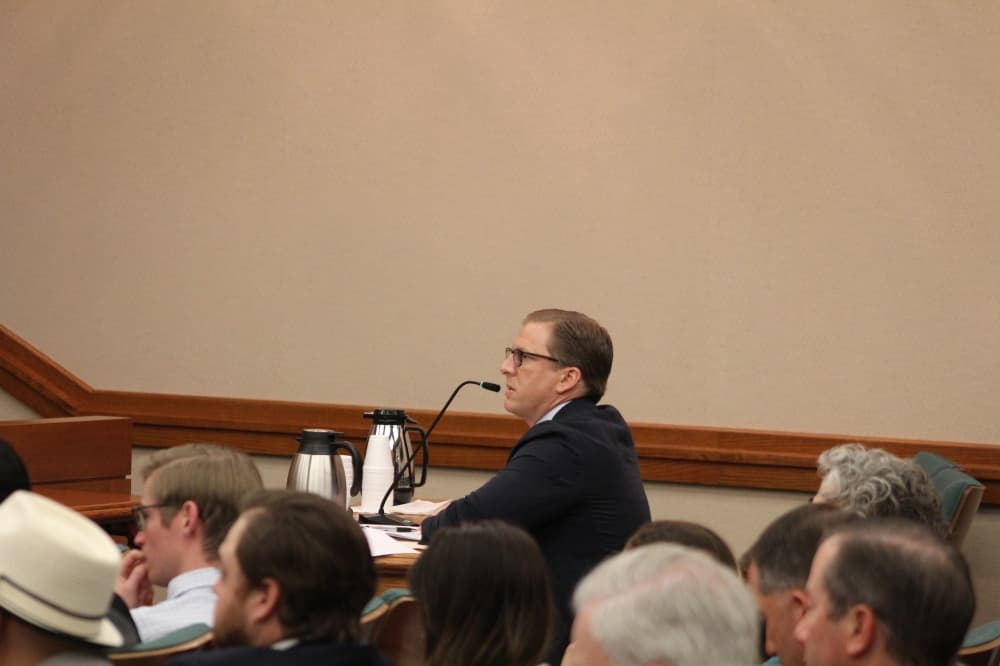
Dan Diorio, vice president of state policy for the Data Center Coalition, speaks to Texas senators during a July 27 hearing at the Texas Capitol in Austin. (Hannah Norton/Community Impact)
Amid a bipartisan push for more oversight and regulation of data centers, senators on the finance committee signaled that they intend to add more strings to the sales tax exemption program or eliminate it entirely. The next state legislative session will begin in January, and lawmakers do not have the authority to change laws in the meantime.
Sen. Joan Huffman, a Houston Republican and the Senate’s chief budget writer, said that while data centers are important, Texans are concerned about the industry’s rapid expansion and the multibillion-dollar cost of the tax exemption. That money could otherwise be spent on public education, property tax relief, water infrastructure and other key programs, she said.
“That is why I have publicly committed to filing legislation on this issue during the next legislative session. Texans expect us to protect their hard-earned tax dollars,” Huffman said. “The sales and use tax exemption was enacted in 2013, well before the explosive growth of cloud computing and artificial intelligence, and as a result, its fiscal impact has far exceeded original expectations.”
Some lawmakers, state officials and political candidates from all ends of the political spectrum have pushed for a special legislative session this year to address the tax breaks and consider increased regulations on data centers. Only the governor has the authority to convene a special session.
“I’m not trying to be political about this, but the question is whether or not we need to have a special session where all of us are focusing in on this,” Sen. Royce West, D-Dallas, said July 27.
“We do,” Kolkhorst said.
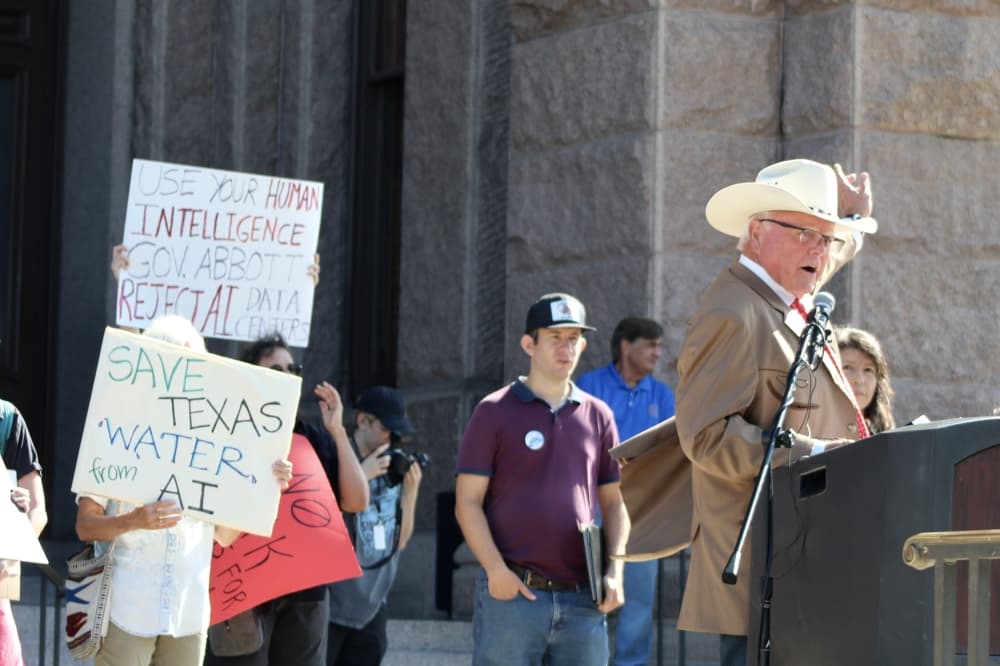
Texas Agriculture Commissioner Sid Miller, speaking at a July 27 rally outside the Texas Capitol, points to Gov. Greg Abbott's office and urges him to consider calling a special legislative session on data center regulation. (Hannah Norton/Community Impact)
Ahead of the July 27 hearing, outgoing state Agriculture Commissioner Sid Miller spoke at a rally on the Texas Capitol steps, pointing to the governor’s office behind him.
“He can hear everything we're saying, and I invite him to come down here and join us today,” Miller said. “The governor has authority to bring the legislature back tomorrow, ... so we're calling on him to do just that.”
Gov. Greg Abbott, who in late 2025 called Texas “the epicenter of AI development,” has not publicly commented on requests for a special session. However, he announced last month that, if reelected this November, he would work with the legislature to repeal the tax exemption, require data centers to pay for their own infrastructure needs and establish noise standards for data center facilities.
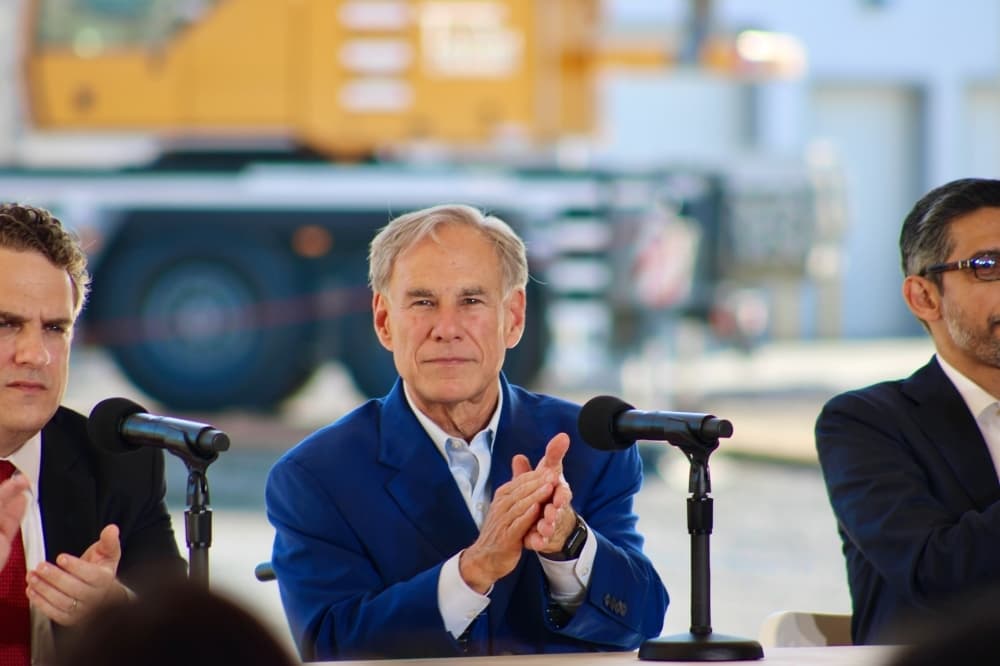
Gov. Greg Abbott is shown at Nov. 14 event in Midlothian, where Google executives detailed their plans to build new data centers in Texas. (Shelbie Hamilton/Community Impact)
More details
Public commenters and legislators criticized the data center industry for a lack of transparency and the negative impacts that data center projects can have on communities, citing concerns about light pollution, water availability and electric grid infrastructure.
“We are experiencing a severe drought in many regions of the state, yet we have data centers located and building in those areas where we don't have enough water supply for farmers, our ranchers [and] families,” said Sen. Juan Hinojosa, D-McAllen. “For example, we have data centers being established in Corpus Christi that's experiencing a significant drought. We have another one down in Raymondville where they have no water.”
Margaret Gannon, an El Paso small business owner, said irrigation allotments for farmers in her area have decreased from 36 inches per acre to five inches per acre in the past few years, expressing concerns that planned data centers would further tighten water availability.
“We have three hyperscale data centers under construction in our region,” she said. “These buildings consume enormous amounts of water and gas to make electricity and to cool the structures.”
Some speakers mentioned that while Texas is a business-friendly state, they have trouble supporting data centers, which may require hundreds of acres of land and thousands of megawatts of electricity.
“As this committee reviews these incentive programs, I respectfully encourage you to consider not only what these projects bring to Texas, but also what Texas is investing to attract them, what role communities contribute to support them, and whether those public investments are producing measurable results for the taxpayers who make them possible,” said Donna Howard, an organizer with the advocacy group Matagorda County Against Data Centers.
Testifiers also pointed to the money that Texas could save by eliminating the data center tax break. Ahead of next year’s legislative session, state leaders have directed all state agencies and public universities to reduce their budget requests for the next biennium by at least 3%. Certain education programs, social services and state pensions are exempt from the required reductions, which Abbott, Lt. Gov. Dan Patrick and House Speaker Dustin Burrows said are needed to promote fiscally conservative policies and further fund priorities like property tax relief.
In recent legislative sessions, Texas had between $24 billion and $33 billion in budget surpluses, although financial experts have warned that similar amounts of excess money will not be available in 2027.
“With that in mind, we should be thinking in terms of, how can we pay for that?” said Shannon Halbrook, a fiscal analyst with the progressive think tank Every Texan. “Ending the exemption seems to be developing into a consensus position.”
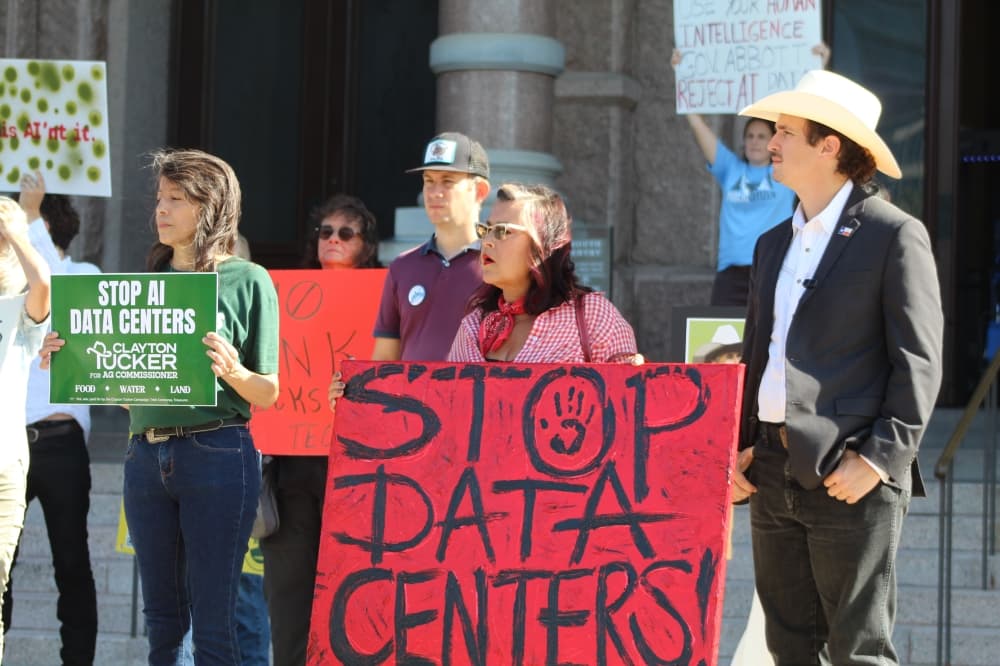
Protesters are shown at a July 27 rally for data center regulation outside the Texas Capitol in Austin. (Hannah Norton/Community Impact)