State lawmakers are considering water use impacts tied to the spread of new data center developments across Texas, and recently heard input from industry representatives and residents as they plan for next year's legislative session.
The setup
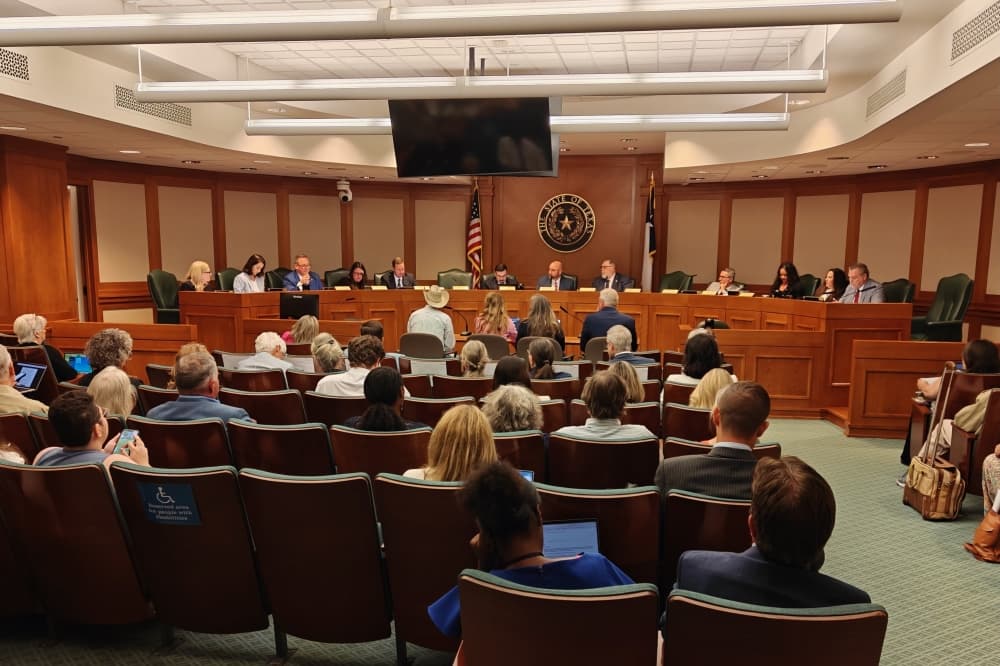
The Texas House Committee on Natural Resources, charged with exploring data center-related water issues, heard hours of invited testimony from state and local officials, data center industry members and concerned residents June 23. It was state leaders' latest data center discussion in the lead-up to the 2027 session.
Rep. Cody Harris, R-Palestine, said state officials must review the ties between the hot-button topic of data center growth and water use and conservation. He also called out "bad actors" in the industry for lacking transparency that's generated public skepticism, and for declining invites to the June hearing.
“The issue of having an explosion of potential data centers is a supply and demand response. As always, with progress and growth comes growing pains," Harris said. "Texans have long prided ourselves on our ardent defense of private property rights, and I hope we always will. But when new developers like Diode Ventures enter a residential neighborhood intent on building a new data center and refuses to do any community town halls, refuses to discuss their water and electricity uses, and refuses to testify before this committee, then Texans rightfully get upset.”
The initial review may preview some proposed state laws regarding data centers and their local impacts. Ahead of the hearing, Gov. Greg Abbott also stated his "bottom line" expectations for data centers going forward: providing their own power, reusing water and reducing electricity costs for their neighbors.
Two weeks earlier, Abbott directed state regulators to ensure data center companies do not pass infrastructure costs on to ratepayers, urging lawmakers to consider tightening regulations on data centers’ water use and repealing certain tax exemptions that benefit the industry
The details
The June committee hearing began an exploration of available information about data centers' water use.
Temple McKinnon, water supply director with the Texas Water Development Board, likened today's data center expansion to the emergence of fracking through the 2010s and said the water planning agency has been following the growing sector for years. She also told lawmakers that precise details about water impacts remain limited.
Data center companies are required to respond to a TWDB survey about their facilities and water usage, but McKinnon said few are doing so even as the industry's footprint grows. The number of surveyed data centers grew from 22 in 2023 to 341 in 2025, she said, but the vast majority—83%—didn't inform the state about their water trends last year, and about 68% failed to in 2023.
A standard nonresponse rate is about 30%, she said. Failure to answer such surveys is a misdemeanor under state water code, but McKinnon said the TWDB isn't responsible for enforcing that rule.
Based on submissions the TWDB did receive, almost all Texas data centers are purchasing their water from public systems. Surface water makes up nearly 90% of their usage, 8% was groundwater and 2% came from an unknown source, McKinnon said.
Lawmakers noted the declining response rate as something that affects both long-range state water planning as well as resident trust. Rep. Brad Buckley, R-Salado, called the survey outcome "terrible," and Harris said it's a low bar that should be fixed in the next legislative session. Rep. Trent Ashby, R-Lufkin, said Texas' reliance on the limited survey results represents a "broken system."
“When you’re talking about massive water usage, especially groundwater, and the state can’t calculate how much water is being [used], I think we can all understand why Texans are rightfully concerned about making sure that we have enough water ... to meet our future demand," he said.
Similarly limited information was also reported by Public Utility Commission of Texas officials, who said just 28 companies representing less than 100 facilities responded to a recent survey on data centers' resource use. Buckley pressed for more accurate information to inform lawmakers' future actions than the "woefully lacking" self-reports available today.
“We don’t have the fundamental data we need to make the decisions moving forward. Nor does Texas Water Development Board, nor does [the Electric Reliability Council of Texas], nor does PUC. It’s important," he said.
According to the industry
Several panelists testifying to the House committee represented the data center industry or companies that are building major projects. Many of those involved in the hearing said they were receptive to concerns about the spread of large facilities and their related impacts on Texas' natural resources, and that their facilities responded to past state surveys.
Beau Schilz, representing Amazon Web Services, said the company has operated data centers for decades and is intent on improving efficiency, transparency and community relations. He also said Amazon aims to be more upfront about its project plans in relation to water resources, and build only in places with sufficient long-term water supplies.
“Our goal is for communities to see us as responsible stewards of natural resources, like water," he said.
Ben Townsend, Google's global head of infrastructure strategy and sustainability, shared similar sentiments while outlining five corporate commitments for transparency, watershed protection, and supporting public infrastructure and water systems. Communities should also feel empowered to present water solutions wish lists to data center companies in order to earn local support, he said.
Lawmakers said they appreciated the feedback from some major players, and suggested companies should be more active in telling stories about their water use and public responsibilities.
“That might be the beginning of a really good public hearing: when you talk about transparency and what you’re offering a community, that you do and have studied the impact that you’re going to have," Rep. Ramon Romero Jr., D-Fort Worth, said.
What they're saying
Further committee testimony came from residents and local officials who've seen data centers rise in their communities, and are concerned about the facilities' drain on natural resources.
Stacey Farmer, a Cedar Creek Lake-area resident in Henderson County, said her neighborhood came "under siege" as data center plans from the company previously referenced by Harris advanced without public notice. And Lori Combs, a Wilbarger County resident, said local resources aren't sufficient for a planned data center coming to her town.
“Where will water come from after we deplete our aquifers? Our lakes, rivers, streams and wells are already drying up. Rainfall and droughts are and have been a big problem for years," she said. "These monstrosities that we don’t want are springing up too fast. There must be a ban or moratorium. Absolutely no need for one or more every 30 miles.”
Farmer suggested the Legislature could grant counties more authority to regulate development or pass data center moratoriums, require reporting from the state's heaviest water users and block large projects near residential areas. Many rural Texans also pointed to water as the state's most critical natural resource that should be protected to support businesses and agricultural activities.
“Economic growth is important to Texas’ future, but so is protecting the water resources that sustain our farms, ranches, communities and our way of life," said Orian Gaston, a Tarleton State University and cattle rancher from Navarro County.
Temple resident Laura Lanford said the rush of new facility development represents an emergency that lawmakers should address, and criticized House leaders for filling much of the June hearing with industry voices before hearing from more private citizens. The committee also accepted hundreds of pages of written testimony related to the proceedings.
Caldwell County Judge Hoppy Haden said he believes developers are targeting rural Texas counties given their limited options to control new construction. His county has been forced to enter into tax abatement deals in exchange for data center development agreements, Haden said, and he urged lawmakers to consider giving counties or state regulators the ability to cap users' water consumption.
Adam Foster with the Texas Alliance of Groundwater Districts raised similar worries. Most of the alliance's member entities had received inquiries or experienced active data center development, Foster said, but aren't getting enough accurate water data for long-term planning. Many districts are also worried about lawsuits from large companies if they attempt to challenge construction plans, he said. State representatives said enhanced legal protections or funding for those districts could be addressed at the Capitol next year.
“If we’re going to do groundwater management effectively, we’ve got to provide the means to defend themselves all the way through the judicial system," Harris said.