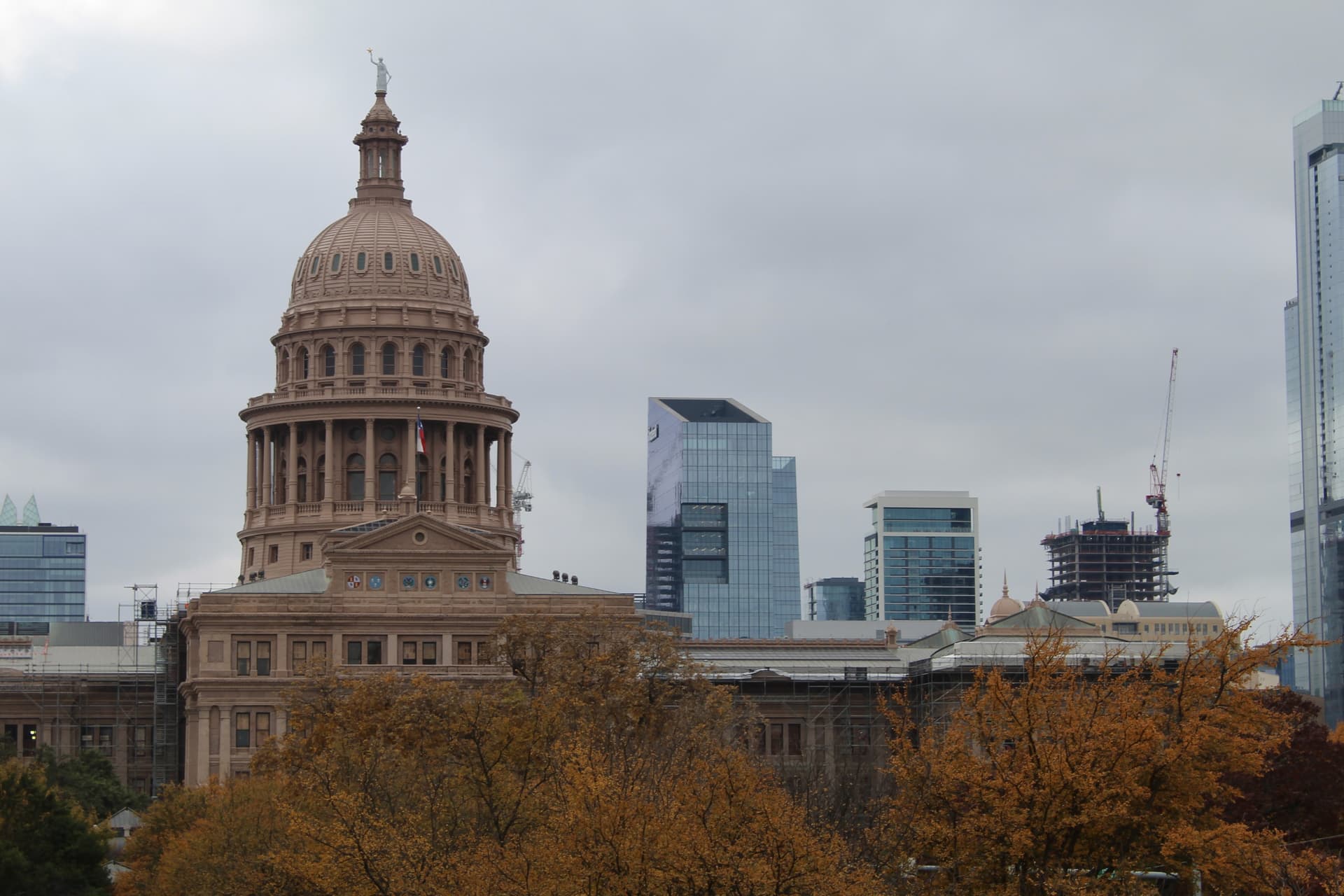
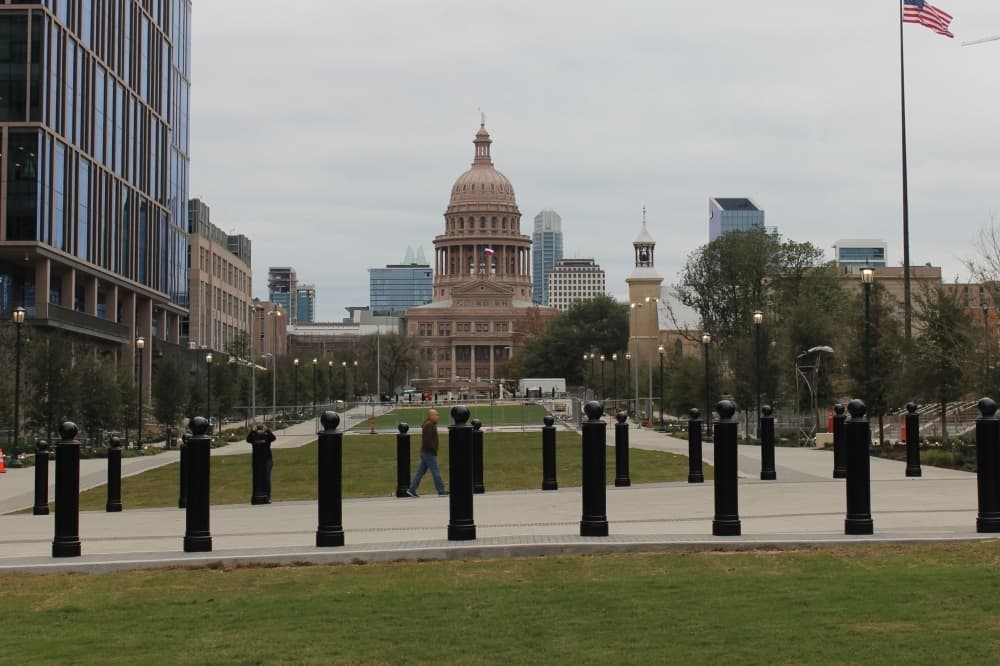
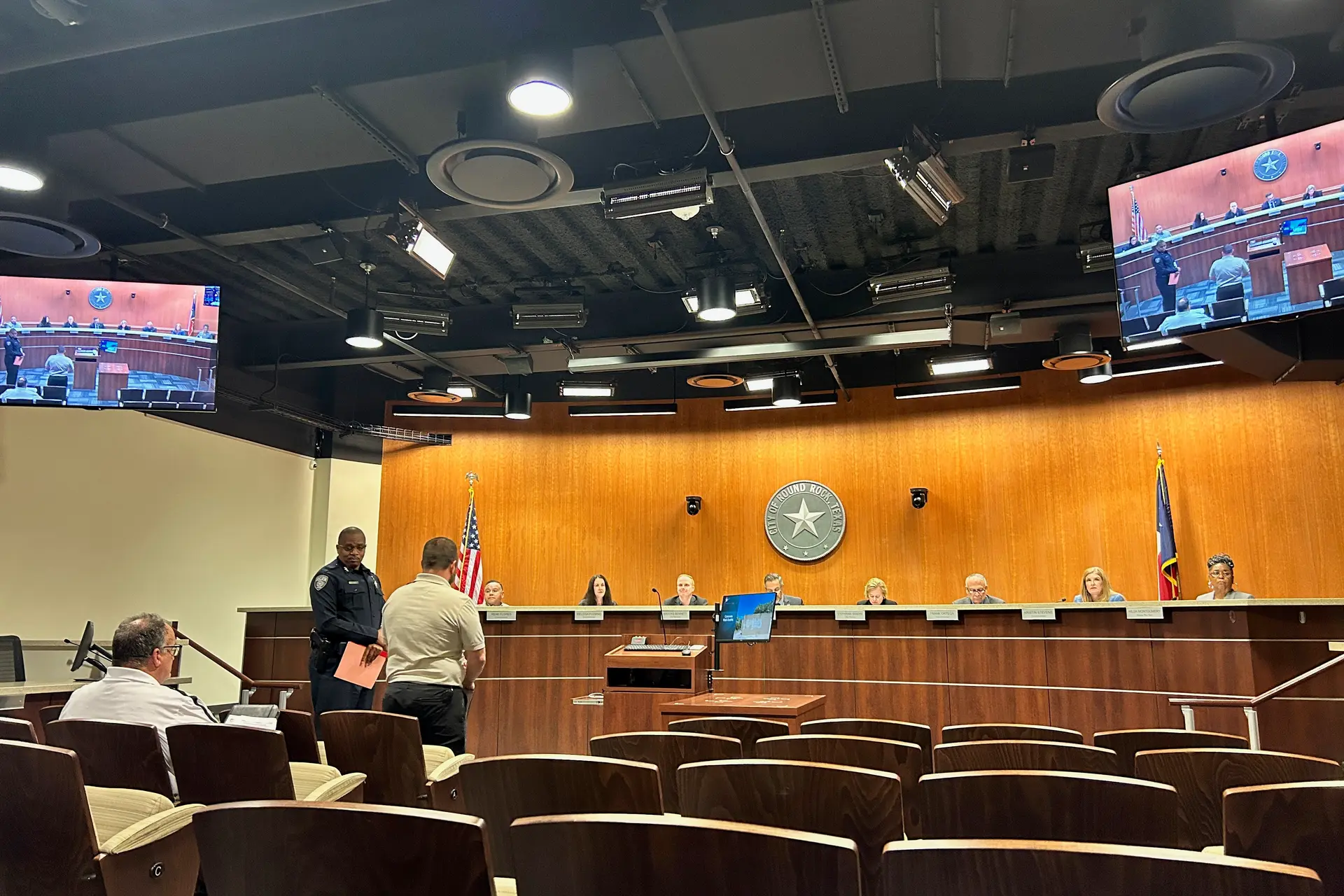
The State Board of Education, which meets in the Barbara Jordan State Office Building near the Texas Capitol, is working on a list of required readings that would roll out to public schools as soon as 2030. (Ben Thompson/Community Impact)
Editor’s note: The State Board of Education approved a mandatory reading list and new social studies curriculum standards June 26, and the new requirements will be introduced in Texas public schools in 2030. The latest information is available here.
Texas education officials gave preliminary approval June 23 to the state’s first mandatory reading list, which includes nearly 200 literary works that public school students would begin reading as soon as 2030.
At a glance
The proposed list incorporates about a dozen stories from the Bible, including the tale of David and Goliath in second grade and direct biblical excerpts beginning in fourth grade. In total, students would be required to read more than two dozen texts in early elementary grades and about 10 literary works per year from sixth grade through high school.
Members of the Republican-led State Board of Education voted 9-5 to cut several titles from the reading list June 23, setting the list up for a final vote later this week. A copy of the proposal, which does not reflect edits made on June 23, is available here.
A day earlier, Texans spoke to the board about the proposed list for nearly eight hours, with speakers on multiple sides of the issue urging board members to allow schools to “teach the truth.” How speakers and board members interpreted that phrase, however, varied.
More than half of those who testified June 22 asked the board to shorten the list, include more diverse authors and remove religious references. Others praised the SBOE for creating a list that they said would teach students about “American exceptionalism” and prioritize classical literature.
If the book list is approved, it would be the first example in recent history of Texas leaders requiring religious readings in public schools, Community Impact previously reported.
“We are bringing the Bible back into schools this week for the first time in [decades],” SBOE member Brandon Hall, R-Aledo, said June 22.
Looking ahead
The SBOE is also rewriting the state’s social studies curriculum during this week’s meeting, with final votes on both topics scheduled for June 26.
The new requirements are slated to take effect in the 2030-31 school year, although board members were discussing options for a phased rollout during the June 23 meeting. State officials said implementing the changes across multiple school years would better support teachers and provide a chronological education for students; a decision had not been made as of press time.
Zooming in
The education board is required to create a K-12 reading list under House Bill 1605, a 2023 state law that also directed the Texas Education Agency to develop state-owned textbooks. The SBOE approved those textbooks, known as Bluebonnet Learning, in late 2024, and the state is currently working to correct roughly 4,200 errors in the materials, Community Impact previously reported.
State law directs the SBOE to select “at least one literary work” to be taught in each grade level, although the board’s proposal far exceeds that requirement.
During public testimony June 22, teachers expressed concerns that they would not have time to cover dozens of required readings within a school year while giving students the option to self-select books for independent reading time.
“The list will eat up weeks of valuable instructional time, ranging from 77 to 142% of the year, ... which is simply a mathematical bridge too far to cross,” said Diane Miller with the Texas Council of Teachers of English Language Arts.
Many testifiers also said the proposed list did not include perspectives that represent Texas’ diverse student population, noting that the list has works from few female, Hispanic or Asian authors. During the 2024-25 school year, about 54% of Texas public school students were Hispanic, 24% were white, 13% were Black, 6% were Asian and 3% were multiracial, according to Texas Education Agency data.
“If we don't see Hispanic or African American authors in the literary works, I think that is really sad because those kids would not be able to see themselves represented in that curriculum,” state Rep. Salman Bhojani, D-Euless, told the board June 22.
Religious leaders and scholars warned that portions of the reading list could foster antisemitism in schools. In eighth grade, students would be required to read Lamentations 3, a religious text that details “the destruction of Jerusalem as God's punishment for the Israelites” alongside "Night," a Holocaust memoir by Elie Wiesel.
“This invites eighth graders to consider whether the Holocaust was God's punishment for the Jews,” Houston Rabbi David Segal said. “I assume this poor choice comes from ignorance, not ill intent, but either way, it’s unacceptable.”
Rabbi Joshua Fixler with the Texas Religious Action Center of Reform Judaism told the board that a focus on Christian viewpoints and Christian versions of multifaith texts “is absolutely going to contribute to antisemitism by making Jewish students and non-Christian students feel out of place, feel uncomfortable, feel like they're not welcome in their own schools.”
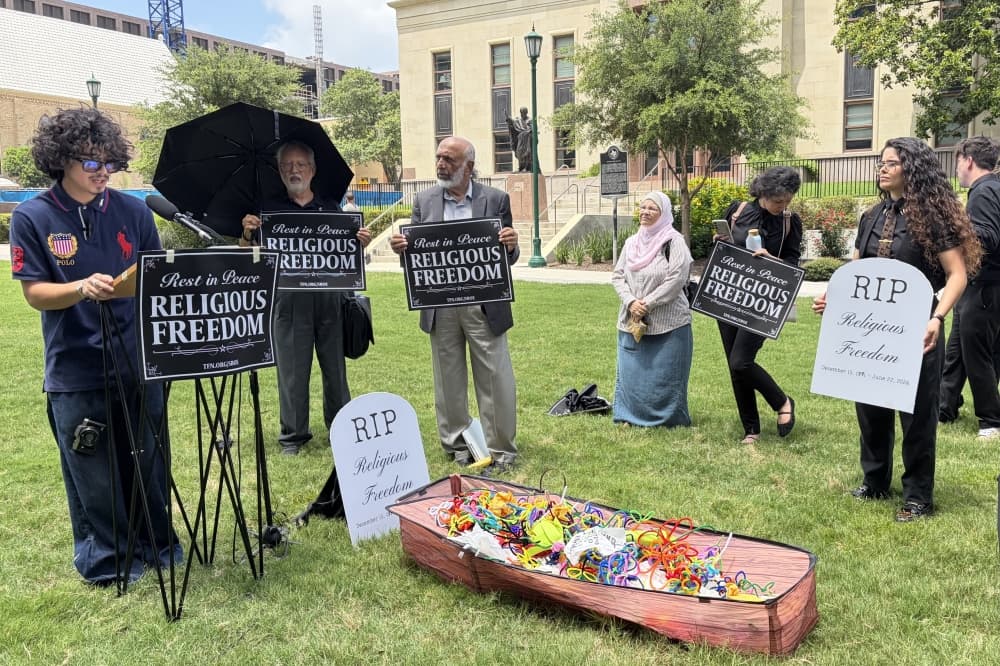
Protesters hold an Austin rally highlighting their concerns about biblical texts in a proposed reading list and social studies curriculum rewrite being considered by the State Board of Education on June 22. (Hannah Norton/Community Impact)
Another perspective
Some testifiers and Republican board members argued that the list includes biblical texts to help students understand the nation’s Judeo-Christian history.
“We are not educating children of the world—we're educating children in Texas,” SBOE member Julie Pickren, R-Pearland, said June 22. “The Texas Constitution says that the whole purpose of a public and free education is for a diffusion of knowledge to preserve our liberties and our freedoms, ... so we need to educate the next generation of Texans in a way that preserves our God-given freedoms.”
Rick Green, a former state lawmaker and founder of the conservative Patriot Academy, urged the board to approve a book list later this week that will “raise up a generation of patriots in this country that understand good versus evil.”
“The vast majority of our founding fathers were Christians,” Hall said June 22. “America and Texas have been a Christian nation and a Christian state forever, and the proportion of the impact [Christianity] had is why that’s included. Of course, there are other faiths that are represented, but they've had a minimal impact in our founding and our culture and laws leading up to this point.”
The proposed reading list does not include works from religious traditions other than Christianity and Judaism.
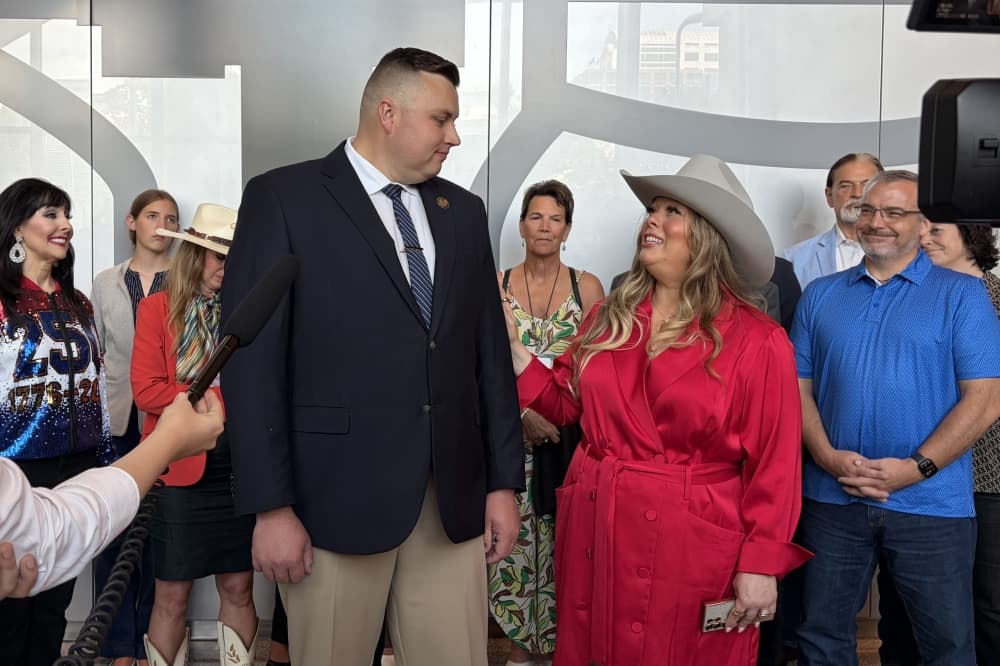
State Board of Education members Brandon Hall, R-Aledo, and Julie Pickren, R-Pearland, speak to reporters about the board's work on a reading list and new social studies standards June 22 in Austin. (Hannah Norton/Community Impact)