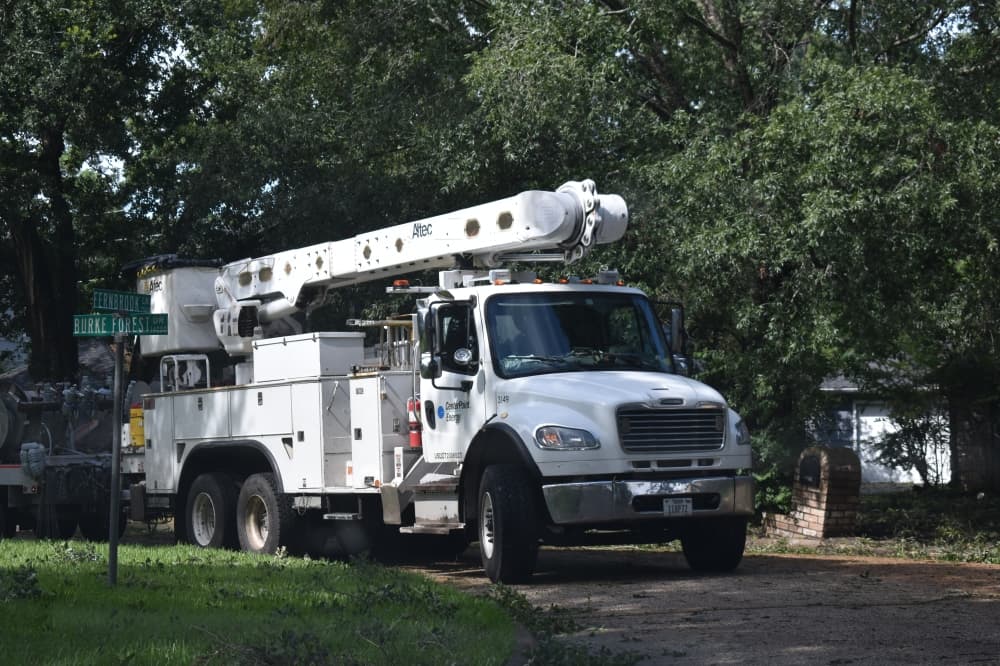
Approximately 85% of electric customers in Texas can choose their retail electric provider, including those across the Houston and Dallas-Fort Worth regions. (Vanessa Holt/Community Impact)
The Electric Reliability Council of Texas operates the state power grid, overseeing the flow of electricity to over 27 million customers. Yet ERCOT does not directly participate in Texas’ electric market or own any of the facilities that deliver power across the state.
Here’s how the Texas grid works and what residents should know about the entities involved in getting power to households and businesses.
The big picture
Frequently compared to an air traffic controller, ERCOT is tasked with ensuring the grid remains reliable by monitoring grid activities, ensuring supply and demand are balanced, guiding the system through grid emergencies, and facilitating a competitive retail electric market.
Power generation plants, transmission facilities and distribution lines are owned by outside companies, meaning local power outages are typically isolated and handled by individual companies, rather than ERCOT.
This differs from Winter Storm Uri, the 2021 freeze that knocked out power and water for millions of Texans, killing nearly 250 people. At the time, power plants froze, and ERCOT declared a grid emergency and mandated rotating blackouts, which officials said were required to avoid system-wide damages.
Texans last experienced a grid emergency in September 2023, when electric reserves dropped during a record heat wave, Community Impact reported, although rotating outages were not required.
How it works
In 1999, Texas legislators passed a law deregulating the state’s retail electric market. The law was designed to “introduce competition in Texas’ electric market by allowing consumers to choose their retail electric provider,” according to ERCOT.
Previously, most Texas utility companies owned all aspects of the electric supply chain, including generation, transmission and the delivery of power to customers. This generally allowed for monopolies, according to ERCOT, whereas the 1999 law “separated the generation, delivery and retail functions of investor-owned utilities.”
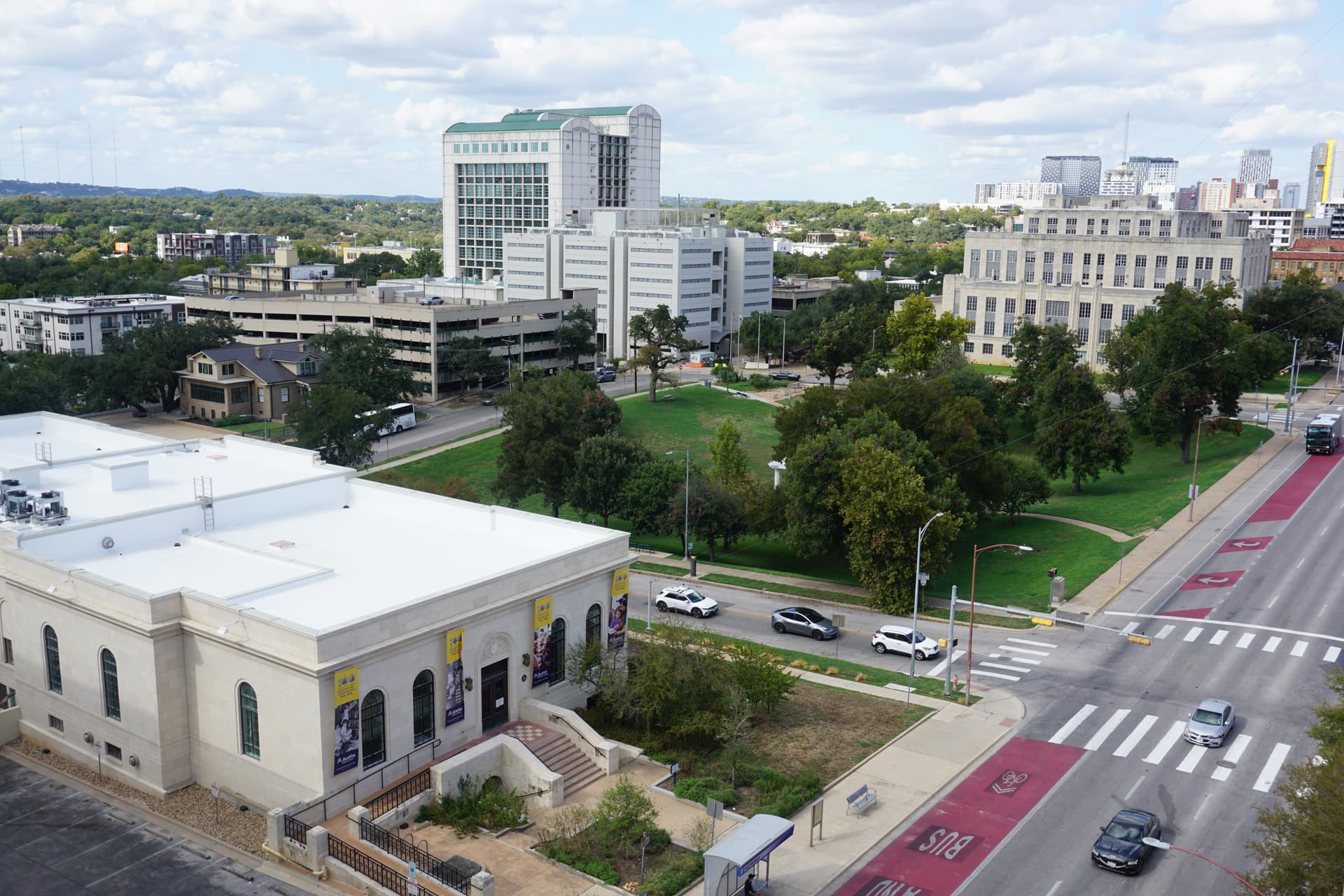
Approximately 85% of electric customers in Texas can choose their retail electric provider, including those across the Houston and Dallas-Fort Worth regions. Customers in Austin and San Antonio get their electricity from municipally owned utilities—Austin Energy and CPS Energy, respectively—and do not have the option to choose an alternate provider.
Many smaller communities are also served by single-option municipally owned utilities or electric cooperatives, according to ERCOT.
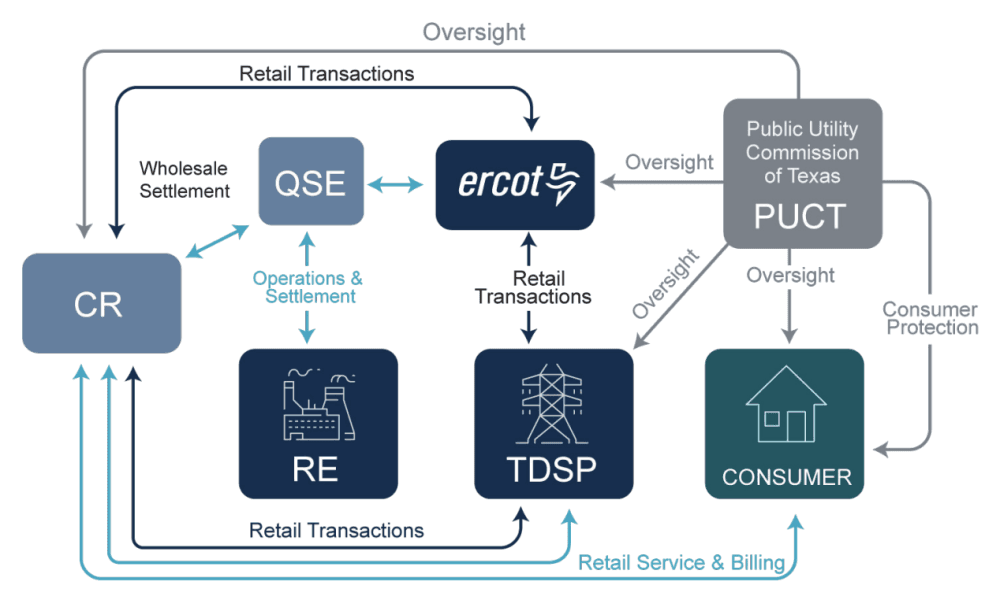
Texas legislators passed a law introducing competition in the state's retail electric market in 1999, although utility companies in Austin, San Antonio and some small communities did not opt in. (Courtesy Electric Reliability Council of Texas)
The types of entities serving the ERCOT system include:
CR (competitive retailers): Also known as retail electric providers, these entities purchase wholesale electricity and compete for customers by offering varying plans. They also work with transmission and distribution companies to deliver electricity to residents and businesses.
QSE (qualified scheduling entities): These market participants negotiate bids and offers among power generators, energy storage operators and retail electric providers.
RE (resource entities): These entities own or control power assets, including power plants, wind farms, solar facilities and battery storage centers.
TDSP (transmission and distribution service providers): These utility companies own and maintain physical power lines, poles and meters.
More information about Texas' retail electric market is available here.