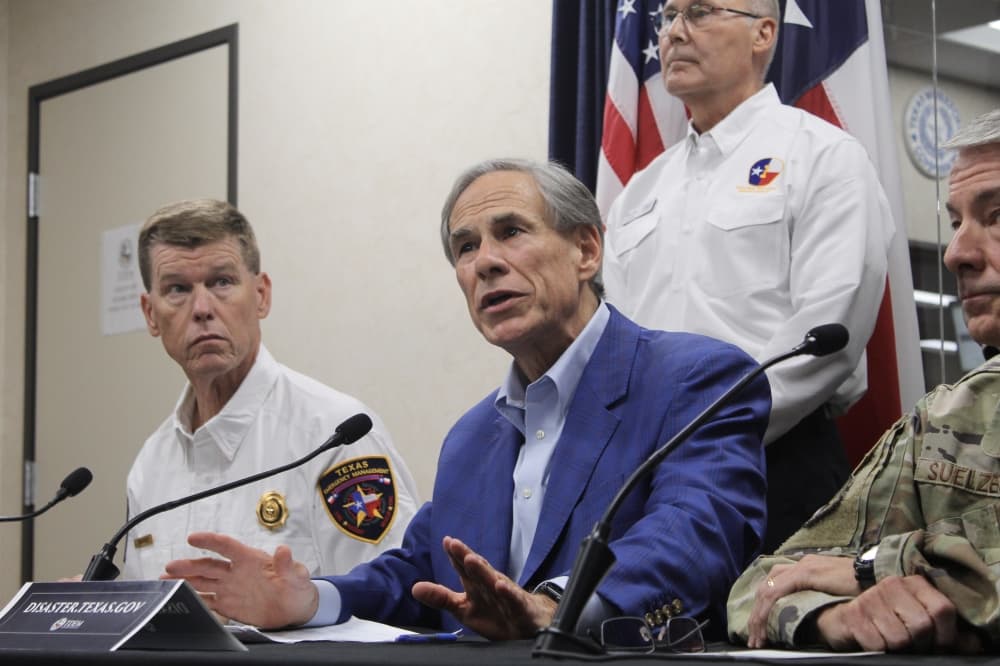
Gov. Greg Abbott outlines the state's preparation for and response to heavy rainfall, which has caused flash flooding in portions of South and Central Texas, during a news conference at the State Operations Center in Austin July 15. (Hannah Norton/Community Impact)
Updated 8:45 p.m. July 16
After a day of intense storms, top state officials urged residents to remain vigilant as another round of flash flooding could hit parts of South-Central Texas late July 16 or on July 17.
"We are not out of this scenario yet," Texas Division of Emergency Management Chief Nim Kidd said. "Meteorologists from the National Weather Service tell us an additional 10-15 inches of rain is possible over already wet areas and new areas north and west of Kerrville."
What you need to know
Officials said that about 2,350 state emergency responders have been deployed to flooded areas, rescuing more than 230 people. At least two people have died: A man near Comfort was swept away in his RV and another man was swept away by floodwaters while driving near Uvalde, Gov. Greg Abbott said July 16.
The governor emphasized the importance of residents staying home and avoiding flooded roadways, as is it not always possible to tell how deep water is on the road.
"Texans can be diligent over the next 24 hours to make sure we avoid rising water or heading into water on roadways," Abbott said. "If we can do that, we'll make it through this episode with nobody else losing their life."
More details
Last July, more than 130 people died as a result of extreme flooding in Central Texas, including 119 deaths in Kerr County. After the floods, state legislators approved new laws aimed at removing summer camps from floodplains, boosting emergency preparedness at camps and installing warning sirens in flood-prone areas.
Abbott told reporters July 16 that last year's floods were a "warning" that led to a more aggressive response from state agencies and first responders ahead of this week's storms.
"What happened last year was a warning to people on or near rivers, as well as to communities around those rivers [and] to the state, that no one can be complacent when rain falls and waters rise," he said. "We all have a sense of urgency with the rise in water."
He said that before this week's storms hit, state game wardens evacuated more than 80 people from campgrounds near rivers in South-Central Texas.
Ahead of Texas' 90th legislative session, which begins in January, state leaders and lawmakers will review lessons learned from recent floods to determine if additional disaster-related legislation is needed, Abbott said.
"We will take experiences gained from this flooding event and evaluate if further laws are needed or if existing laws need to be recalibrated," he said.
One more thing
Abbott said that response efforts and "protecting life" remains the state's top priority this week. He encouraged Texans who need storm resources or want to help their neighbors to visit the following websites:
disaster.texas.gov for emergency management resources, information about shelters and flood safety tips
damage.tdem.texas.gov to report storm- or flood-related damages to their homes or businesses
rebuildtx.org to make monetary donations to flood recovery efforts
Updated 6:12 p.m. July 16
In his second severe weather update in 24 hours, Gov. Greg Abbott warned that Texans should expect "very heavy rain" and potentially "life-threatening catastrophic flooding" in several areas of the state on the evening of July 16:
The Edwards Plateau in Central Texas
The Permian Basin in West Texas
The Concho Valley in West Texas
The Trans-Pecos region in Far West Texas
Fifty-nine counties remain under a flood watch, the governor told reporters at the State Operations Center in Austin. As of 6:08 p.m. July 16, all or parts of 13 counties in the region were under a flash flood warning, which means that a "sudden, violent flood" is imminent or already occurring, according to the National Weather Service.
Updated 5:45 p.m. July 16
Severe flooding in South-Central Texas has resulted in at least two deaths, Gov. Greg Abbott told reporters July 16. The confirmed fatalities include a man near Comfort whose RV was swept away by floodwaters and a man in Uvalde who was swept away in his vehicle.
As of 3 p.m. July 16, game wardens with the Texas Parks and Wildlife Department had rescued 147 people from flooded homes and vehicles across the region and evacuated another 83 people, according to a news release.
Updated 1:15 p.m. July 16
At least one person has died due to flooding in the Texas Hill Country, Gov. Greg Abbott said July 16.
The fatality occurred along the Guadalupe River between Kerrville and Comfort—downstream from Hunt, where many summer camps are located and the majority of the flooding took place in July 2025. Flooding this year has been more intense downstream than upstream, Abbott said.
"I am informed that the loss of life is not a camper," Abbott said at an unrelated news conference July 16, adding that officials were working to confirm more details about the person.
Zooming in
More than 70 people have been rescued from floodwaters, and evacuation orders have been issued in multiple parts of South-Central Texas, the governor said.
"We have massive flooding in ... the Greater Kerrville area, but we also are looking at what's been taking place in Uvalde—there are massive challenges in Uvalde as well," Abbott told reporters. "In fact, people need to expect very meaningful flooding in the Rio Grande [Valley]."
Abbott said he plans to travel over the next 24 hours to all regions of the state that have been impacted by this week's flooding.
"We have two messages for people in the flooded areas: The state is providing all available resources to make sure that they will be taken care of," Abbott said, noting that helicopters and drones are being used to find people who may be stranded. "They will be rescued; they will be made safe. ... Second, they need to do everything themselves to not put their lives at risk. In all of these areas that we're talking about, there's higher ground that people can go to."
More context
In Comfort, the Guadalupe River rose to 37.05 feet around 8:05 a.m. July 16, federal river gauges in the area showed.
"The river gauge at Center Point has risen 32 feet in 4 hours and is expected to reach a crest similar to July 4, 2025 catastrophic river flood," National Weather Service officials said in a flash flood alert earlier that morning.
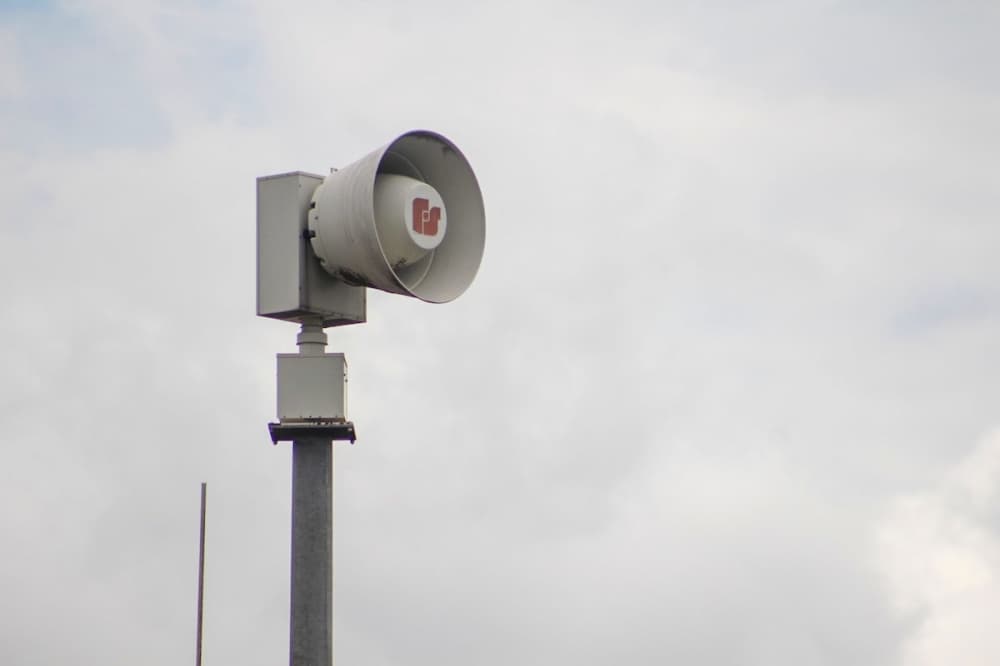
As required by state law, at least six flood warning sirens have been installed along the Guadalupe River in Kerr County. Abbott said all sirens in the area went off this morning, although one was delayed by about 5-10 minutes. The sirens that have been installed so far are located upstream of Kerrville, according to the Upper Guadalupe River Authority.
Comal, Guadalupe, Kendall, Travis and other Central Texas counties are also working on installing flood sirens with state grants, Community Impact previously reported.
Updated 8:05 p.m. July 15
Parts of Texas could see more than 30 inches of rain during this week's storms, Gov. Greg Abbott said July 15.
This exceeds the roughly 20 inches of rainfall that caused catastrophic, deadly flooding in Central Texas last July. At the time, gauges along the Guadalupe River in Kerrville showed the river rising over 30 feet in 90 minutes. More than 130 people died due to flooding on July 4-5, 2025.
This storm will be different, Abbott told reporters, citing the state's preparedness for the ongoing severe weather and differing landscapes in the areas expected to receive the most rain.
"We're better prepared than we have ever been to deal with weather events in general, but rainfall events and flooding events in particular," Abbott said at the State Operations Center in Austin. "Fortunately, there have been no lives lost, and we want to continue to achieve that."
The governor also pointed to flood sirens that were recently placed along the Guadalupe River in Kerrville, where at least 119 people died in last summer's floods. Several other Central Texas counties—including Comal, Guadalupe, Kendall and Travis—have received or are seeking state grants for flood warning systems, according to previous Community Impact reporting. Thirty counties are required to install the sirens with state support under a 2025 law.
Comal County Commissioners unanimously approved a resolution accepting up to $1.25 million in funding from the Texas Water Development Board to bolster floodwater infrastructure and warning systems. (Amira Van Leeuwen/Community Impact)
What's happening
More than 75 people have been rescued from this week's floods, with no reported fatalities, Abbott said. To prevent deaths, state officials urged Texans to pay attention to local weather alerts, be aware of their surroundings and do not drive if they see water on the road.
"I've had family members today that were driving to work on on roads and in construction areas where the water on those roads completely surrounded them," Texas Division of Emergency Management Chief Nim Kidd told reporters. "They were not driving through water when they started. If you do not have to be out on the Texas roads right now in this impacted area, do your best to stay home and work from home."
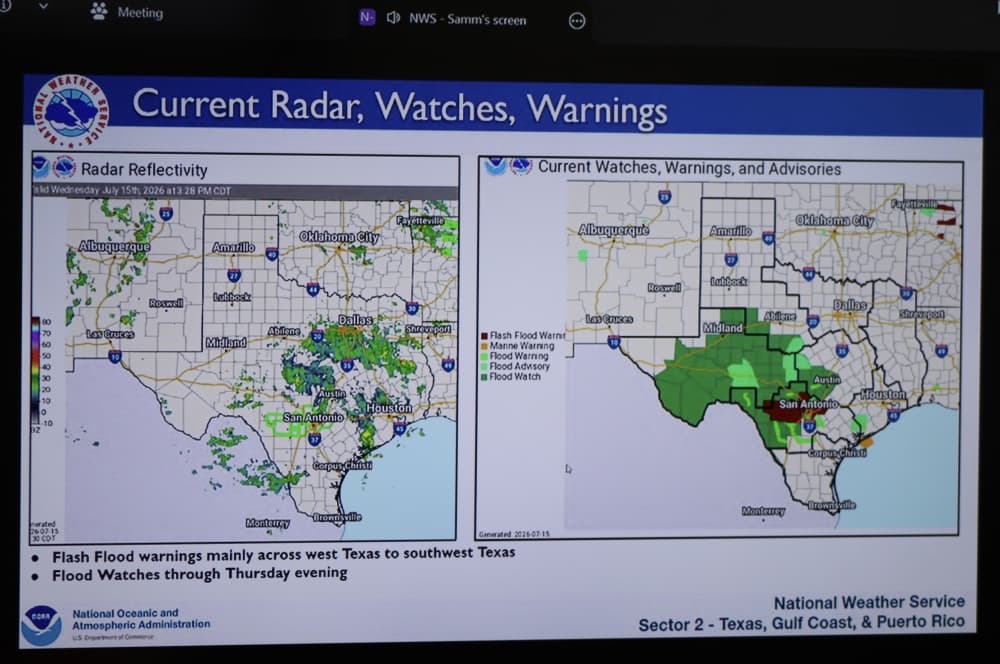
Areas in the Nueces River basin are most at risk of flooding, Abbott said, warning residents of other parts of South and Central Texas to stay alert. Swaths of the region have received 10-15 inches of rain so far and are expected to see another 10-15 inches through July 16, according to forecasters.
A map from the National Weather Service shows rainfall conditions and flood warning areas in South and Central Texas during a July 15 briefing at the State Operations Center in Austin. (Hannah Norton/Community Impact)
A tornado also touched down in northwest San Antonio July 15, although no injuries or deaths had been reported, Mayor Gina Ortiz Jones said on X. Additional tornado warnings were in effect east of San Antonio through 7 p.m., according to the National Weather Service.
More than 800 vehicles and 1,300 state personnel are available to respond to the severe weather and make rescues, the governor said. The state is closely coordinating with local emergency management offices, officials said.
Abbott said the biggest challenge that emergency responders face is ensuring that Texans are aware of the severe weather and its potential consequences.
"If you're in the regions that are located on [the flood watch] map, which is about a quarter of the state or more, know that you're going to be facing life-threatening water," the governor said. "If every Texan is aware of what's going on and realizes they can protect themselves over the next 24 hours, everything's going to work out just fine."
Updated 5:30 p.m. July 15
This week's flooding "is likely going to break records in Texas," Gov. Greg Abbott told reporters July 15 at the State Operations Center in Austin.
"I want to give you a comparison: The Fourth of July floods last year had rainfall of 20.29 inches," Abbott said. "The... rainfall during this rainstorm is expected to be more than 30 inches."
As of 5 p.m., no deaths had been reported due to the floods, Abbott said, adding that "we've got to keep it that way."
Nim Kidd, chief of the Texas Division of Emergency Management, said it is important to pay attention to "the rate of rainfall," with meteorologists reporting three inches of rain per hour in some parts of South Texas.
"It doesn't matter where you live—three inches of rain an hour will cause flooding," Kidd said. "The far majority of the rescues that have taken place [today] are stranded motorists. Do not drive on the road where you cannot see the road, and if there is water on the road, turn around; do not drown."
In the past 24 hours, some areas along the Llano River in the Texas Hill Country had received over 5 inches of rain, according to Lower Colorado River Authority records. Communities in the Greater Houston area had largely received about one inch of rain or less in the same 24-hour period, per the Harris County Flood Warning System.
Published 4 p.m. July 15
As heavy rain and flash flooding threatens large swaths of South and Central Texas, Gov. Greg Abbott is scheduled to speak to reporters about the state's preparation for and response to the severe weather around 5 p.m. July 15.
The big picture
The heaviest rainfall is occurring in southwest Texas, according to the National Weather Service, with 10-15 inches of rain expected through July 16 along the U.S. 90 corridor west of San Antonio. As of 2:40 p.m. July 15, all or parts of 14 counties were under a flash flood warning, including Comal, Hays and Bexar counties.
The city of New Braunfels announced several road closures July 15, and the city also closed recreational access to the Comal River due to continued rainfall and rising water levels, Community Impact reported.
More details
Dozens of other counties were under flood watches, advisories and warnings. Per the NWS, a flood watch means that "conditions are favorable" for flooding and flooding is possible, but is not guaranteed to occur. A flood advisory is issued when forecasted flooding is expected to "cause significant inconvenience" and may threaten life or property, while a flood warning means that flooding is imminent or already occurring.
Fifty-nine counties were also under a state disaster declaration as of July 14, before the bulk of the rainfall began. Abbott activated state emergency response resources to respond to the flooding—including boat squads, rescue swimmers and Blackhawk helicopters—days earlier.
Stay tuned for updates from the governor's news conference.