The University of Texas at Austin will be the south node of a national workforce development program to connect job seekers with educational opportunities and employers in the semiconductor industry.
What you need to know
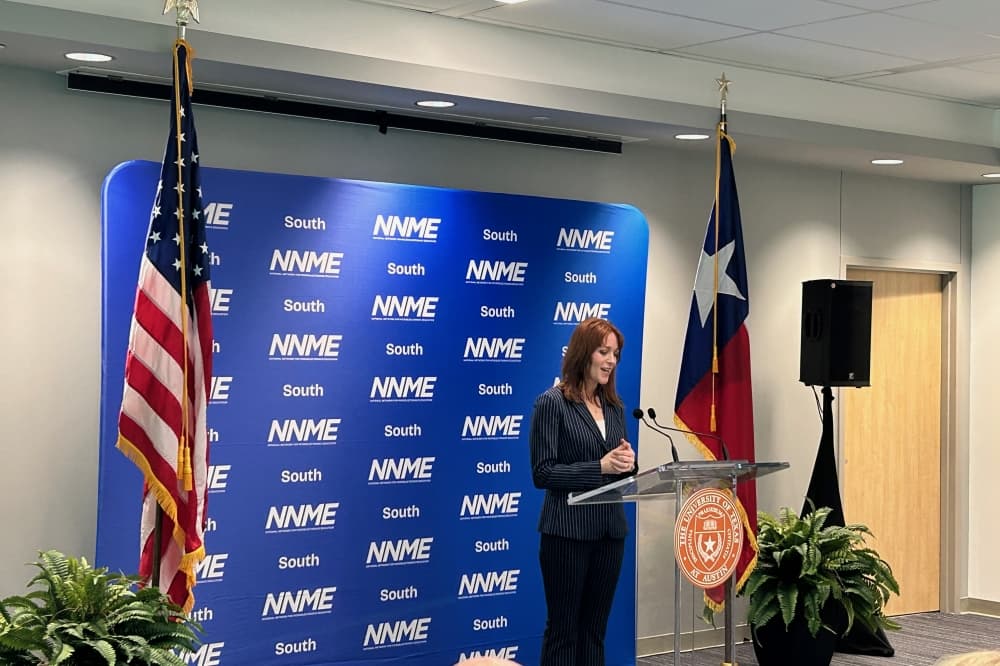
The university announced its selection to lead part of a national effort to expand the semiconductor workforce June 9 at the Texas Advanced Computing Center on the university's J. J. Pickle Research Campus.
UT's Texas Institute for Electronics will lead the south node of the National Network for Microelectronics Education, which is operated at the national level by the SEMI Foundation. The nonprofit supports workforce growth in the microelectronics industry, which includes semiconductors.
Funding for the program comes from the National Science Foundation and the U.S. Department of Commerce.
About the program
NNME South will bring together industry employers, K-12 and higher education partners to bridge the gap between available semiconductor industry jobs and the workforce by establishing new pipelines and programs. Not only will these target students, but also veterans and those looking to reskill for a career change. In the program's first year, it will focus on making pathways to careers in this industry more visible, aligning job training with industry needs, expanding training opportunities and connecting to diverse talent pools.
This sector of the program will encompass Alabama, Arkansas, Florida, Georgia, Louisiana, Mississippi, New Mexico, Oklahoma, Texas and Utah. This region comprises an estimated 92,000 semiconductor industry workers and about one-third of the country's semiconductor manufacturing capacity. Over the next decade, the region will add an estimated 29,000 positions.
The details
Alyssa Reinhart, director of workforce development for TIE, said the semiconductor manufacturing industry as a whole is expected to add 115,000 jobs by 2030, but does not have the workforce in place to meet demand.
Expectations for unfilled positions come from federal, state and local investments in semiconductor manufacturing, she said, as the U.S. works to reshore this industry.
What they're saying
"The question of whether the U.S. can build the workforce that it needs is not rhetorical," Reinhart said. "The answer is here in Austin, across Texas, across the south, and that's a yes, we can do this, but we have to do it together."