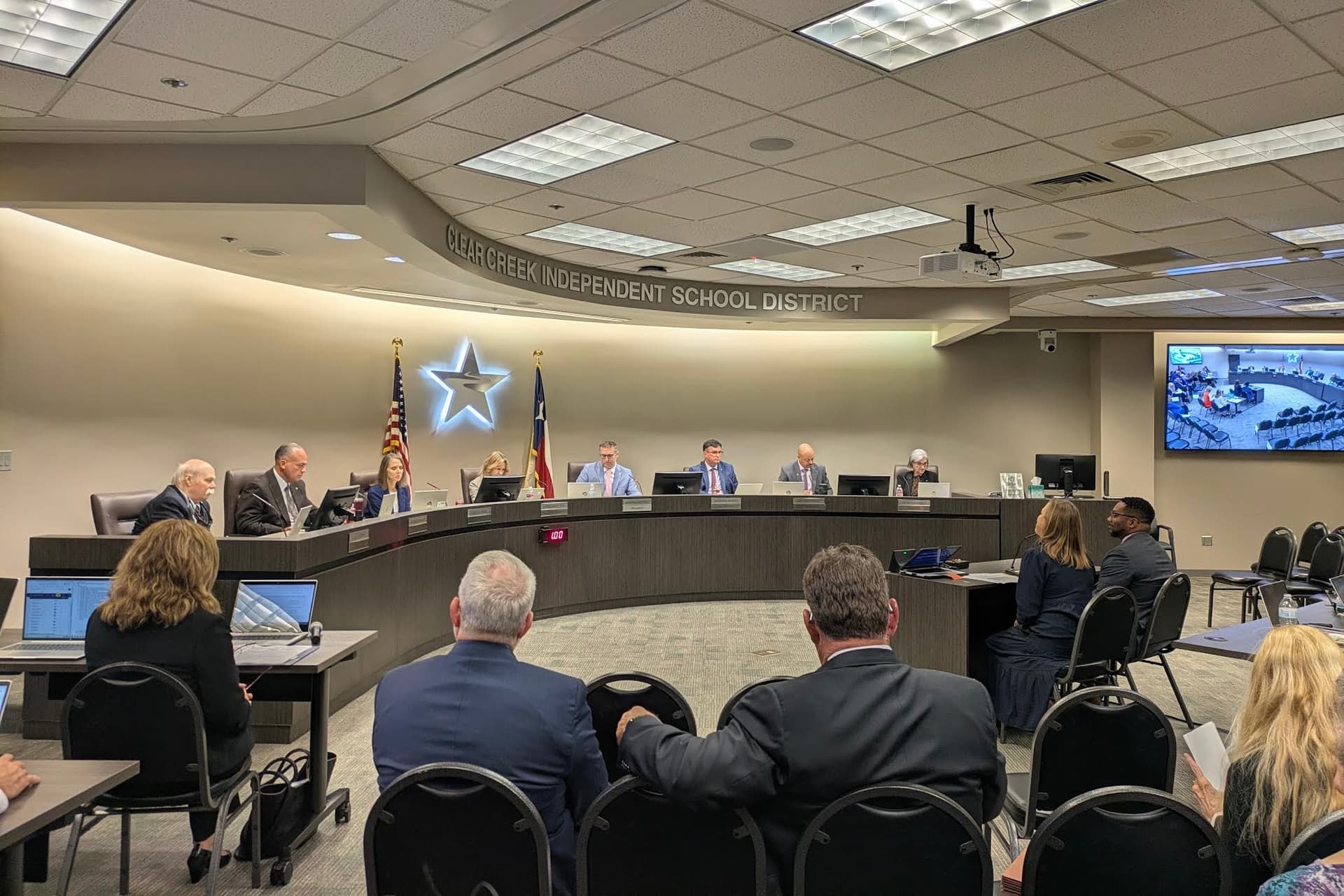
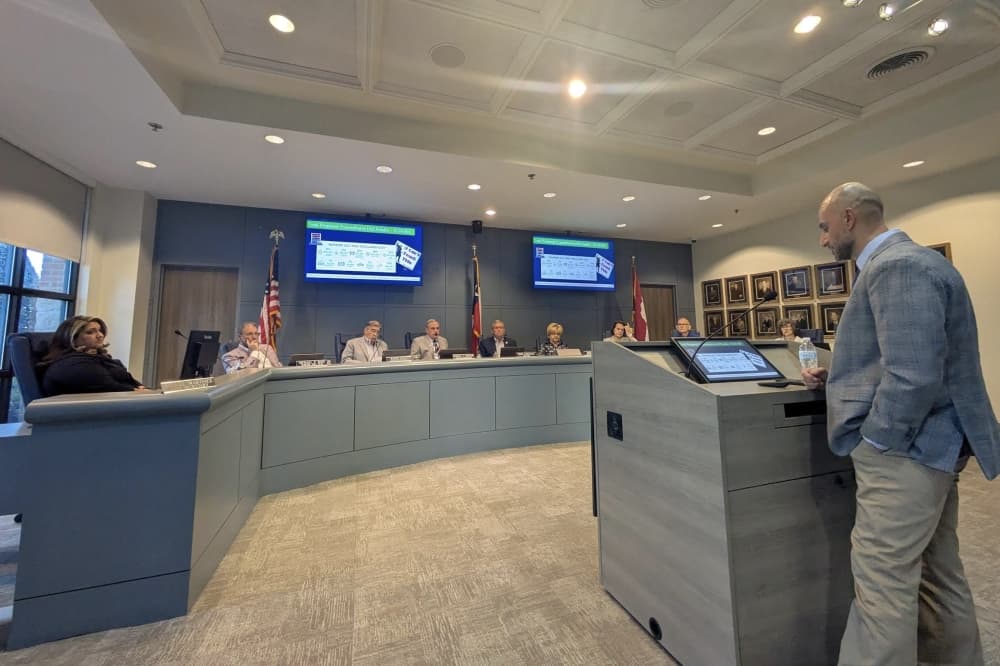
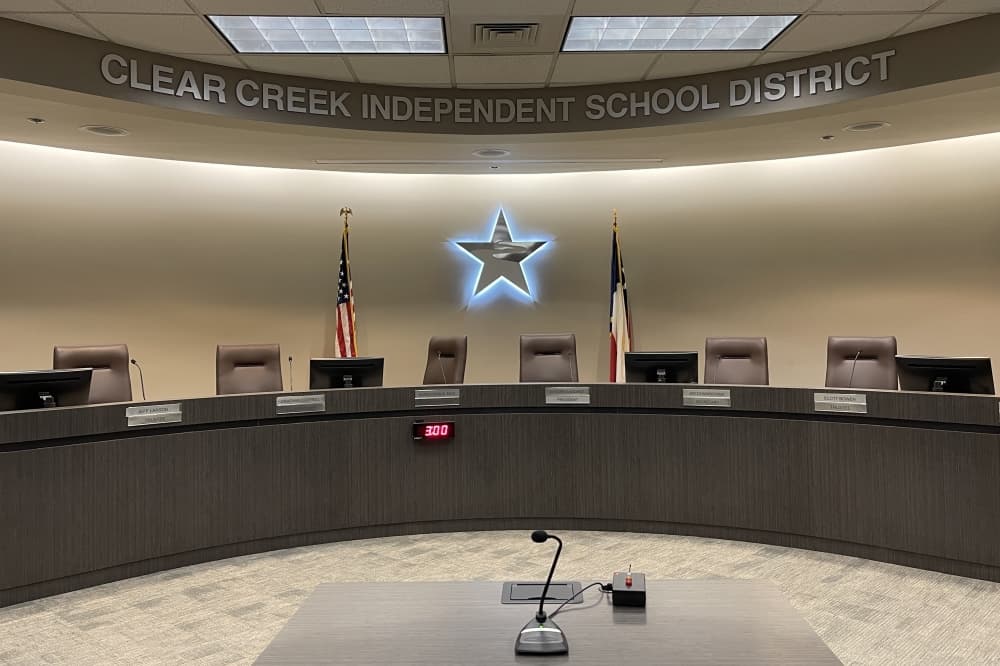
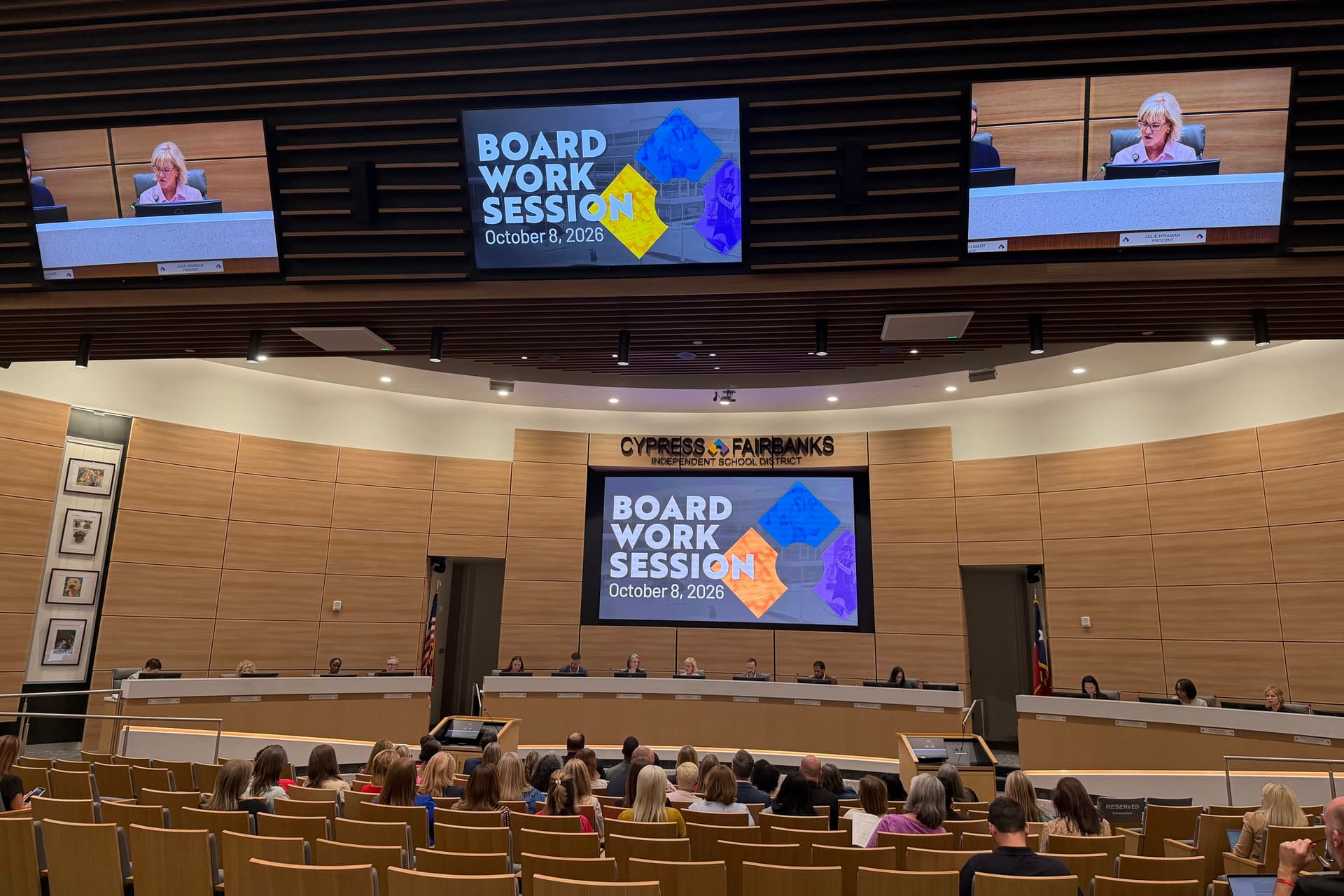
Clear Creek ISD officials project a $19.7 million shortfall for fiscal year 2026-27 following a preliminary budget review presented to the board of trustees at its May 4 workshop session.
The district is considering multiple options to address revenue shortfalls and rising costs, including a potential voter-approval tax rate election, or VATRE, and continued review of staffing efficiencies, as it works toward balancing the budget by FY 2027-28.
“These are not district decisions; these are decisions that are coming from the legislative session,” trustee Arturo Sanchez said at the meeting. “Our ability to link budgetary impacts to what it's doing to fiscal stability, such that if it puts us in the place where we're looking at doing a VATRE or recovering additional pennies, it's to our benefit to make sure that those actions are closely linked to the source.”
Budget explained
CCISD anticipates $404.4 million in revenues and $424.2 million in expenses for FY 2026-27, landing the district in a possible shortfall of $19.7 million, according to budget documents.
This represents an approximate $10.2 million decrease in revenue and a $5.1 million decrease in expenditures compared to anticipated totals for FY 2025-26.
The district also anticipates ending the current fiscal year with a deficit of nearly $8.2 million, which is lower than the original $12.5 million deficit the board adopted last August, as previously reported by Community Impact.
Revenue changes added nearly $2.2 million to the projected shortfall, although the district expects to come in under budget on expenditures, particularly in payroll, said Robert Miller, CCISD’s assistant superintendent of support services.
Also of note
The district’s 2026-27 tax rate is projected to be $0.963 per $100 valuation of a home, which is lower than the adopted tax rate for FY 2025-26.
This tax rate combines $0.6930 for maintenance and operations, or M&O—which funds daily operations, and $0.2700 for interest & sinking, or I&S—which pays bond debt and is unchanged from FY 2025-26, according to budget documents.
The board also reviewed enrollment trends for the 2025-26 school year. According to data from the Texas Education Agency, the district's enrollment has decreased by more than 6% since the 2019-20 school year.
The breakdown
The district cited several budget challenges, including rising costs for fuel and insurance, as well as uncertainty from funding model changes tied to House Bill 2, passed by the 89th Texas Legislature, including teacher compensation and special education intensity tiers.
Other concerns include increased difficulty in recruiting and retaining staff, potential risks to sustaining current programs in future budget years, and an inadequate state funding model to support a quality public education, according to budget documents.
Revenue has also declined, Miller noted at the workshop, including state funding tied to homestead tax limitations for elderly or disabled residents, which has fallen from $7.8 million in 2023-24 to $2.7 million in 2025-26.
What’s being done
The district has already implemented several revenue strategies, including the 2023 VATRE that generated $18 million, expanded open enrollment and the addition of a virtual option for the 2026-27 school year, and improved attendance, which increased from 92.9% in 2021-22 to 95% in 2025-26, according to budget documents.
On the expenditure side, the district has reduced staffing by 70 positions for the 2026-27 school year to align with enrollment decline, according to budget documents.
The district plans to pursue additional revenue through multiple sources, including evaluating a potential future VATRE for nine enrichment pennies, which would generate approximately $20 million, and considering the elimination of the 5% local optional homestead exemption, according to budget documents.
To reduce expenditures, the district plans to review staffing ratios, course offerings, class sizes, employee contract days and substitute usage for efficiency, and implement zero-based budgeting in select departments.
The district also created the CCISD Strategic Budget Team to evaluate long-term finances and support Vision 2030 by identifying cost reductions, reviewing facility use, assessing potential revenue options and avoiding use of reserve funds to balance the budget, according to budget documents.
Superintendent Karen Engle said at a Dec. 17 work session that the team would be formed in early 2026, as previously reported by Community Impact.
Stay tuned
The board of trustees will meet at its regular May 18 meeting to consider budget priorities for FY 2026-27.
In July, trustees are expected to review compensation plans and receive updated demographic data and certified property values. In August, the district will hold a public hearing before adopting the final budget and tax rate for FY 2026-27, according to budget documents.