Austin could partner with Capital Metro and Travis County to expand fare-free voting availability around this fall's general election.
The overview
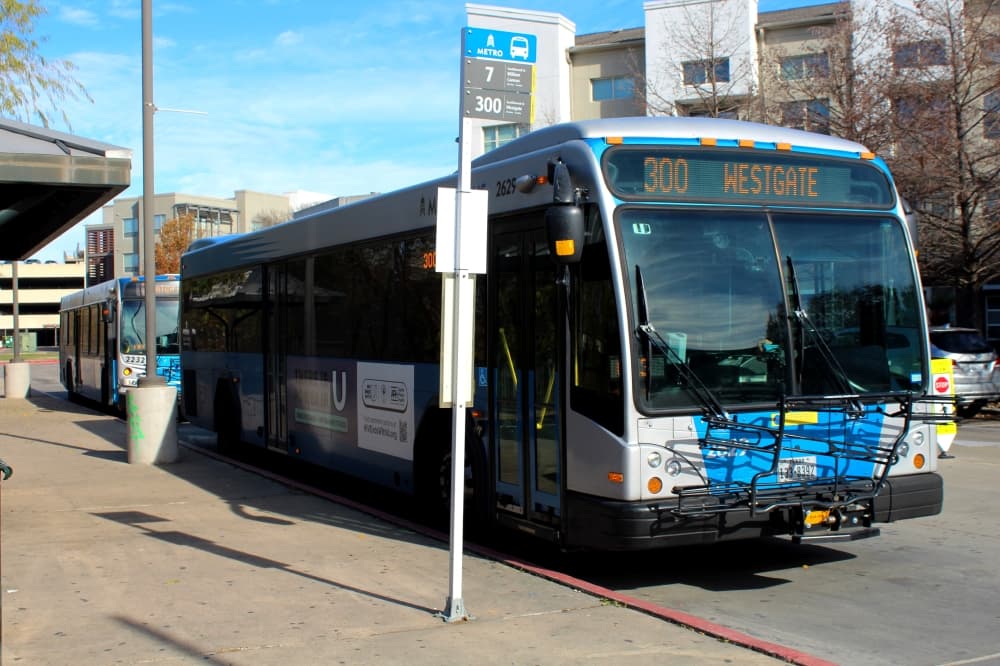
CapMetro typically suspends transit fares on Election Day in even-numbered years, which a transportation agency spokesperson said can "simplify operations and maximize access" when voter turnout is highest. Free fare holidays have also included New Year's Eve and the Fourth of July.
In an effort to broaden voting access, City Council recently supported a request to extend fare-free offerings to early voting days leading up to the election. The service expansion was first proposed by Austin's African American Resource Advisory Commission in April before securing council approval in late May.
“Some people aren't able to vote on Election Day for a variety of reasons. They might not be able to get off from work, they might have a doctor's appointment, there might be some reason they can't get to the polls. And so early voting is a critical opportunity for people to vote," said council member Mike Siegel, who drafted the expansion proposal.
The approach
The city will now work with CapMetro and Travis County on possible extra free-fare days for this fall. Siegel said he hopes Austin and the other entities can identify the highest-turnout days in the early voting window and sponsor extra availability.
Bus and rail ridership has increased around Austin on the most recent November general election dates, according to CapMetro data. The agency didn't have an evaluation of early voting ridership trends as of June, as more coordination for the potential fare-free program expansion is still to come.
"We are committed to being a helpful resource to our partners, and we look forward to sharing data with the Austin City Manager's team to help inform their internal due diligence," the spokesperson said.
Detailed daily cost estimates for fare-free early voting aren't yet available, but CapMetro typically generates between $50,000-$75,000 in fare revenue on an average day. The spokesperson said more review will be needed before any final decisions on added fare-free dates.
"As a steward of public funds navigating a tight regional economic climate—with our primary source of revenue, sales tax, tracking lower than expected—fiscal responsibility is paramount to protecting our daily operations," the spokesperson said. "While the City’s recent resolution directs city staff to explore potential cost-sharing structures with partner entities, any future policy shifts or expansion of services would require formal evaluation and direct approval by CapMetro’s own Board of Directors."
Quote of note
Siegel's measure was inspired by both the recent local fare-free suggestion and the Supreme Court's redistricting decision, which he said has weakened Voting Rights Act protections.
"We know that every da,y a new state in the South is seeking to gerrymander their political lines and make it harder for Black Americans to have representation. And unfortunately, the city council can't do much about that national dynamic," Siegel said in May. "Of course, I am personally very opposed to the Supreme Court decision and the attacks on the Voting Rights Act. But I think this commission recommendation gave us an opportunity to take a small step forward to reduce barriers for Austinites to vote."