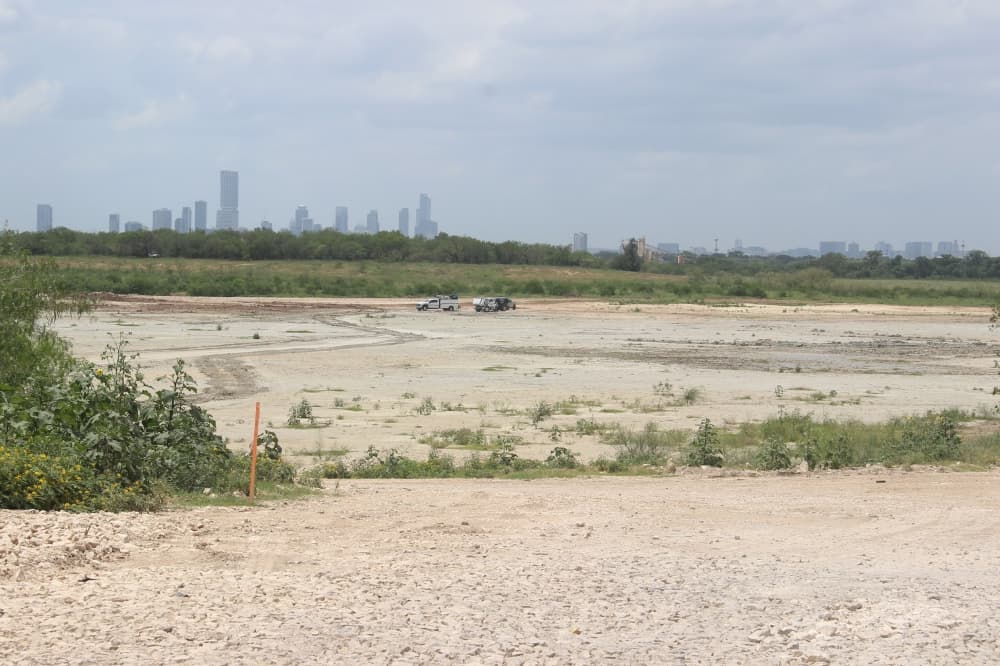
Austin may annex around 4 square miles of largely undeveloped land along the Colorado River just north of the airport. (Ben Thompson/Community Impact)
City officials appear likely to annex more than 4 square miles of land in East Austin along the Colorado River and support decades of mixed-use development there. Assistant City Manager Eric Johnson called the "mega-site" proposal a generational economic opportunity with the city at a "fiscal crossroads."
The big picture
Dogs Head Land JV Ltd., an entity registered to Austin's Endeavor Real Estate Group, owns the land along the Colorado north of the airport between US 183 and SH 130. That area known as the Dog's Head is valued at tens of millions of dollars and covers more than 2,600 acres—more than twice the size of downtown.
The Dog's Head is currently outside city limits in Austin's unincorporated extraterritorial jurisdiction, or ETJ. The full site would be annexed this spring under a 45-year development agreement between the city and Endeavor that came together given the project's expansive scope and timeline.
That agreement calls for the creation of a Dog's Head tax increment reinvestment zone, or TIRZ, to set aside a portion of city tax collections for future improvements there. It also sets standards from land use and drainage to public benefits like affordable housing and parkland.
The former mining and industrial area is "blighted and underutilized," according to city staff, who said it could be transformed and generate significant revenue for Austin through the proposed partnership. They reported the "revitalized mixed-use district" would bring new economic opportunities and improve mobility, open space and housing access.
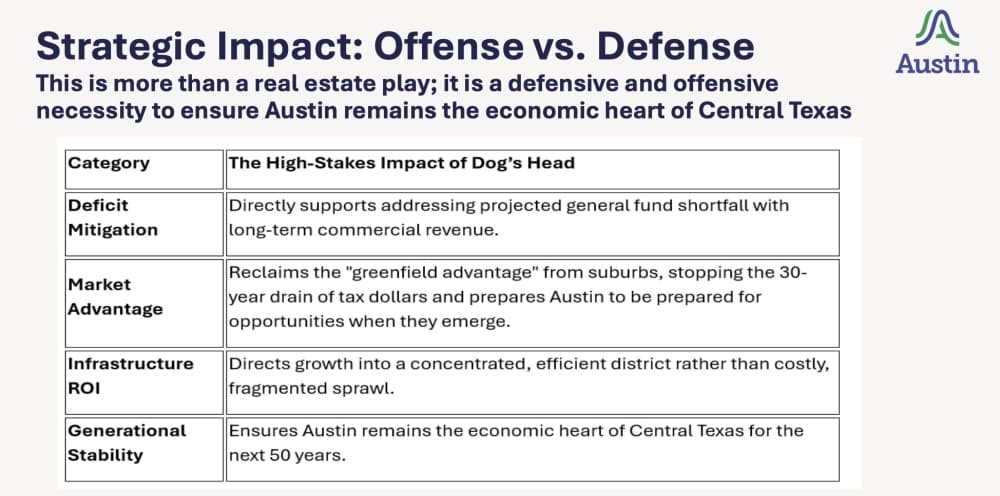
Adding the Dog's Head to Austin would serve as a competitive advantage for the city's renewed economic development efforts, Johnson said.
“For large American cities facing fiscal uncertainty, the opportunity to annex a massive single-owner tract of land shouldn’t just be viewed as a routine real estate transaction," he told City Council. "It’s a rare ... structural fiscal lifeline, and a strategic macroeconomic development tool."
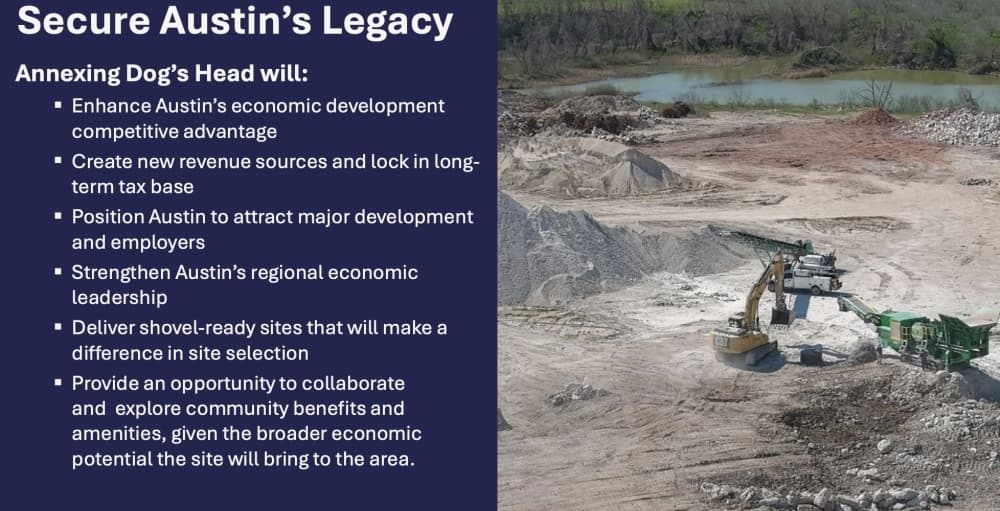
City management and staff support the proposed Dog's Head development. (Courtesy city of Austin)
Zooming in
Future mixed-use development may feature various types of residential, commercial industrial and civic uses. Lobbyist Richard Suttle said no firm plans are yet in place, but that single-family housing, high-rises, commercial areas and manufacturing sites could be included.
“The Dog’s Head is unique because it’s a blank slate," he told council.
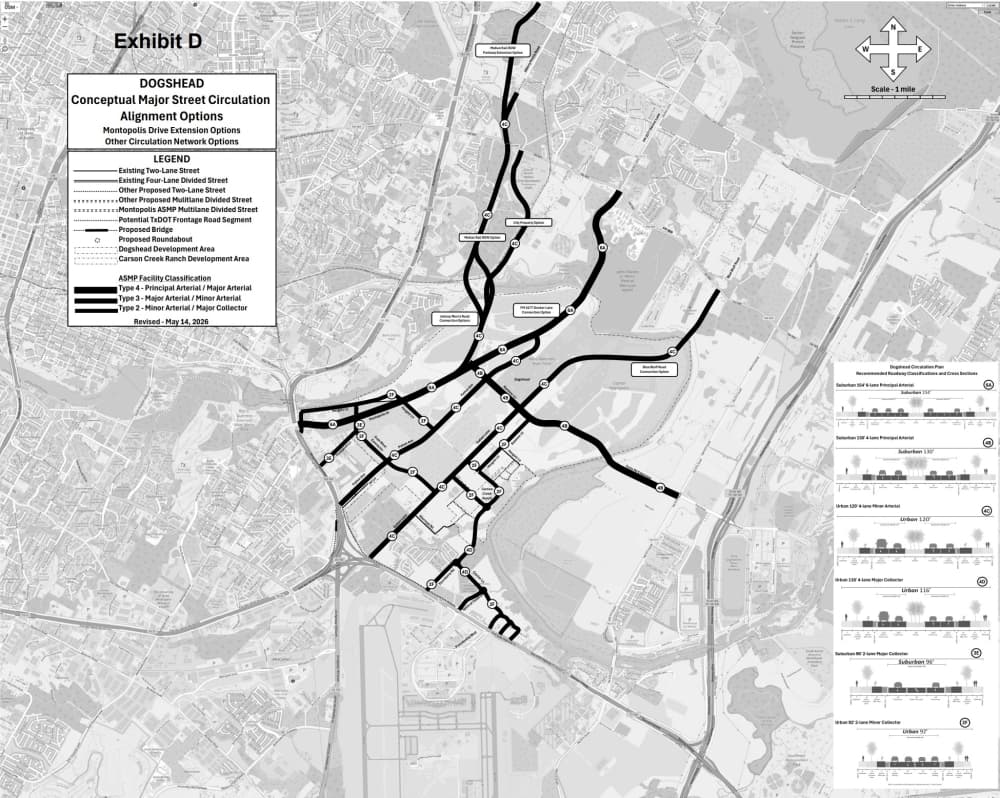
The development plan calls for hundreds of acres of public open space and miles of trail near the river. New roads, sidewalks and utility lines would also be built around the project area, with exact locations and alignments still to be determined.
A new street grid and Colorado River crossings are planned under the Dog's Head development, with final designs subject to change. (Courtesy city of Austin)
Construction in the Dog's Head wouldn't be subject to certain city regulations like certain design standards, overall height limits and restrictions on building size near homes. Many yard size and spacing requirements wouldn't apply, and mixed-use additions could reach 100% impervious cover, or surfaces that don't absorb rainfall.
The Dog's Head would also have some variances from Austin's standards for drainage, water quality and other environmental requirements. Watershed Protection Director Jorge Morales told council members he was comfortable with the impacts of those adjustments.
Under the city agreement, 20% of all housing built in the project area would be affordable to lower-income residents. Half of those units would come from Endeavor and half would be created through a "joint effort" with the city using various financing tools and incentives. The sizes and income levels of that housing is still to be determined.
More than 260 acres of open space would gradually be dedicated throughout the Dog's Head over the 45-year term of the agreement. A roughly 6.5-mile public trail is planned, with an initial 2-mile portion on the northern side of the area to open within 2 years of TIRZ adoption. Access points to the river for non-motorized craft like kayaks and paddleboards are also envisioned.
The framework
Initial council votes May 21 would advance the annexation and create the TIRZ, to be followed by adoption of a final project financing plan in July. The new TIRZ would be overseen by members appointed by Endeavor and representatives of local governments; the proposal calls for Travis County's involvement as well.
The city anticipates the Dog's Head could generate $3.5 billion in total property taxes over the first 30 years of the agreement, $2 billion more than projected without a deal in place. The TIRZ would set aside a portion of that revenue within the zone for new public facilities and infrastructure needed to serve the growing area. Those collections are expected to increase over the decades ahead as property values increase with new development and improvements.
TIRZ funds would support future infrastructure in the Dog's Head area that's currently outside the city's full-purpose jurisdiction. (Ben Thompson/Community Impact)
Tax increment financing is allowed under state law to incentivize private investment in underutilized areas, and council member Mike Siegel called the Dog's Head a "great example" of how TIRZs should be used. Austin has previously used the tool for development around City Hall and the Seaholm district downtown, the Mueller community, and the Colony Park Sustainable Community.
City officials recently attempted to establish a TIRZ in the South Central Waterfront to support redevelopment of the former Austin American-Statesman site, known as 305 South Congress. However, that financing plan was struck down in district court after residents sued the city over claims the diversion of tax dollars for the private project was illegal.
Growth in the Dog's Head under city jurisdiction is contingent on the TIRZ. If officials don't approve that financing measure or the overall agreement falls through, Endeavor could disannex the Dog's Head and potentially be released from Austin's ETJ.
If a deal isn't reached, Suttle said the area would likely build out in unincorporated Travis County as a more suburban-style project supported by an existing municipal utility district. However, he said the city partnership has been in planning for 7 years and that the Dog's Head should be located within Austin. Several officials agreed ahead of their initial votes May 21.
“I know this has moved very quickly, but it does seem to be well-thought out," Mayor Pro Tem Chito Vela said. "This is a tremendous opportunity for the city, and I think it’s a mutually beneficial opportunity for both the city and the landowner, the developer, and I’m excited to see this move forward."
City management and staff support the proposed Dog's Head development. (Courtesy city of Austin)
Central Health approves $54M for mental healthcare