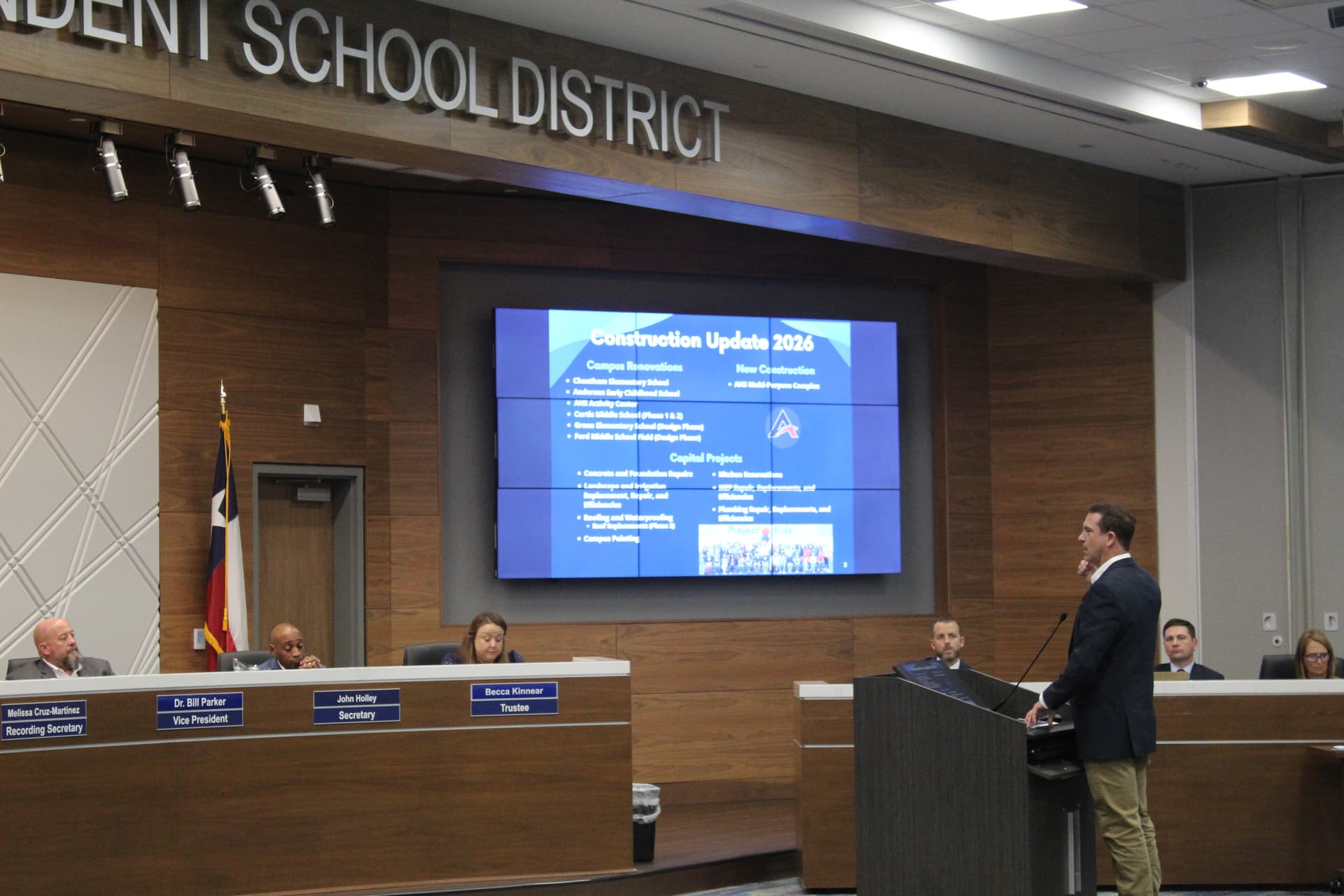
Allen ISD leaders approved a two-cent decrease in the school district’s property tax rate in August.
The full story
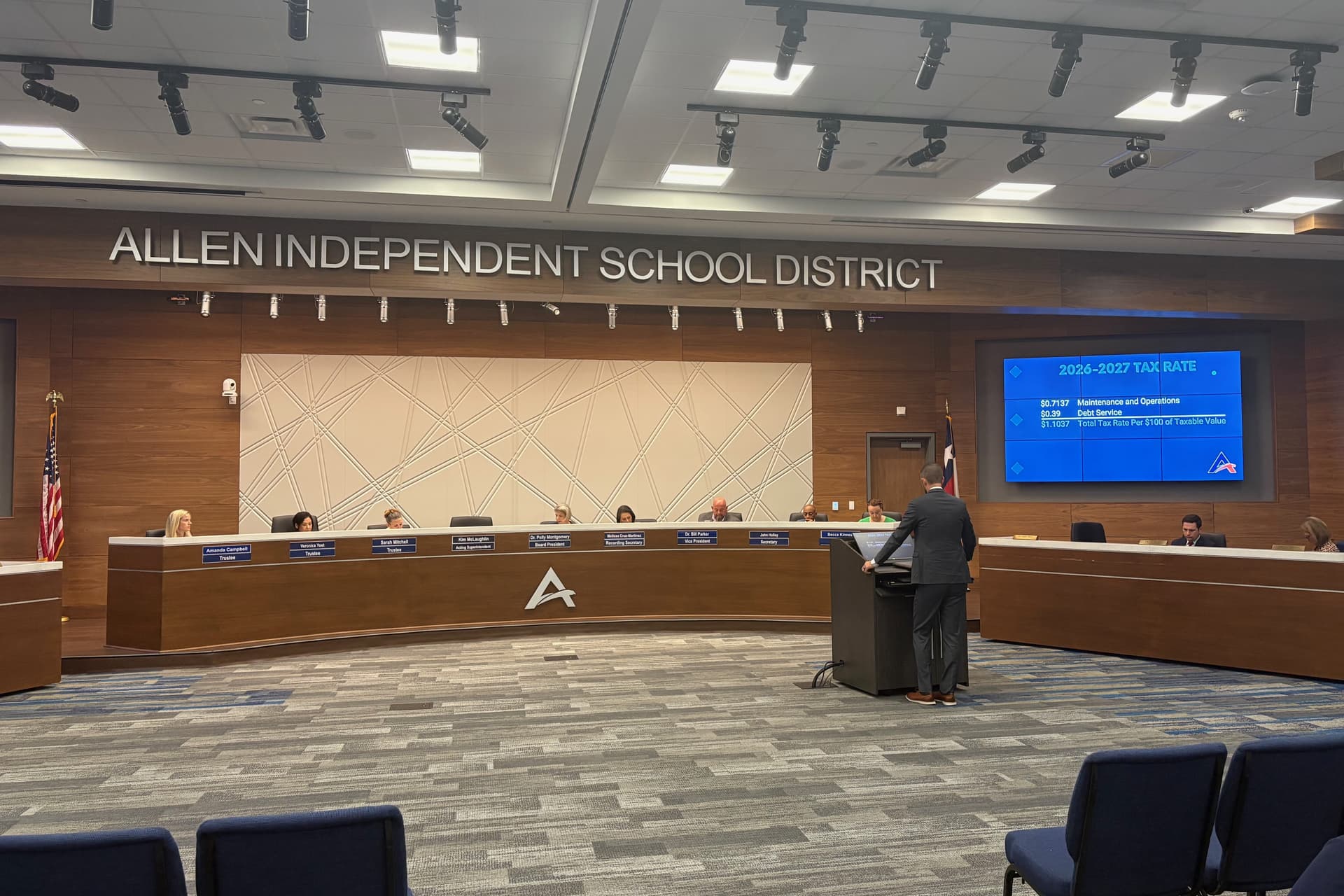
The board of trustees approved a total tax rate of $1.1037 per $100 of assessed valuation during an Aug. 24 meeting. It is lower than last year’s tax rate of $1.1258 per $100 of assessed value and AISD’s lowest tax rate since 1993, according to a district presentation.
The tax rate generates funding for AISD’s daily operations and debt service fund. Board members approved the tax rate nearly two months after approving a $226 million general fund budget in June.
Despite the lower rate, some homeowners may pay more in taxes due to rising home values. The average taxable value of a single-family home increased by more than $10,000 between 2025 and 2026, according to certified totals from the Collin Central Appraisal District.
The average taxable value of a single-family home was $457,872 in 2026, according to the Collin Central Appraisal District. The average homeowner could pay about $5,053 in property taxes to the school district.
More information
The district tax rate is composed of two rates that contribute to the general fund and debt service fund:
- Maintenance and operations, or M&O, rate: $0.7137
- Used to fund daily operations and maintenance
- Interest and sinking, or I&S, rate: $0.3900
- Used to fund debt obligations
The maintenance and operations rate is established based on several factors including the maximum compressed tax rate, or MCR, set by the Texas Education Agency, said Kyle Penn, assistant superintendent of Business and Technology.
“That number comes to us from TEA,” Penn said. “We do not set that rate. It’s looking at the values that we receive from the appraisal district.”
The MCR was lowered this year but the rest of the formula remained the same, according to the district presentation.
In case you missed it
AISD board members adopted the 2026-27 school year budget in June. The budget projects a $5.3 million shortfall between revenues and expenses within the district’s general fund. Changes to this year’s budget were driven by a projected decrease in enrollment, inflationary increases for fuel and maintenance costs, and teacher raises.
The budget is divided into three separate funds:
- General fund: Accounts for local tax revenues and expenditures related to daily operations within the district
- Student nutrition fund: Accounts for providing lunch and breakfast to students
- Debt service fund: Accounts for principal and interest payments on the district’s general obligation bonds