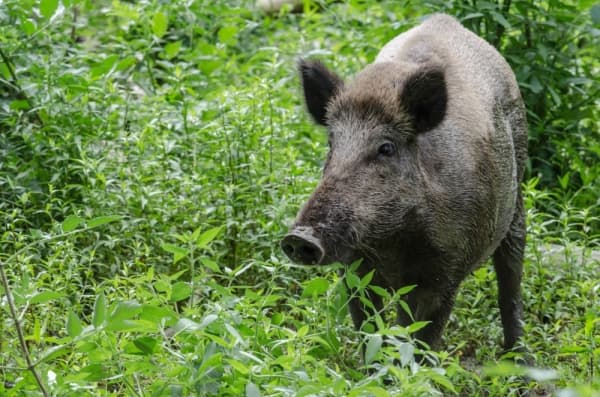
Sugar Land officials are asking residents to report any feral hog activity as part of the city’s effort to better understand and mitigate it.
The breakdown
The city’s Feral Hog Mitigation Pilot Program, which started its 90-day data collection phase on Oct. 1, aims to locate hogs’ living areas to assess future action.
Feral hogs rely on rooting in the soil to find food, which can damage lawns, parks, landscaped areas and natural habitats, according to the Texas A&M AgriLife Extension. Hogs can also cause millions of dollars in damage and possibly spread diseases.
Why it matters
The pilot program comes after Sugar Land has received 20 reports of feral hogs this year, which is slightly higher than in past years, according to city data. Hogs have mainly been reported along the Brazos River and near the Sugar Land Regional Airport, according to a city heat map.
In Texas, 253 of 254 counties have feral hogs, according to Texas A&M AgriLife Extension. However, hogs are a non-native species, so Texas does not have predators that can regulate the population.
Get involved
Residents who spot feral hogs or notice damage caused by hogs should report the information to the city via:
Photos are not required for the reports, per the city website.
City officials also advise residents to avoid feeding, chasing or attempting to capture the hogs. To avoid attracting them, residents can treat their lawns for grub worms, ensure rain or sprinkler water does not leave large puddles and avoid leaving garbage or food outside.
Looking ahead
The data-collection period will end on Dec. 30 with plans to share a summary of findings and next steps at www.sugarlandtx.gov/feralhogpilot.
Future steps could include:
Targeted professional trapping in some areas
Adding fencing to some access points
Coordinating with property owners if the activity is on private property
More monitoring and education