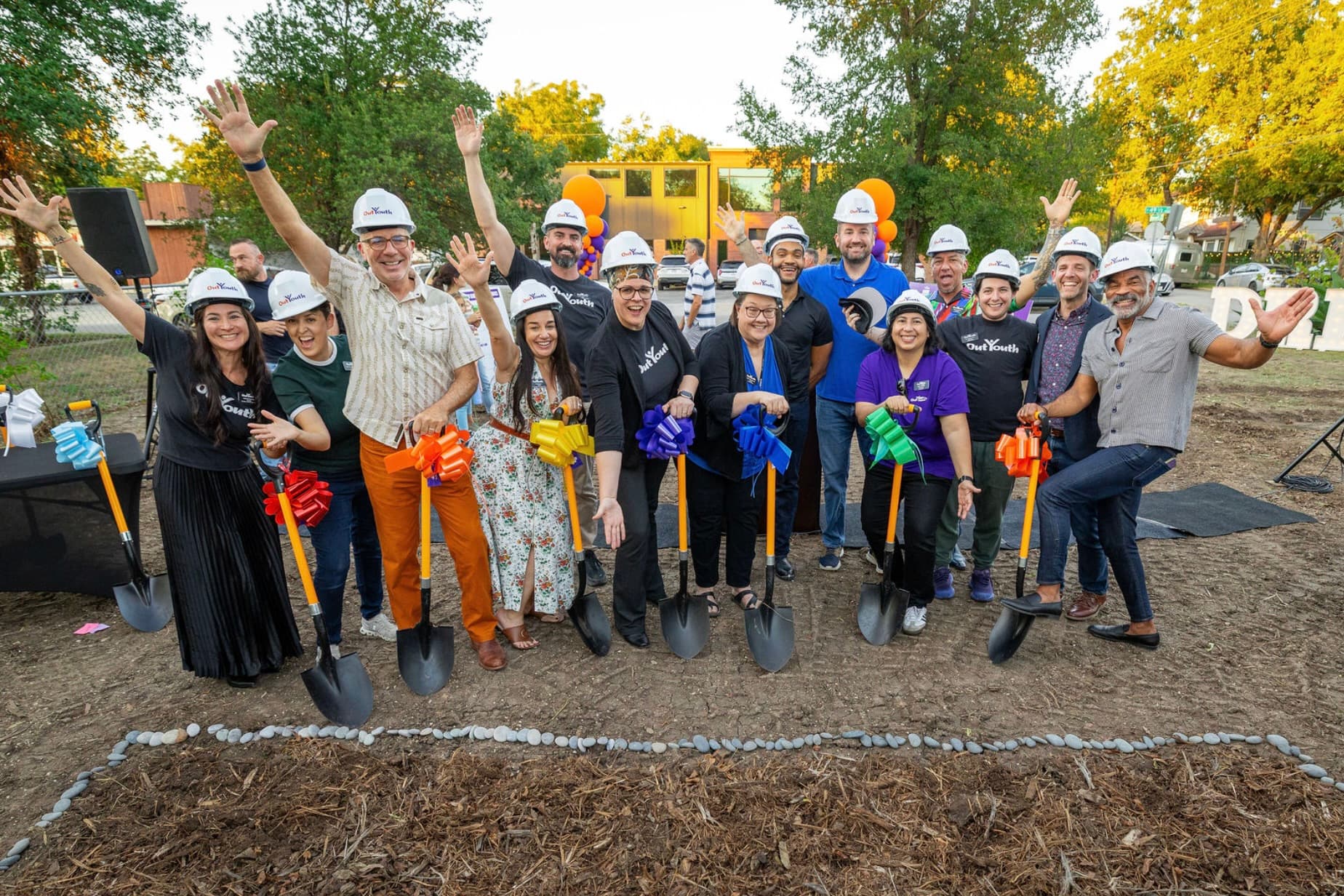
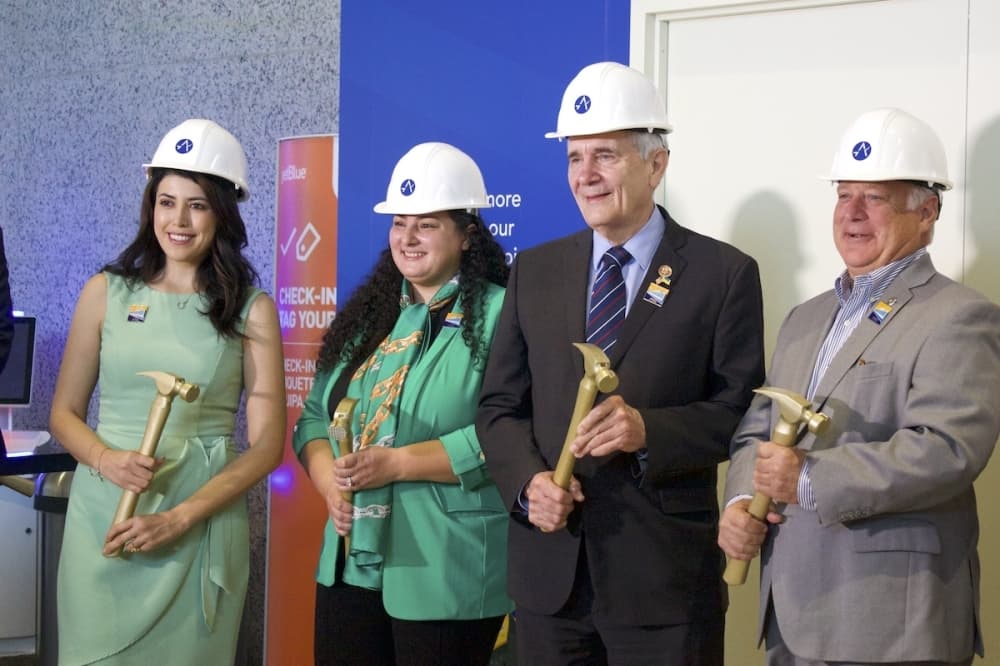
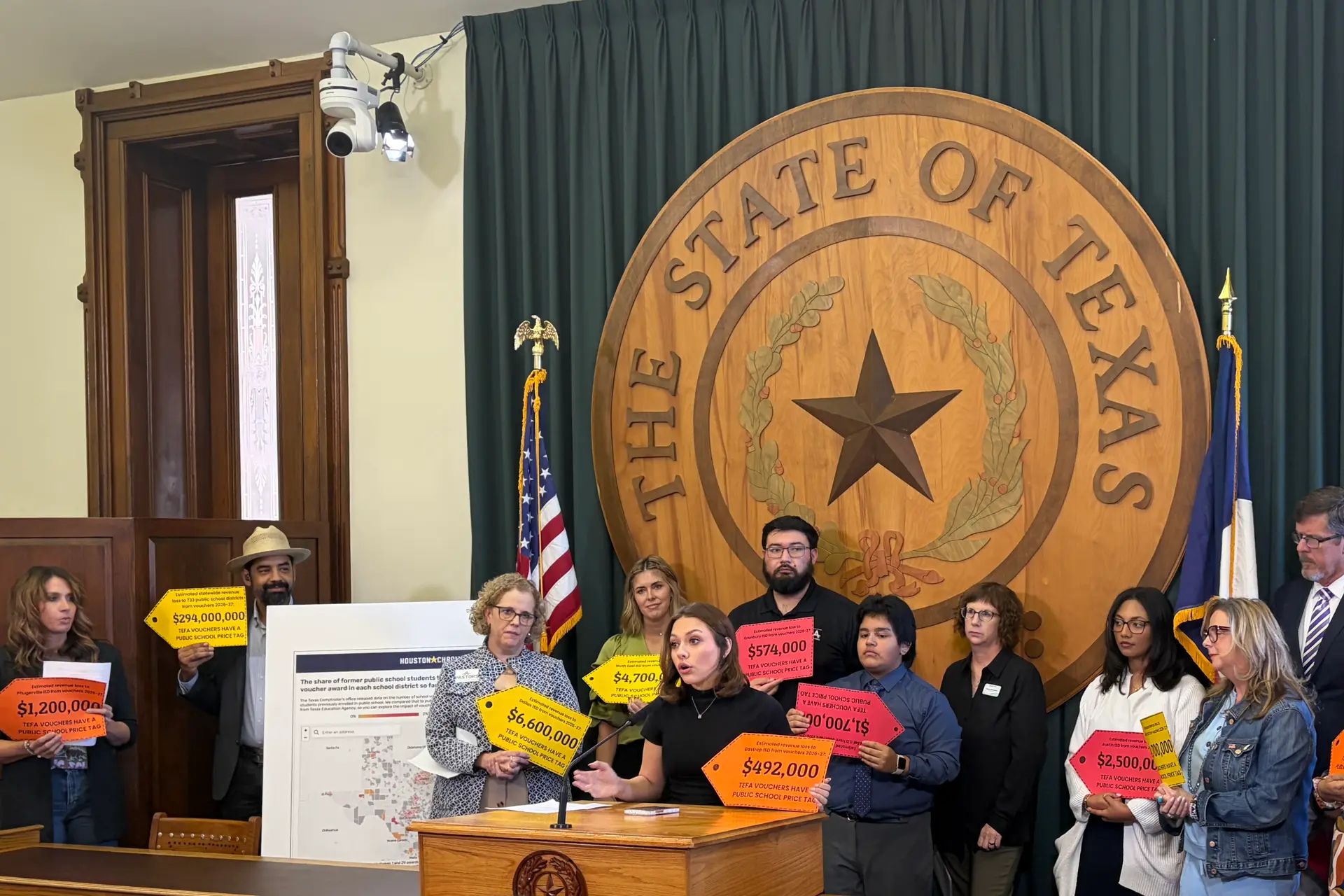
Airport and elected officials celebrated a ceremonial groundbreaking of the West Infill expansion, a project part of a larger expansion program for Austin-Bergstrom International Airport. From left to right: council member Vanessa Fuentes, ABIA CEO Ghizlane Badawi, U.S. Rep. Lloyd Doggett, D-Austin, and Austin Mayor Kirk Watson. (Elle Bent/Community Impact)
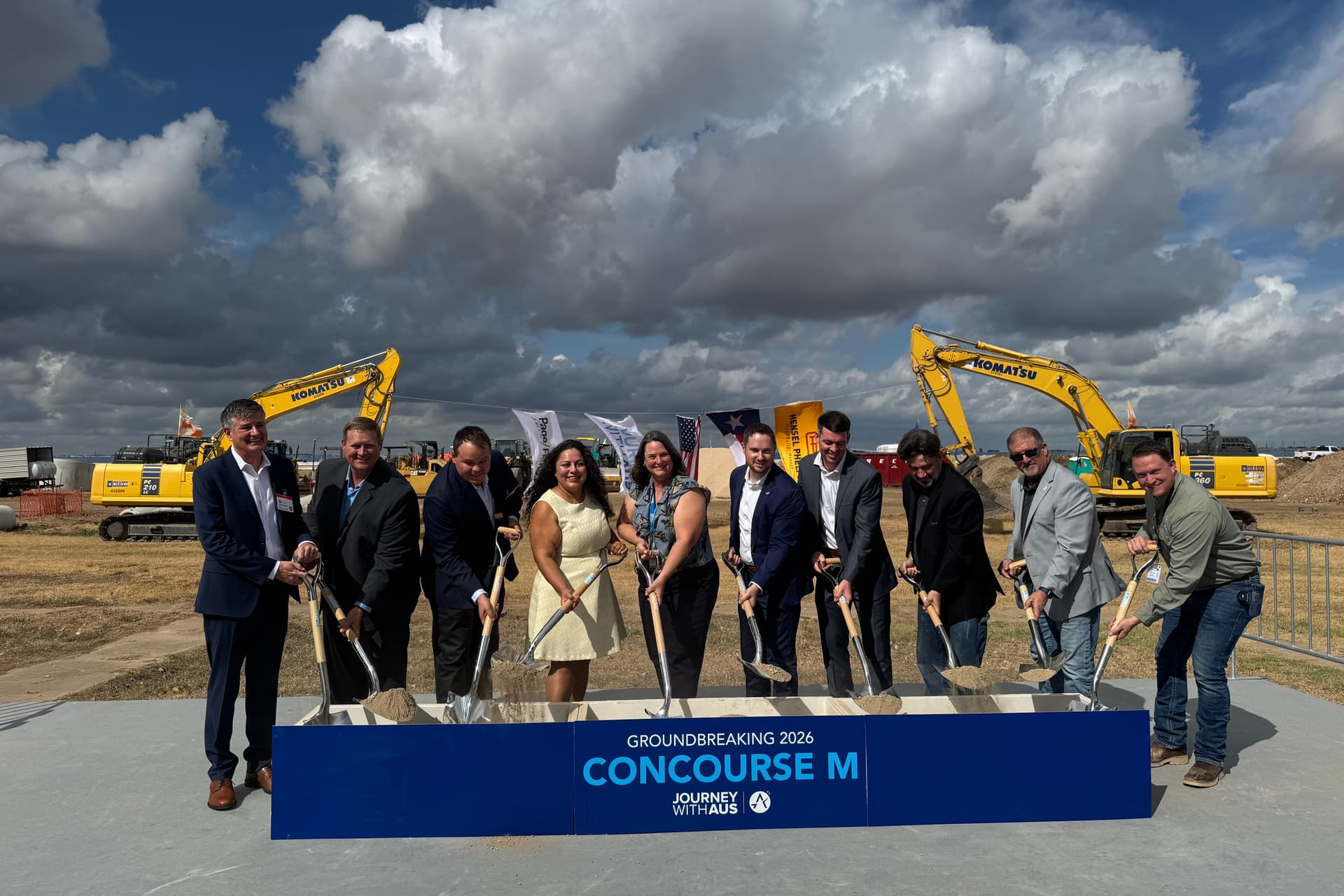
Austin-Bergstrom International Airport representatives and elected officials including U.S. Rep. Lloyd Doggett, D-Austin, and Austin Mayor Kirk Watson celebrated a ceremonial groundbreaking on the West Infill project April 22, part of an overall expansion plan.
The overview
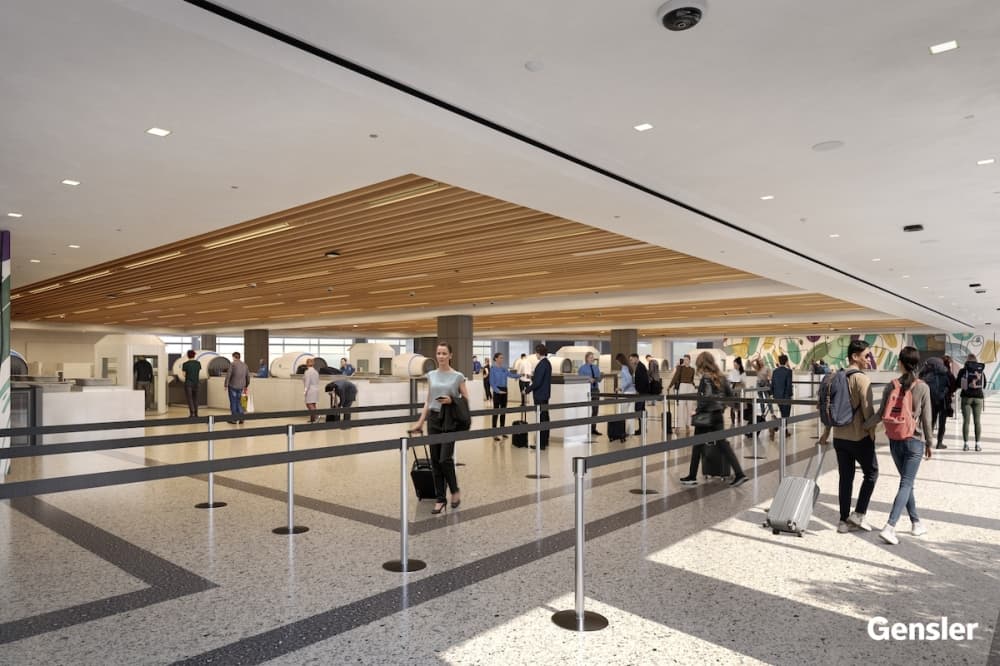
The project will add 75,000 square feet across four levels, increasing space for new security checkpoints, passenger processing and amenities. This required the closure of the Transportation Security Administration checkpoint near the JetBlue ticket counter Feb. 5, which will be expanded to accommodate travelers.
Airport staff added two more lanes to Checkpoint 2 West to offset congestion while Checkpoint 3 is under construction.
Construction began in fall 2023 on the West Infill project and is anticipated to be completed in 2026. The project will include:
“This project marks another significant milestone in our ongoing commitment to improve and enhance the passenger experience,” ABIA CEO Ghizlane Badawi said. “We have all experienced those hectic days when lines stretch beyond the terminal doors.”
The West Infill project will add 75,000 square feet, increasing space for new security checkpoints, passenger processing and amenities. (Rendering courtesy Austin-Bergstrom International Airport)
The cost
The project will cost $241 million, including the baggage handling system, and is funded by airport revenue like parking, airport cash reserves and $15.9 million of federal funding.
The framework
When the Austin airport first opened 25 years ago in 1999, Watson—who was mayor at the time—said he thought it was “a big airport.”
Now, he says, the community needs an expanded facility to accommodate a growing number of passengers every year.
“One of the best signs of success is the fact that you end up with the kinds of challenges, good challenges that we currently have in [Austin] with this airport,” Watson said.
The expansion and development program, spanning over multiple years, aims to address this growth and consists of projects to create space and modernize the airport, said ABIA spokesperson Sam Haynes.
In addition to the West Infill expansion and baggage handling system, the following projects are estimated to begin construction this year as part of the expansion program:
Improvements to the international facility that will include new baggage carousels and more queuing space
Two parallel taxiways to connect the east and west sides of the building
Ticketing-level atrium infill, which will fill in an open space with 13,000 square feet to avoid TSA lines from queuing outside
The following are projects already in construction:
The need for a larger airport will also support the economic growth in the region, said Doug Driskill, Dell Technologies client solutions group support services vice president.
“Ultimately, this is about an investment in our future,” Driskill said. “It's about ensuring Austin remains a critical economic driver for our region; it's about fostering a future where air travel seamlessly connects us to the world, fueling our economic potential.”
Part of economic growth includes setting up long-term major infrastructure, which Visit Austin President and CEO Tom Noonan says the airport expansion program is doing.
“We are that next hot destination [in] America and this airport is a vital cog to our entire economy,” Noonan said.
As the region grows, Doggett also pointed to safety as something he has been advocating for as a need for ABIA.
“We have some big challenges here,” Doggett said. “We need more aircraft, more air [traffic] controllers and we need additional equipment.”
In January, ABIA was the first airport to receive a tower simulator system—a visual database to simulate air traffic scenarios—to support air traffic controller training at the airport, as previously reported by Community Impact.
These goals from Doggett follow multiple near-misses occurring in the past two years at the airport.
What’s next
Passengers can visit the following checkpoints for security screening while Checkpoint 3 is closed:
General TSA screening: Checkpoint 1, Checkpoint 2 West
PreCheck: Checkpoints 1 and 2 East
Clear: Checkpoint 1
Construction is expected to be completed in spring 2026. For more information, visit www.austintexas.gov/airport.