Richardson ISD staff introduced changes to district-wide technology guidelines for the 2026-27 school year in response to community concerns around the use of technology in the classroom.
District staff said they aim to provide clarity to educators about the expectations for technology in the classroom, including limits on passive screen time, while remaining transparent with community members about the guidelines that are in place.
“The goal is to learn with technology, not from it,” Director of Instructional Technology Morgan Cave said. “It is never the intention to replace the teacher. It is more about enhancing that learning environment and providing creativity.”
The big picture
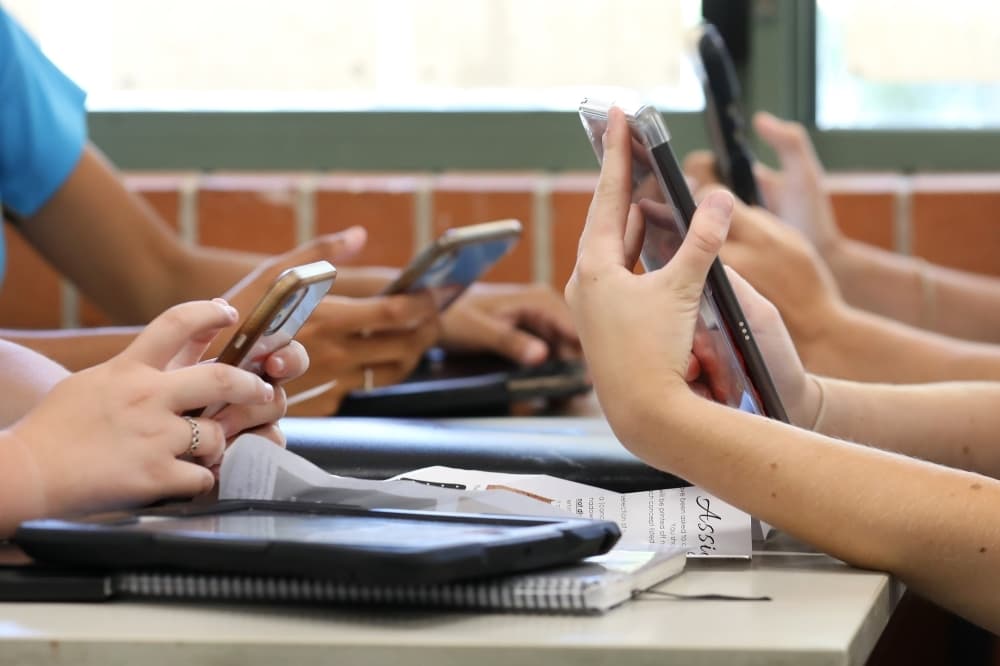
The changes in RISD’s technology guidelines largely focus on curbing passive use of technology, which include watching videos, research and other forms of consuming content on a device.
Robin Gunter, executive director of instructional technology, said RISD uses a research-based framework to ensure technology is used to enhance learning and engage students. She differentiated passive technology use from productive uses, which are active and engaging uses when students are utilizing technology to “create, design or collaborate.”
“We want to make sure that we help kids shift from thinking about technology just as an entertainment tool, but understand how technology can and should be used for efficiency, productivity [and] creativity,” Superintendent Tabitha Branum said.
Branum said teachers became more reliant on technology after the COVID-19 pandemic, and the district has not been sufficiently explicit with expectations for technology use in the classroom.
“I don’t think we’ve had the chance to do a hard reset to make it clear this is how we’re going to use technology and this is how we’re not going to use technology,” Branum said.
What you need to know
Gunter said the majority of screen time should be productive uses that actively engage students. She said RISD reviewed district-wide guidelines on limiting passive screen time, with recommendations varying by grade level.
Other technology changes for the 2026-27 school year include:
- Eliminating required minutes for instructional platforms
- Extending YouTube restrictions beyond elementary school into secondary school
- Prohibiting technology use as a behavior incentive, reward or indoor recess activity
- Reinforcing guidelines and recommendations for teachers on student technology use
In past years, students had a required number of minutes to interact with the iReady instructional software each week. Branum said this required engagement, as well as free technology use during indoor recess or as a reward, did not qualify as meaningful screen time.
“There is no more free iPad time,” Branum said. “We have lots of other tools to incentivize students to develop a love of reading or to address behavior or discipline in a way that does not involve incentivising them with iPads.”
Gunter said the district’s instructional technology team plans to publish a new resource for next school year with clear examples and guidance by grade level to support teachers integrating technology in the classrooms. Along with the extra resources, she said accountability measures will be in place to ensure that the guidelines are followed in classrooms.
Put in perspective
Branum highlighted productive uses of technology in the classroom, including providing accommodations for students in special education, differentiating activities for students at varying levels of ability and offering a tool for teachers to assess student learning.
Branum also said RISD still needs to help young students build technology skills. Technology is not only included in the required Texas Essential Knowledge and Skills, but beginning in third grade, students must also use technology on the State of Texas Assessments of Academic Readiness.
“We want to limit screen time,” Branum said. “We also know that we have to give students the opportunity to learn the skill of using technology, so that they can use it to demonstrate learning.”
Cave said the district also needs to develop technology skills in order to prepare students for future careers.
“We know that there are few professions that are untouched by technology, so we really want our students when they graduate from RISD to be comfortable with using technology and be able to transfer that knowledge into what they do next,” Cave said.
Looking ahead
Branum said RISD will prioritize “transparency from the teacher to the parent around how they are using technology in that classroom,” with the district’s guidelines serving as a starting point for open communication around technology use.
“We do have TEKS that we have to teach, but [technology] should not be the pervasive method of instruction that happens on a daily basis,” Branum said. “What we are striving [for] right now is to work towards a better balance.”