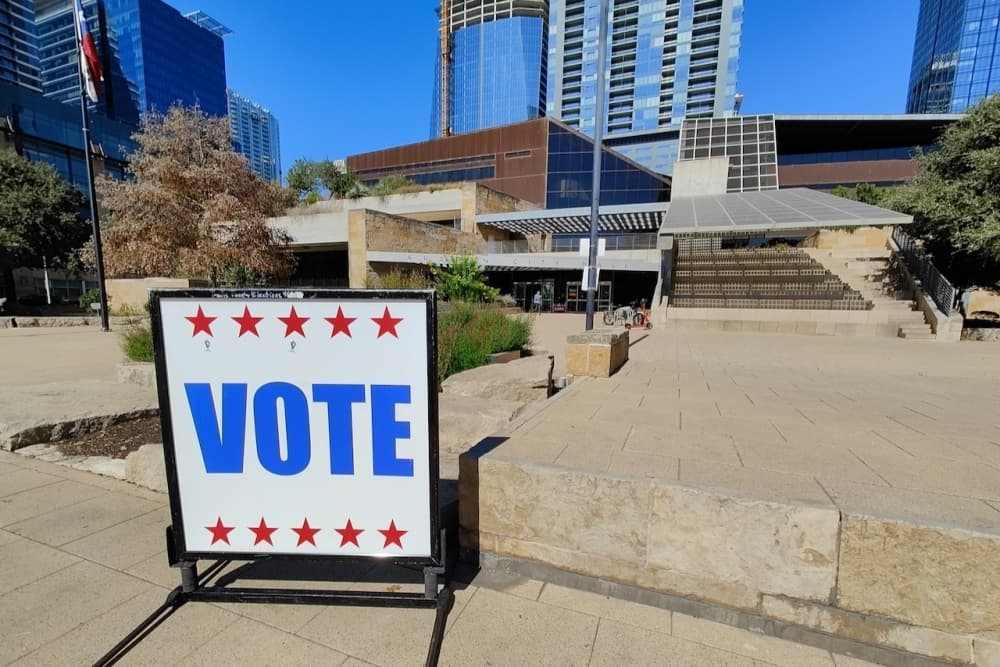
Primary election day in Texas is March 3. With dozens of state, regional and local races on the ballot, voters in the Republican and Democratic primaries will determine their parties’ nominees for the November midterm election.
Voters may participate in either primary, but not both. Those who signed petitions for Libertarian or Green party candidates are not eligible to vote in a primary, according to the secretary of state.
Over 2.5 million Texans, or 13.5% of the state’s 18.7 million registered voters, cast ballots during the Feb. 17-27 early voting period, state data shows.
Keep reading to learn what’s on the ballot and what voters can bring to the polls. For a closer look at the contested races on local ballots and over 100 Q&As with candidates, visit communityimpact.com/voter-guide.
At a glance
Polling places across Texas will be open from 7 a.m.-7 p.m. March 3, according to the secretary of state.
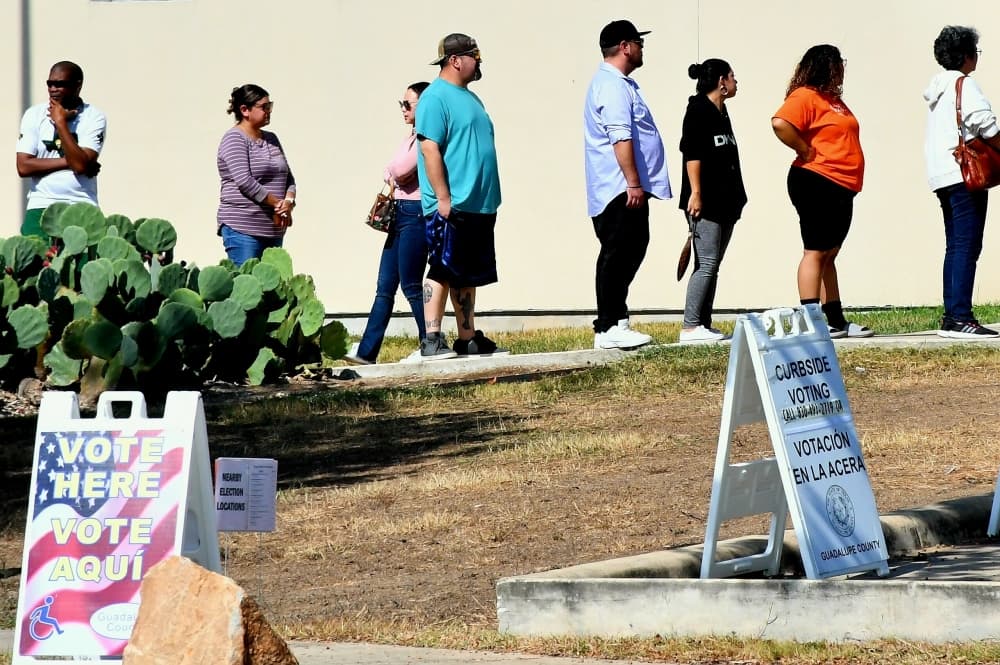
On election day, voters in the following counties in Community Impact’s coverage areas can vote at any polling location within their county of residence through the countywide voting program: Bastrop, Bexar, Brazoria, Brazos, Collin, Comal, Fort Bend, Galveston, Guadalupe, Harris, Hays, Tarrant and Travis. Registered voters in other counties are required to visit a polling place specific to their voting precinct.
Dallas and Williamson counties previously offered countywide voting but will be switching to precinct-based voting for the March 3 primaries, per local election officials.
Registered voters can find precinct information on their voter registration certificate or by logging into the state voter portal. Texans can search for polling locations through the voter portal or contact their local election office.
On the ballot
At the polls, voters will be given a ballot with a slate of statewide seats and other races determined by the voting precinct they live in.
Candidates who win their primaries will represent their party in the midterm election Nov. 3. If no candidate receives more than 50% of the vote in a race, the two highest vote-getters will face each other in a May 26 runoff election. Primary voters are not required to vote in runoff elections, although they may not switch parties if they participate in both.
Voters in some Texas communities will see local races, such as county commissioners and justices of the peace, on their primary ballot.
All of Texas’ 150 state House seats and 16 of 31 state Senate seats are up for election this year. Eight of Texas’ 15 State Board of Education seats are also up for election.
Texas’ 38 congressional seats will also appear on the ballot. Many Texans may see new congressional representation in 2027, previous Community Impact reporting shows: Several members of Texas’ congressional delegation are not seeking re-election, and 37 of the state’s 38 congressional districts were redrawn in 2025.
The following statewide races will appear on all Texas voters’ ballots, with several competitive and high-profile races at the top of the ticket:
- One U.S. Senate seat
- Governor
- Lieutenant governor
- State attorney general
- State comptroller
- State land commissioner
- State agriculture commissioner
- One railroad commissioner
- Four state Supreme Court justices
- Three judges on the state Court of Criminal Appeals
- Three justices on Texas’ 15th Court of Appeals
Voters will also see nonbinding propositions at the bottom of their ballot. Party propositions are used to gauge voters’ opinions on certain topics and do not create new policies or laws, according to the ballot text. A list of propositions appearing on the Democratic primary ballot is available here, and Republican primary propositions are listed here.
What to bring to the polls
State law requires all Texas voters to present photo identification at the polls. Identification may be expired for up to four years, according to the secretary of state, and voters age 70 and older may use identification that has been expired for any length of time.
The following seven forms of ID are accepted at the polls:
- A Texas driver license (issued by the Texas Department of Public Safety)
- A Texas personal ID card (issued by the DPS)
- A Texas handgun license (issued by the DPS)
- A Texas election ID certificate (issued by the DPS)
- A U.S. military ID card with the voter’s photograph
- A U.S. citizenship certificate with the voter’s photograph
- A U.S. passport
Texans without an approved ID can sign a “reasonable impediment declaration” at the polls and present an alternate form of identification, such as a birth certificate, a current utility bill or a paycheck. More information about voter ID requirements is available at votetexas.gov.
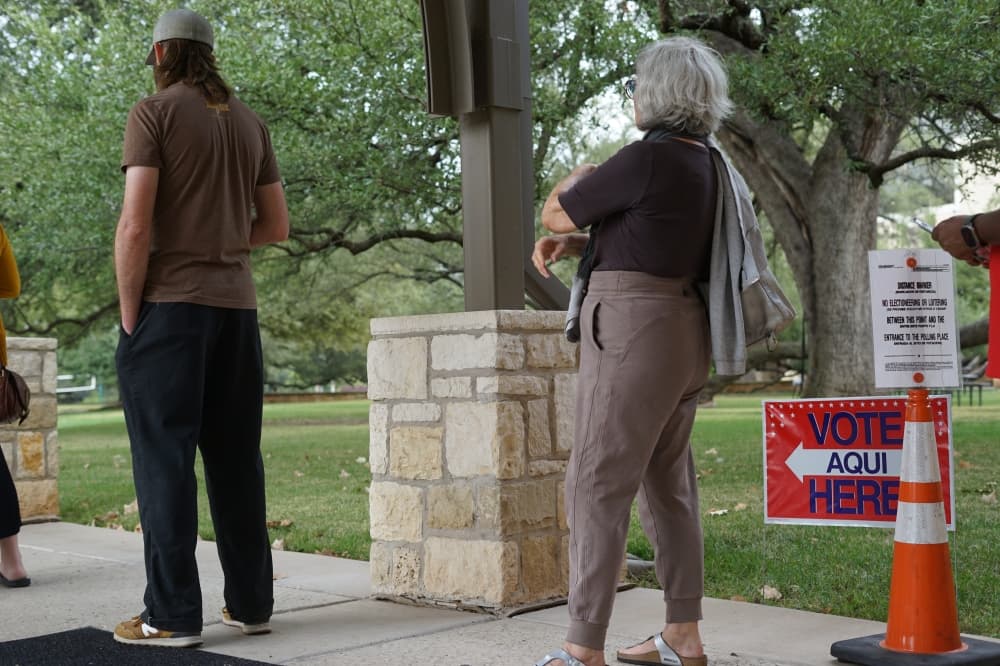
Voters may bring written materials, such as notes and sample ballots, to the polls to help them cast their votes. However, wireless devices such as cellphones, tablets and smart watches are not allowed within 100 feet of voting stations, per the secretary of state.
Texans also cannot post or distribute written materials within 100 feet of an entrance to a polling place, as this is considered campaigning or electioneering.
Did you know?
Texans can check their voter registration status through the state voter portal. The deadline to register or update information for the primaries has passed, although registered voters who recently moved addresses within the same county can still vote at their previously assigned precinct, according to the secretary of state.
Texas residents who missed the voter registration deadline can find information about registering for the next election here. State law requires voters to register at least 30 days before election day.
Something to note
Third-party candidates will not be listed on the March primary ballots. Texas’ Libertarian and Green parties are scheduled to hold nominating conventions in April to determine who will represent their parties on the November ballot. Independent candidates were required to submit paperwork declaring their intent to run for office by Dec. 8 and have until June 25 to file an official candidate application for the November election, according to the secretary of state.