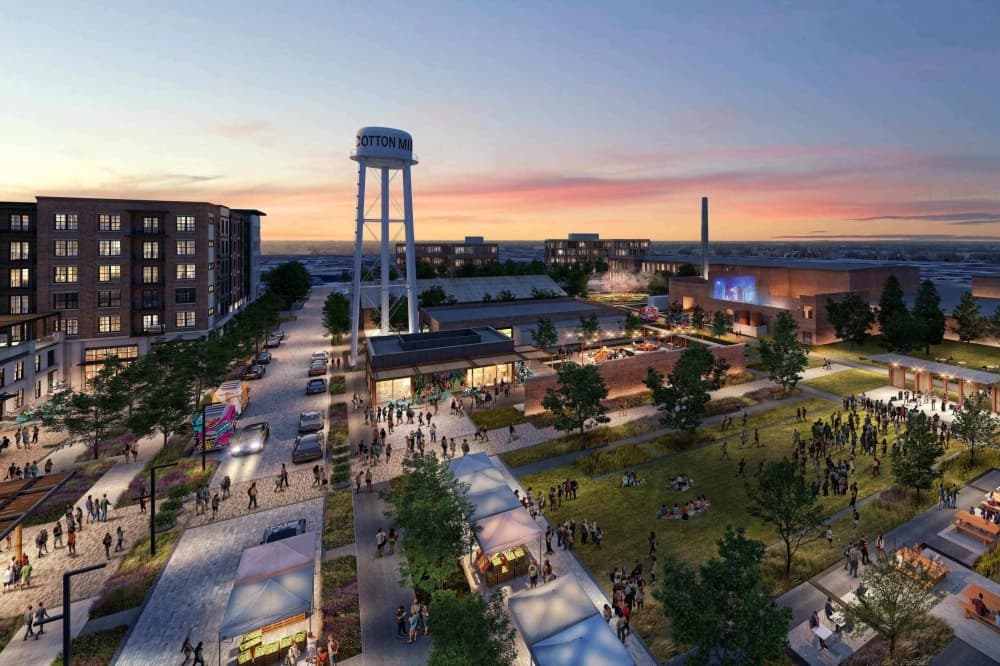
City leaders are waiving roadway impact fees for a proposed multifamily development in East McKinney.
The overview
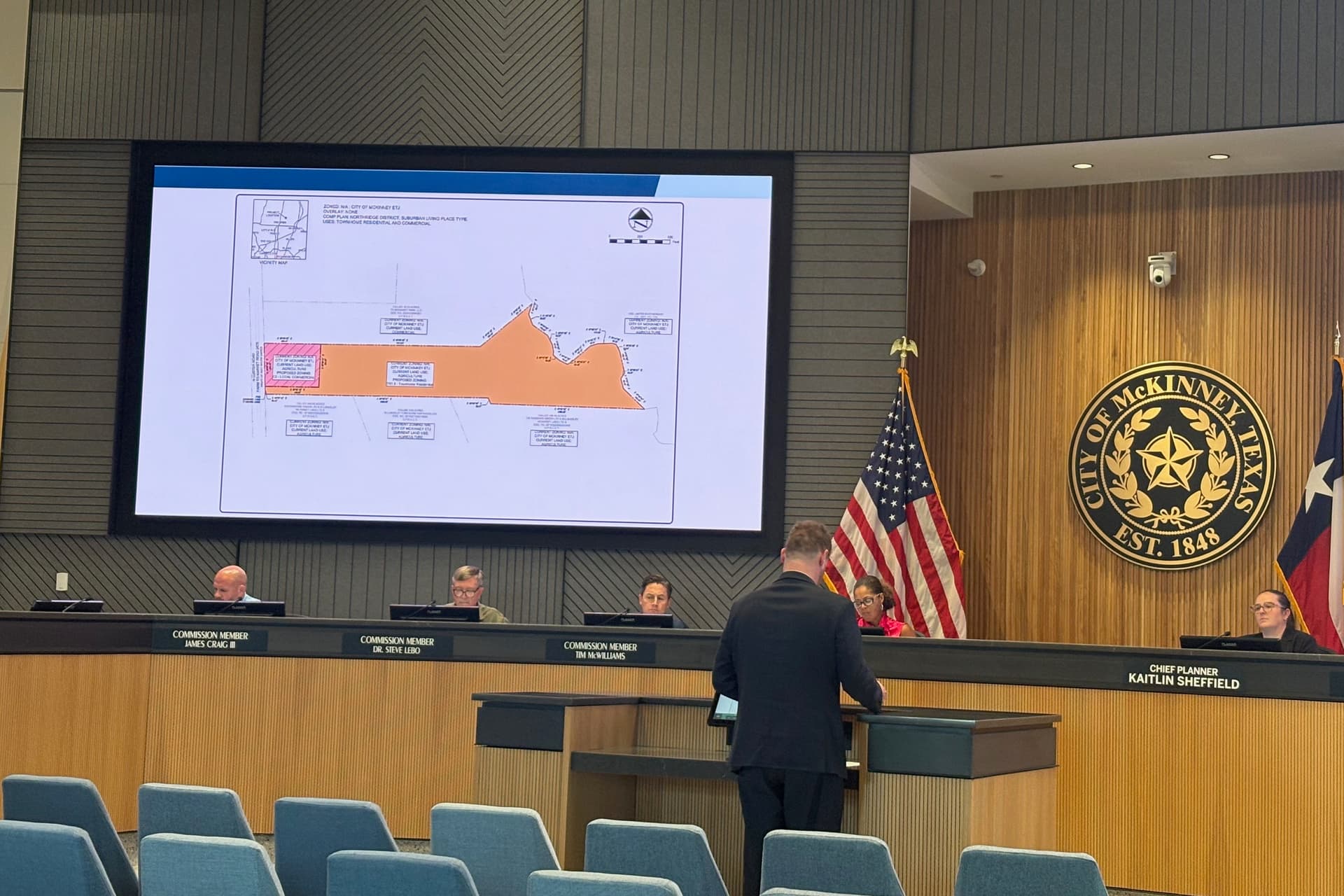
McKinney City Council members voted 4-3 on July 21 to waive $2,946,900 in fees for the Presidium Cotton Mill development, according to a city document. Texas-based real estate developer Presidium is expected to pay the fees upfront when a construction permit is issued and will be reimbursed upon completion of the project.
Presidium applied through the city’s Neighborhood Empowerment Zone program, which enables fee waivers for infill developments within certain boundaries. Roadway impact fees are levied against new developments to pay for off-site construction of infrastructure work to support development, according to McKinney’s website.
The waiver request required council approval since it exceeded $50,000, according to city officials. Presidium requested the waiver for the project’s multifamily component, which plans for 1,140 apartment units located east of SH 5.
Presidium Development President Josh Eames said they requested the waiver because the infrastructure costs are “too burdensome for this to be fully funded privately.”
“The returns that the capital market needs to justify this investment just aren’t there,” Eames said.
The specifics
City staff recommended denial of the waiver based on design guidelines for new construction within the NEZ’s boundaries, McKinney Planning Manager Cassie Bumgarner said. The denial was recommended based on three project factors that staff found were not compatible with the surrounding area:
- Building height
- Massing
- Scale
Massing refers to how the basic shapes of multifamily buildings fit together, and scale refers to the building sizes relative to the lot, according to a staff presentation. The surrounding area includes single-story single-family homes and some nonresidential buildings like the McKinney Cotton Mill, Bumgarner said.
While development of this specific project is already allowed after council’s approval of several design exceptions in 2023, the waiver request required a different approval process, according to city officials. The NEZ program is “really just an incentive” for developers, McKinney Planning Director Lucas Raley said.
“The project has been approved,” Raley said. “There’s nothing that prevents them from building the project. The NEZ is an incentive that says ‘hey, we appreciate that the project you’re bringing forth is also contextually appropriate for the neighborhood and so we want to make it even easier for you to bring something that’s contextually appropriate because that may have a higher price tag than a design or a massing or scale that’s less contextually appropriate."
About the project
Presidium is planning to build four apartment buildings in four phases, according to the staff presentation. Phase 1's building will include 257 apartments, some of which will be affordable units:
- 128 units at market rate
- 128 units at 80% of area median income
- 13 units at 30% of AMI
The building will stand at five stories tall, measuring 66 feet at its tallest point, according to an elevation document. The remaining three buildings will stand at seven stories tall, measuring 90 feet.
Eames said the project is a “tool” that council can use to “help bring this area back to life.” The waiver request was the “next logical step” in requesting help from possible resources, he said.
“We feel that this tool is exactly what it should be used for,” he said. “We’re confident that the city wants to see our project and this redevelopment move forward.”
For a typical multifamily project, Presidium pays about $1 million in infrastructure costs, Eames said. With the four multifamily buildings and two office buildings that are also planned as part of the project, that amounts to $6 million, he said.
“The cost of the infrastructure here is four times that amount,” he said. “That’s a tremendous burden and ultimately, it doesn’t matter if it's Presidium or some other developer; the costs are just too burdensome for this to be fully funded privately.”
Eames said they want to keep these funds in the district and redirect them to paying for infrastructure needed to redevelop the area.
“At the end of the day we don’t see this as an ask for city funding,” he said. “We view this as an ask to let us put more of the private capital that we are intending to bring in directly into the district itself.”
The action taken
Council members Patrick Cloutier, Geré Feltus and Michael Jones voted against the motion to approve. Cloutier said the area’s infrastructure and roads are “terrible for modern development,” but he wondered how “heavy of a lift” the city should provide to the project.
Cloutier said he would “love to see a grocery store” and more restaurants in the area but roadway fees pay for McKinney’s existing roads to “accommodate the increase in traffic volume.”
“It’s going to present a lot more traffic,” he said. “Should that be on the taxpayer McKinney to pay that or should it be on the developer? To me, it can’t be on the taxpayer right now.”
Council member Justin Beller, who voted in favor, said design exceptions were already granted for the project and there was no need to “relitigate” its height. The project is “one of the few opportunities” council will have in getting “this type of development in East McKinney,” he said.
“This fits with what we need to bring about in old McKinney,” he said.