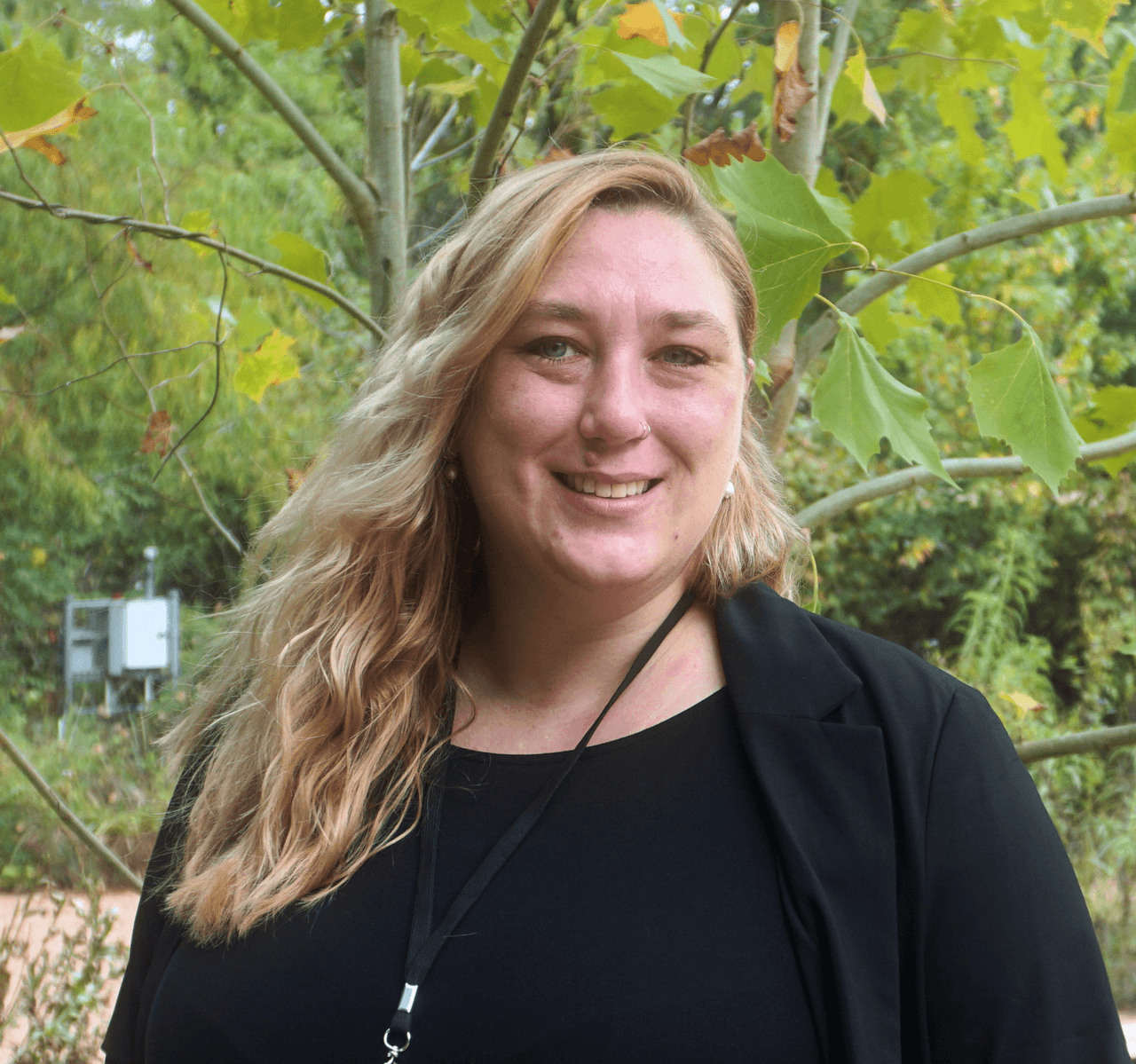
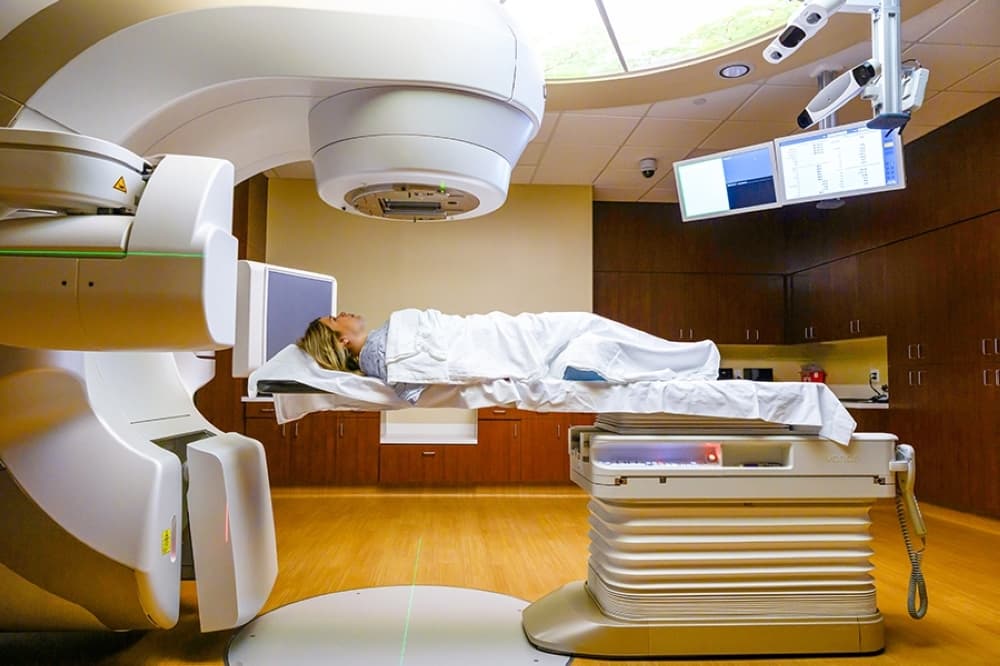
Natalie Franco, senior marketing and internal communications specialist at Memorial Hermann Northeast, demonstrates the hospital’s new TrueBeam linear accelerator, which delivers highly precise radiation to tumors. The machine is just one of several recent investments the hospital has made to bolster cancer care locally. (Jamaal Ellis/Community Impact)
New countywide data that breaks down cancer cases at the census tract level is helping to inform the way providers care for patients in the Lake Houston area, local health care officials said.
The overview
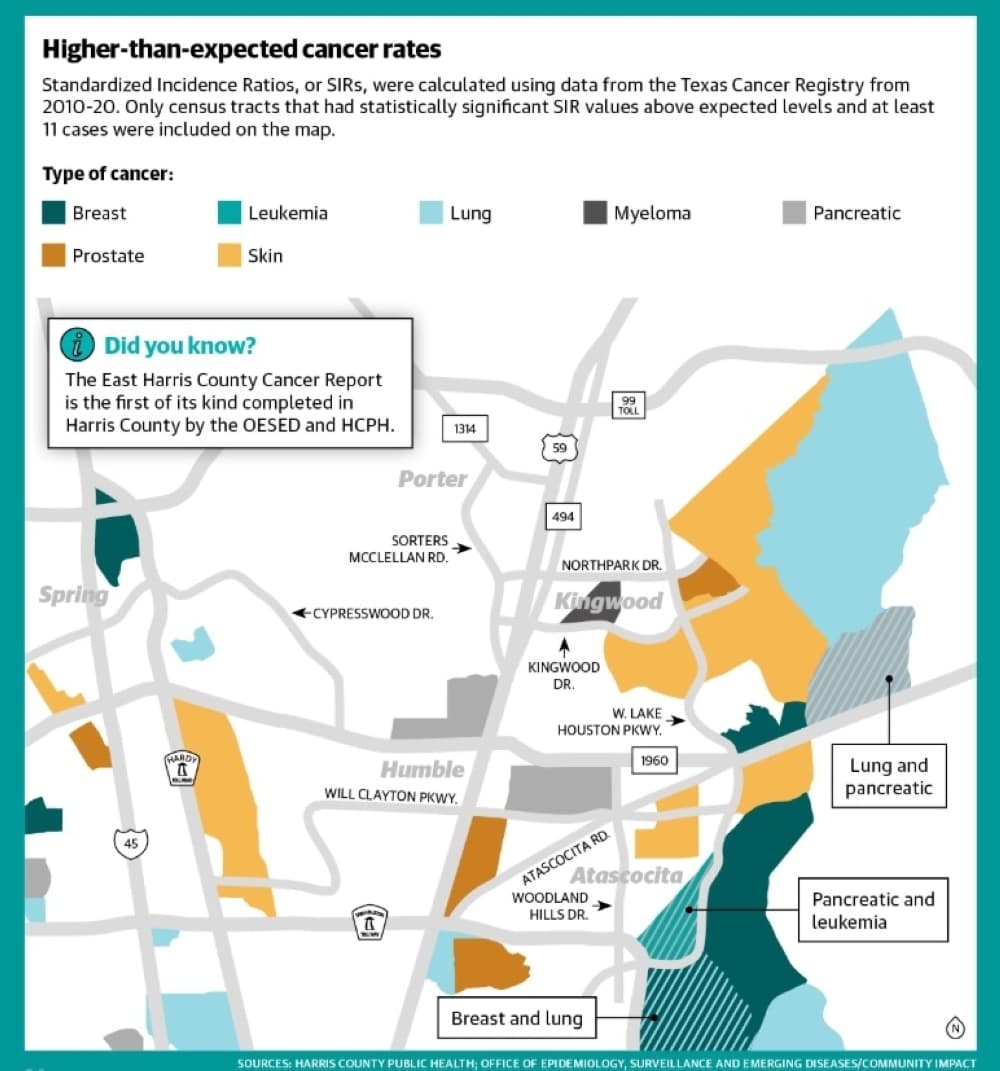
In March, Harris County Public Health released the East Harris County Cancer Assessment Report, which focused on 66 census tracts in East Harris County, including some portions of the Lake Houston area. Along with the report, HCPH launched an interactive dashboard where residents countywide can see where 17 types of cancer have higher-than-expected rates.
Higher-than-expected cancer rates exist across all of Harris County compared to the state of Texas, said Dr. Jo Ann Monroy, senior manager of Data Analytics and Reporting for the Office of Epidemiology, Surveillance and Emerging Diseases, or OESED.
“By identifying where certain cancer types occur at higher-than-expected rates, clinicians can better understand the communities they serve, tailor prevention and screening efforts, and consider environmental or demographic factors that may influence patient risk,” Monroy said.
In the Lake Houston area, data shows several census tracts exhibited higher-than-expected cancer rates—with breast, lung, pancreatic, prostate and skin cancer being some of the most prominent.
While the report acknowledges environmental concerns, Monroy noted it does not determine causation, and more work is needed to explore possible correlations.
“Continued air and water-quality monitoring, enforcement of existing environmental regulations and ongoing remediation of contaminated sites all play a significant role in lowering risk over time,” Monroy said.
Standardized Incidence Ratios, or SIRs, were calculated using data from the Texas Cancer Registry from 2010-20. Only census tracts that had statistically significant SIR values above expected levels and at least 11 cases were included on the map.
What's being done
The county’s dashboard mirrors trends that health care officials are seeing locally, said Nikki Roux, vice president and chief operations officer for Memorial Hermann Northeast Hospital. She noted the hospital’s top three high-prevalence tumor sites include breast, lung and prostate.
“We have seen that year over year there are more diagnosed [cancer] cases,” Roux said. “But it could be for a couple reasons: Technology is better across the board, not just in our area, so we’re diagnosing more [or] it could be that we’re bringing more awareness ... and making more resources available.”
To meet growing needs, Roux said MHNE has invested in new technology to offer patients less invasive options and faster recovery times. Some of these technological advances include a TrueBeam linear accelerator for radiation treatments, a da Vinci 5 robotic-assisted surgical system and an Ion robotic bronchoscopy platform used to biopsy lung nodules.
MHNE has also partnered with Oncology Consultants and Texas Oncology, which offer medical oncology and chemotherapy infusions on-site. In April, hospital officials unveiled roughly $12 million in completed cancer center renovations and $3 million in technology investments, Roux said.
“We’ve really taken the needs of the community seriously and try to make sure that we have everything we need to care for them where they are so they can stay close to home and avoid getting sicker or having to travel too far,” Roux said.
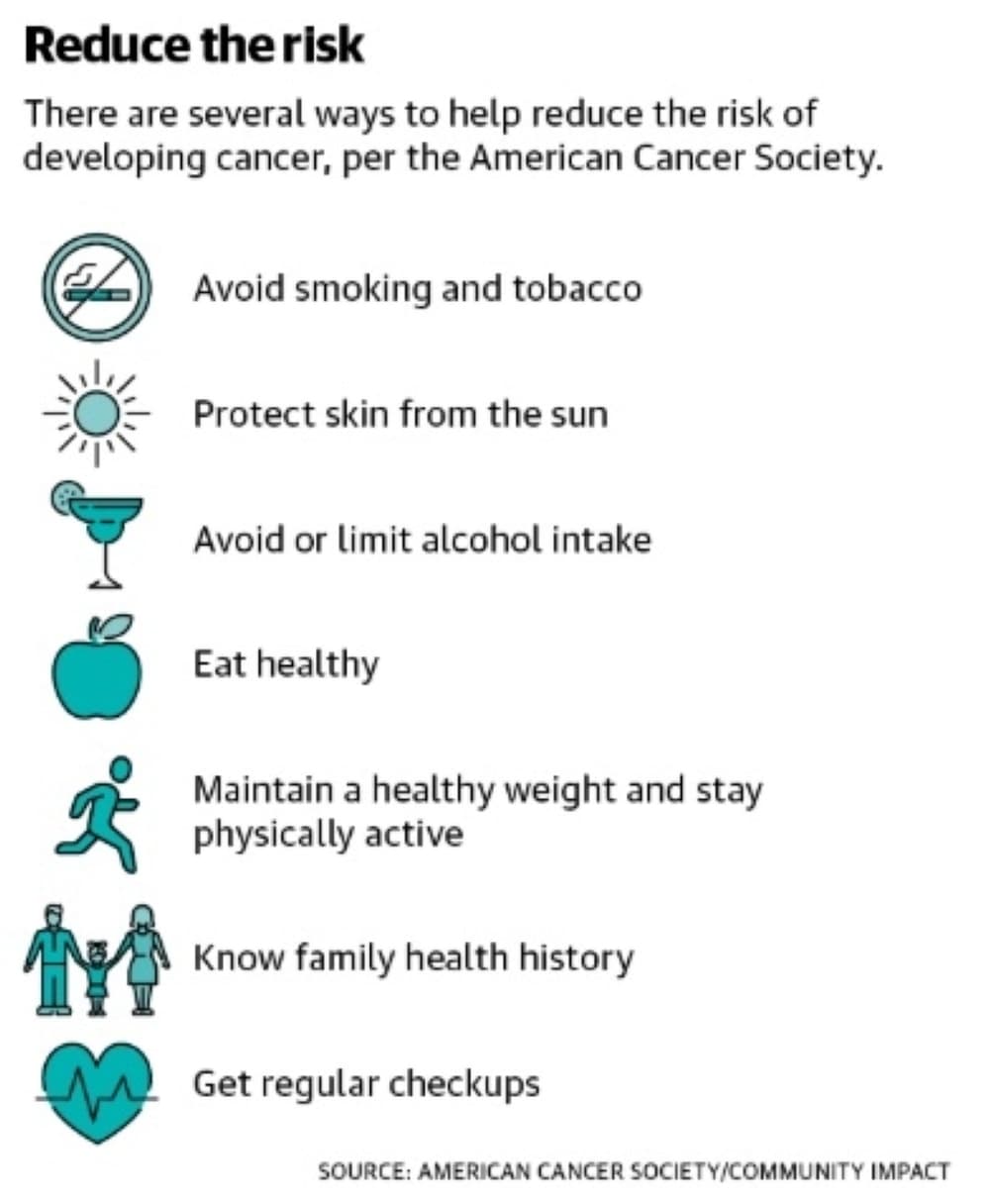
There are several ways to help reduce the risk of developing cancer, per the American Cancer Society.
What the experts say
Oncologist Dr. Pierre Khoury, who has been practicing in the north Houston area for 25 years and works primarily at HCA Houston Healthcare Kingwood, said early detection through routine cancer screenings plays a vital role in a patient’s prognosis.
“We don’t have any better way of curing cancer except for diagnosing cancer from the beginning,” Khoury said. “When you diagnose cancer at an early stage, you have a better chance and a higher chance of curing it.”
Khoury added that the majority of cancer cases—75%-80%—are sporadic, while only 15% of cases have a family history of cancer and 5%-10% of cases are genetically related.
“So it’s very important for the patient to go for screenings even if they never had any family history of cancer,” Khoury said. “If they do have a family history of cancer, they need to go earlier.”
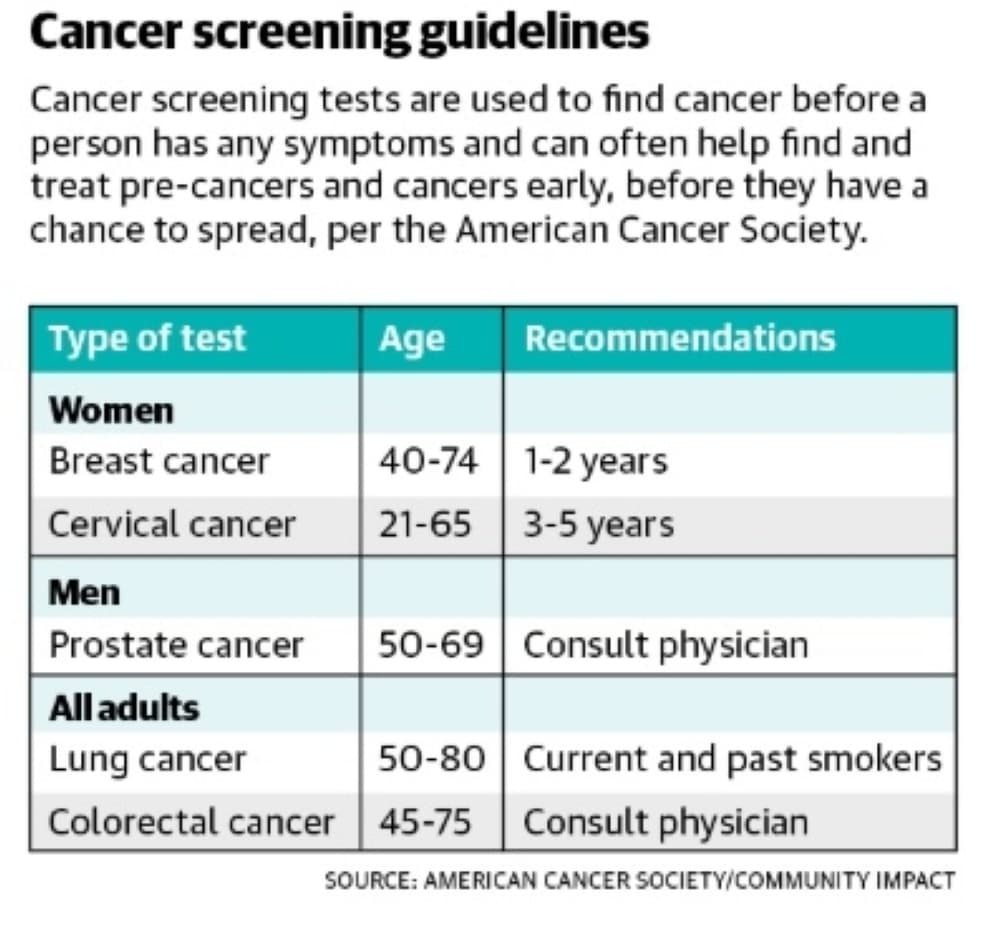
Khoury noted recent changes to cancer screening guidelines include colorectal cancer screenings, which are now recommended starting at age 45 instead of 50, and lung cancer screenings, which were previously recommended for smokers ages 55-75 and have been extended to ages 50-80.
“If you have any symptoms, don’t ignore it,” Khoury said. “Go see your primary care doctor and tell them about it.”
Cancer screening tests are used to find cancer before a person has any symptoms and can often help find and treat pre-cancers and cancers early, before they have a chance to spread, per the American Cancer Society.
What's next
Moving forward, Monroy said HCPH and the OESED plan to obtain additional data from the Texas Cancer Registry as new data is released to further enhance their analysis.
“Additionally, we plan to do further analysis by leveraging available environmental exposure data to explore possible correlations,” Monroy said. “We are continuing to identify other possible partnerships for longer-term studies/analyses in the future.”
This fall, Roux said MHNE is planning to onboard a dedicated thoracic surgeon, an additional breast surgeon and two additional urologists to keep up with growing demand for those services.
“We are really looking at where we’re starting to see inconveniences for our patients because of the volume and growth of the needs and adding resources, services and equipment to the campus,” Roux said.
Fresenius Kidney Care opens new dialysis center in Humble