Northwest ISD’s board of trustees approved a preliminary balanced budget for fiscal year 2026-27 that includes a decrease in class sizes.
The details
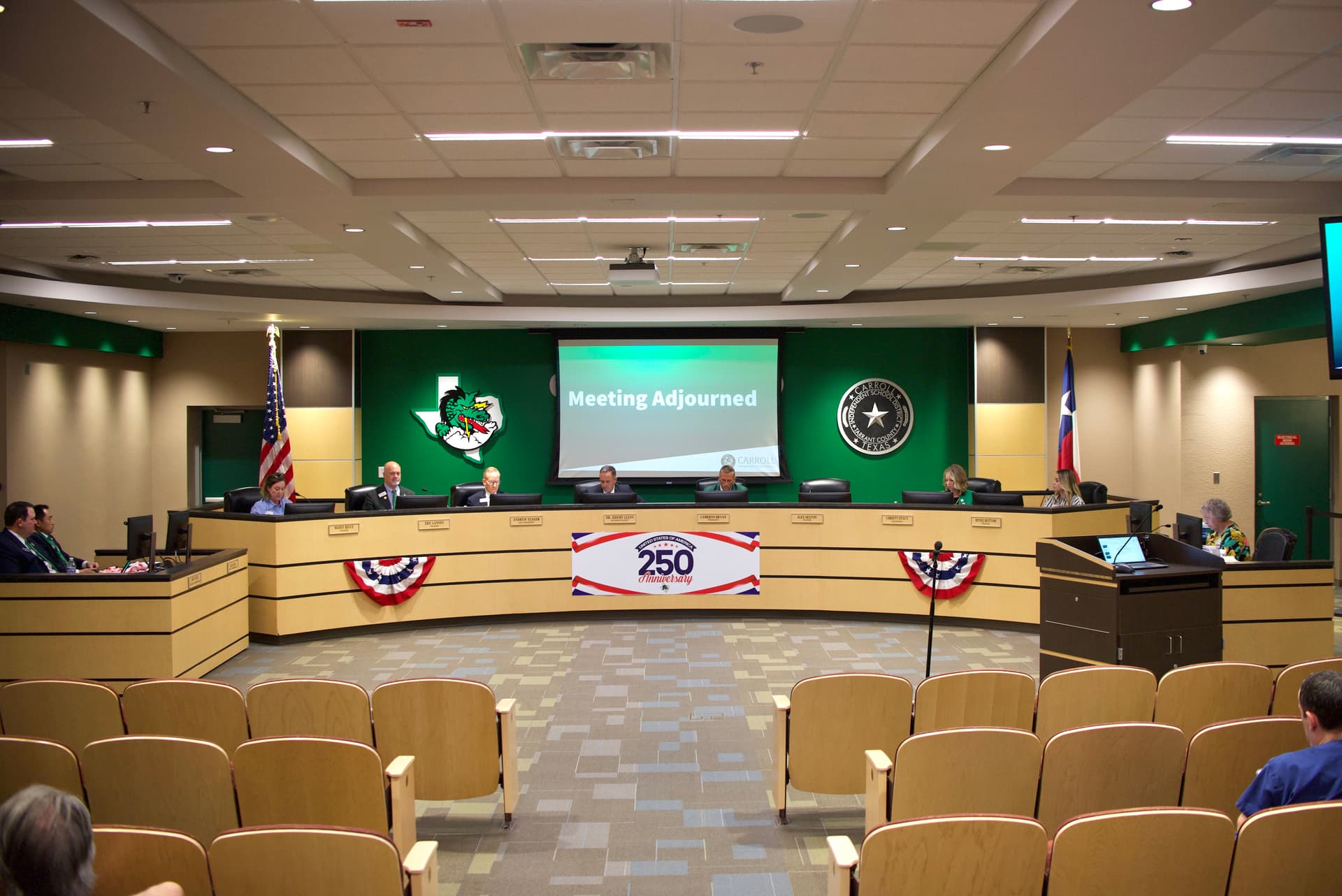
At the June 22 board meeting, trustees adopted the budget for the upcoming school year with a 6-0 vote.
Budget projections show a nearly $377.56 million revenue budget with a nearly $377.56 million expense budget, netting a $9 surplus overall, according to a district presentation.
The budget approval means that class sizes will remain smaller for the 2026-27 school year despite previous budget cuts, thanks in part to the voter-approved tax rate election that was passed by NISD voters in November 2025.
The budget cuts were originally implemented to reduce a $16 million shortfall from the 2025-26 school year, according to previous reporting.
NISD Chief Financial Officer Jonathan Pastusek said at the meeting that the VATRE increased the district’s revenue by more than $25.71 million and helped keep classroom sizes smaller.
“With the passing of the VATRE and the public support, we were able to actually take [the class size] back down to 22 to 1 [for elementary school.] That was one of the VATRE commitments and promises,” Pastusek said.
Secondary teachers will instruct eight fewer students per day, according to a presentation from Pastusek.
Zooming in
The budget approval means an adjustment in the tax rate for the school district, which Pastusek said is how the district based the budget adoption.
The proposed maintenance and operation tax rate for the district is $0.6492 per $100 valuation, a $0.0139 decrease from last year’s rate of $0.6631 per $100 valuation. The interest and sinking fund rate, which is for debt services, will remain unchanged from last fiscal year at $0.421.
Overall, the tax rate changed from $1.0841 to $1.0702 per $100 valuation, which was part of the VATRE approval in the November 2025 election.
Pastusek also said the state revenue per student decreased from $5,423 last year to $2,514 this year because the property values have gone up, generating revenue for the district and lowering how much the state is obligated to give NISD.
The average NISD homeowner paid $4,373.49 in taxes last year to the district, compared to $3,944.54 this year, which is a $428.95 difference.
However, Pastusek said he doesn’t think those numbers are accurate at the moment and that those preliminary numbers have been affected by funding from the teacher retention allotment, which was mandated by House Bill 2 from the 89th Texas legislative session.
“I think that property value [number] will be a lot less. If that property value number comes down a little bit, the money from the state will come up a little bit,” he said.
Looking ahead
Pastusek said some key impacts, like the Texas Education Freedom Accounts program and the Tarrant Appraisal District’s frozen values, are not known at the moment nor how they will impact the district’s values.
The tax rate will be approved Aug. 2 after NISD receives its certified property values and gets its final revenue calculations in July, Pastusek said.