Fort Bend County residents of a new “agrihood” are currently settling into a new routine, according to a March 2 news release from Texas A&M University.
The big picture
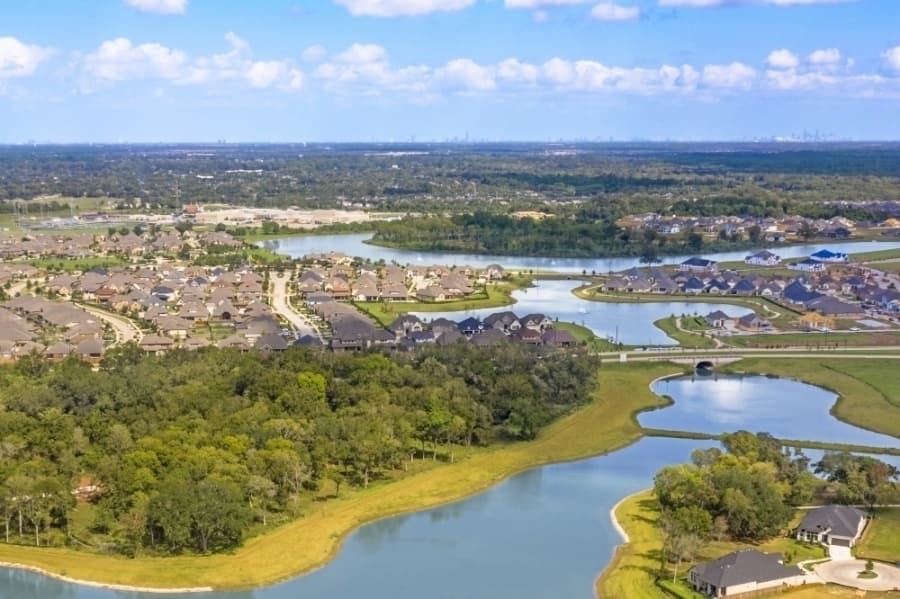
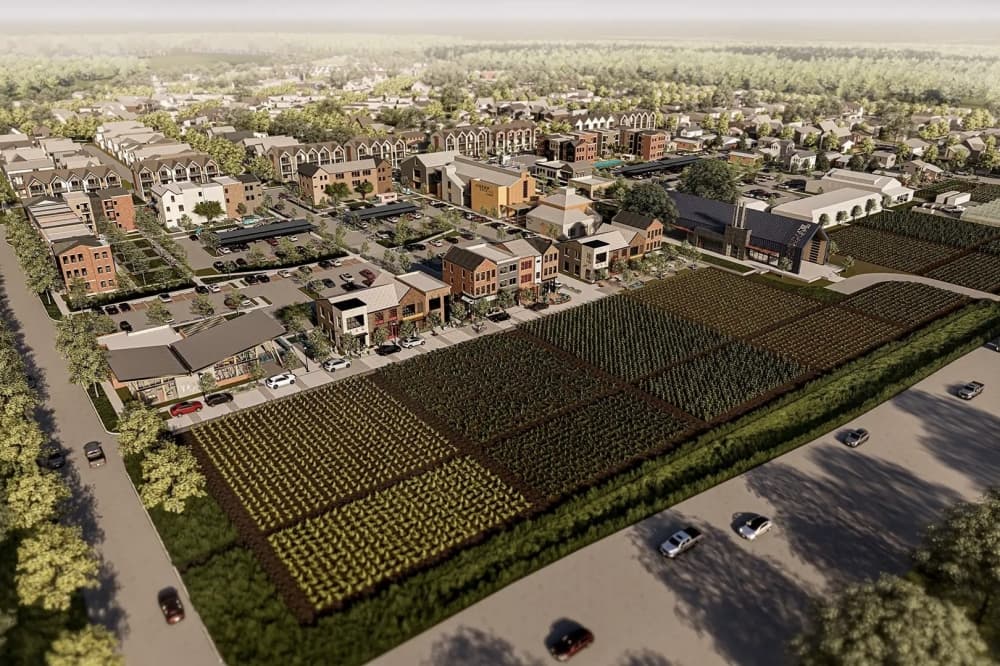
Earlier this year, residents moved into the 235-acre master-planned community called Indigo as part of a study led by Jay Maddock, a Texas A&M professor in the School of Public Health and director of the Center for Health and Nature.
The purpose of the study is to examine how living in an agriculturally integrated suburban neighborhood influences health, which is why 42 acres of the neighborhood are dedicated to agriculture, housing crop fields and a livestock pasture.
Indigo, which is located at 1300 Harlem Road in Richmond, also promotes walkability by dedicating more than half of its land to car-free green spaces, including walking trails and water features.
About the project
The 13-month study recruited 350 residents who were split between Indigo and a comparison community with similar demographics but no agricultural features.
With only 100 agrihoods developed or in development globally, Maddock said these types of communities are still relatively new, but that he sees promise for urban development.
“It does seem that people will connect more to each other and connect to the farm and where their food comes, but so far it’s all been anecdotal evidence,” he said. “This is a first-of-its-kind exploration of this.”
Measuring the impact
To measure the effect on residents, a mobile clinic travels to both neighborhoods to collect height, weight, blood pressure and other data points.
“Forty percent of Americans have never met a farmer before in their lives. I think we’ve totally divorced ourselves from where our food comes from,” Maddock said. “I think the agrihood provides a model in a rapidly growing urban community of bringing the farmer back to the people and knowing where your food source is and how we can actually create neighborhoods that improve people’s health.”