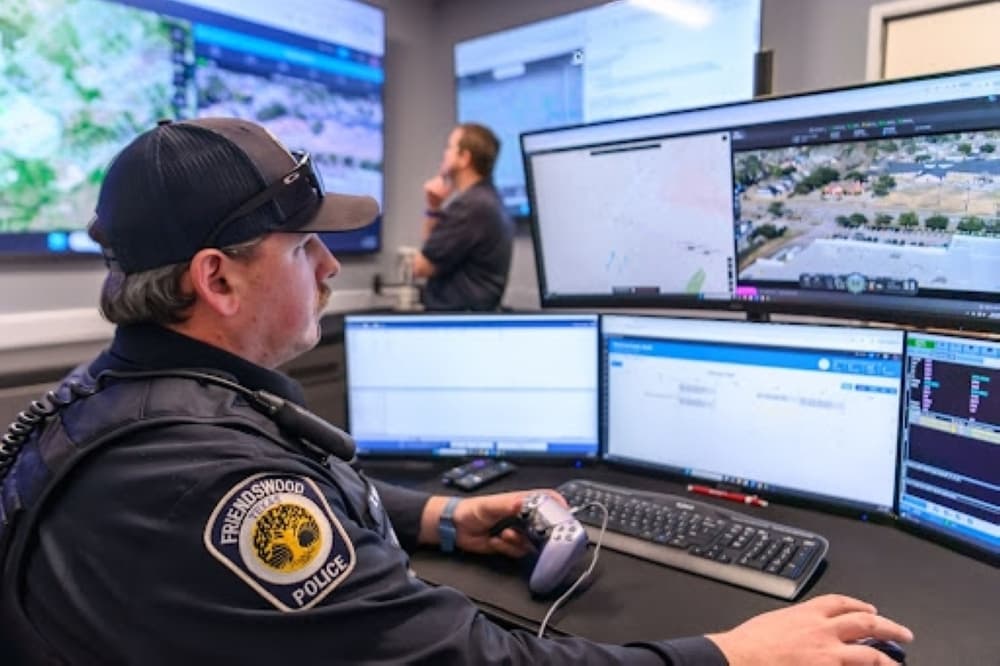
In 2025, Friendswood launched its drone as first responder program, in which the city’s police department dispatches a drone to respond to a call before officers arrive on scene.
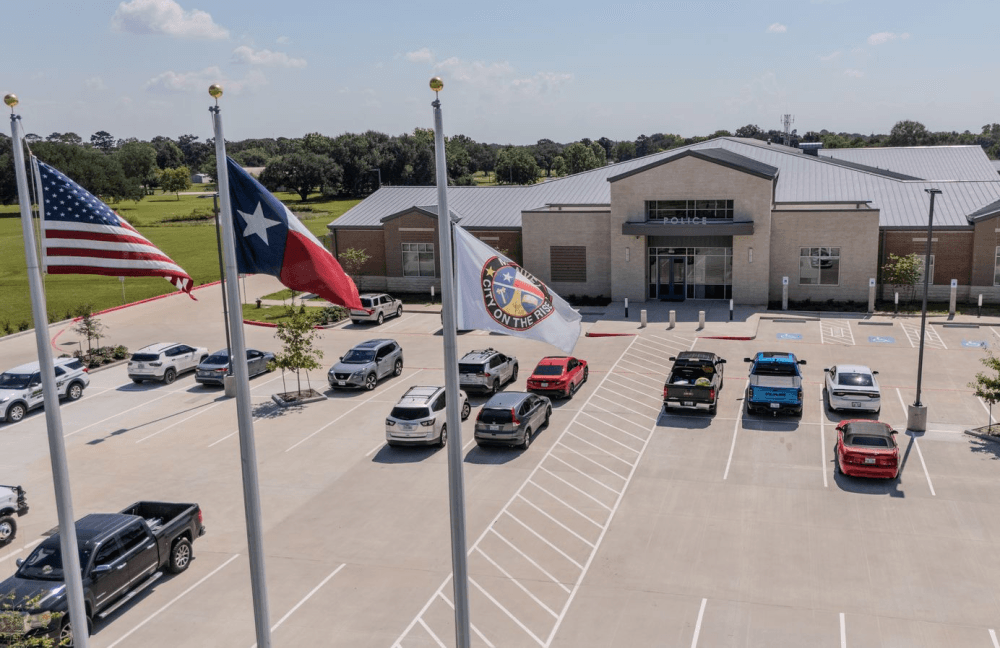
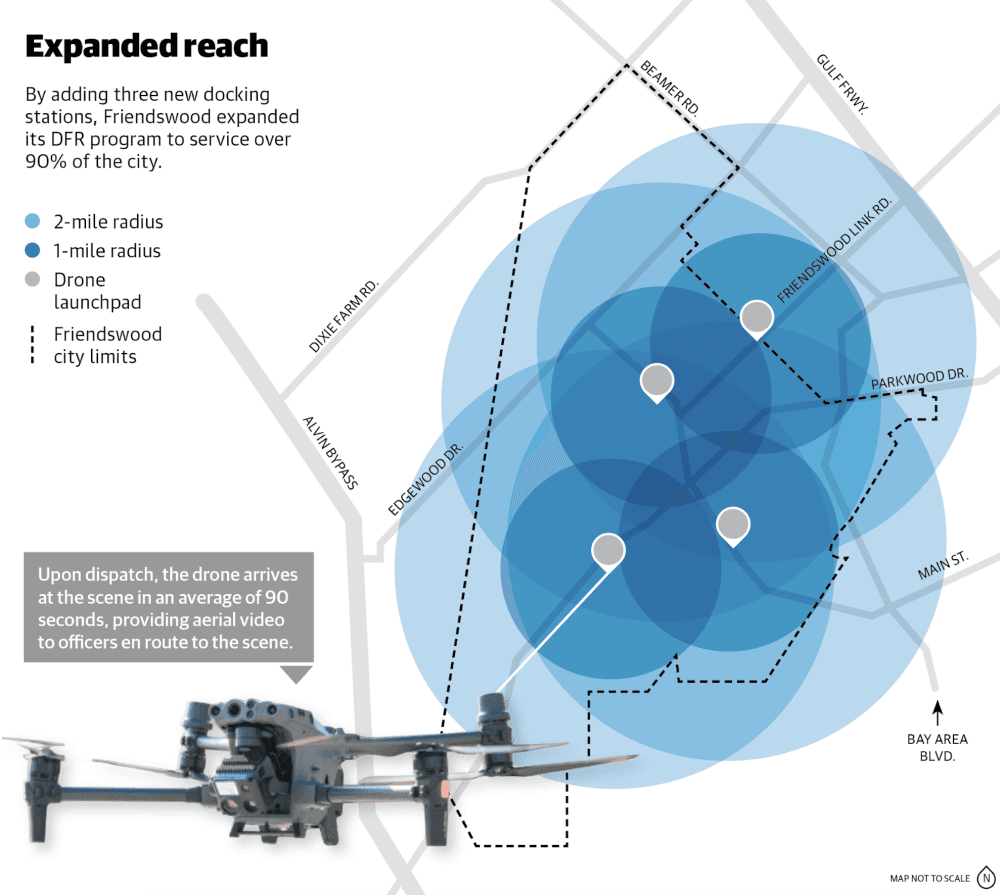
The Federal Aviation Administration, or FAA, allows the department to fly the drone within a 2-mile radius of its docking location, so until now, the department could only service a limited portion of the city near its police station, located at 1600 Whitaker Drive, Friendswood.
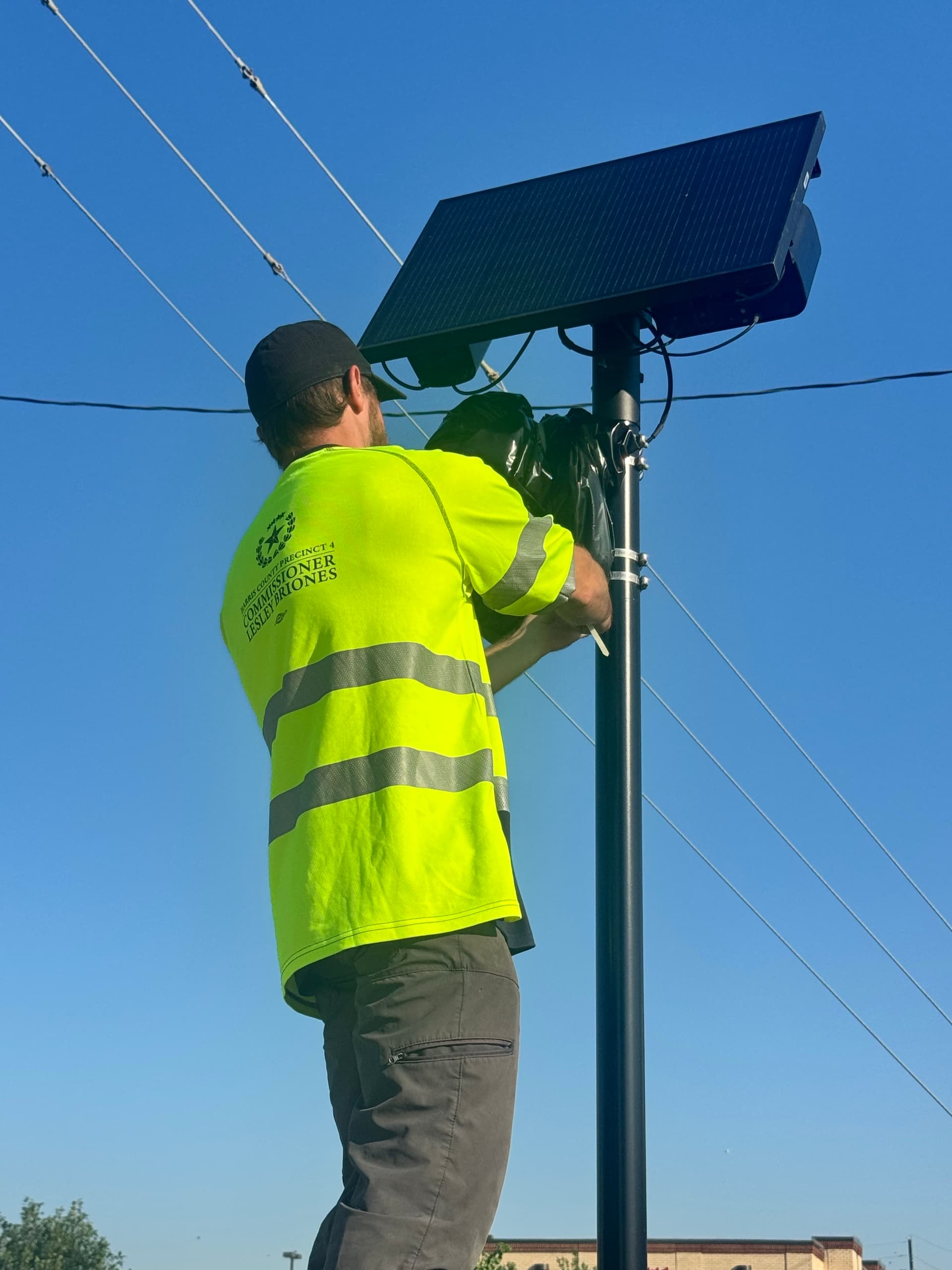
By the end of February, the department will add three new docking stations, increasing aerial visibility to over 90% of the city, Multimedia Communications Specialist Taylor McCombs said.
Unlike traditional police drones, which officers pilot on-scene, these drones are mounted at fixed locations and piloted remotely from a control room.
Created by manufacturer DJI, the drones feature high-end cameras with infrared sensors for thermal imaging and zoom capabilities. Each drone and dock costs $22,000, and the Dronesense software to operate them costs $8,000 per year, Friendswood Police Chief Josh Rogers said.
Even during the testing phase, the drones were deployed just under 200 times in January, Sgt. Scott Muir said, adding that he anticipates the number will increase “exponentially” once the program is fully operational.
Why it matters
While the drones only have a 2-mile flight radius, pilots can monitor areas the drone can’t fly over with the camera’s zoom features.
Muir said the drones serve as “eyes in the sky” that make law enforcement’s jobs easier, referencing a recent call where officers used a drone to quickly locate a lost, vulnerable woman.
Muir anticipates the drones will be useful in other, higher-risk scenarios, such as encounters with armed suspects.
The drone can also be used to triage traffic accidents. In a recent accident involving two cars with missing tires, Muir said the pilot immediately saw the damage, allowing the police department to call wreckers before officers arrived at the scene.
Also of note
Friendswood isn’t the only area community building a robust drone as first responder, or DFR, program.
In 2023, the FAA authorized the Pearland Police Department to operate its DFR program in a beyond-visual-line-of-sight operation, eliminating the need for human visual observers—the first department in the nation to receive that distinction.
Manvel Chief of Police Keith Traylor, whose department has used drones since 2021, said if the department secures city funding in the 2025-26 fiscal year, he anticipates it will be able to launch its own DFR program within the year.
Since 2021, Manvel’s police department has grown its drone fleet from two to six, Traylor said. “They’re a very, very efficient tool for us and ... as technology progresses, they’re going to get better and better and better,” Traylor said. “There’s all kinds of uses and tools for these devices, and as technology grows, we’re going to grow with it here.”
What residents should know
When Manvel police partnered with the Brazoria County Sheriff’s Department to use drones to pursue a suspect at night, officers were able to use the drone’s infrared sensors to discover the suspect hiding only five feet away from the other officers, who were unaware of their presence, Manvel Capt. Christopher Day said.
Tasks that once required hours of traffic barricades can now be completed in 15 minutes with drone technology.
While drones expand the department’s capabilities, Traylor said his department anchors its drone policy in the Fourth Amendment, which prohibits unreasonable searches and seizures.
“Some people think that law enforcement is going to use these as a spying tool ... but there’s specific laws that we have to follow, and there’s specific rules to flying the drone, to ... even get your pilot’s license for the drone,” Traylor said.
A closer look
Traylor distinguishes between drones used for general surveillance and for active police operations. For example, if it’s illegal for an officer to peer over a fence, it’s also illegal for them to use a drone to look over that same fence.
However, if a suspect flees a crime scene and runs through a neighborhood, the drone pilot can fly over houses and look into backyards, Traylor said.
Per Texas Government Code 423, or the Texas Privacy Act, the state law regulating the use of drones, law enforcement agencies in counties with populations over 150,000 must report data collected on individuals and property not under investigation.
Looking ahead, Traylor said his department will prioritize working within the bounds of the law.
“When you start abusing that, that’s when you start losing your tools ... and that’s what we don’t want to do,” Traylor said
By the numbers
Here are some interesting findings related to privacy from the American Civil Liberties Union and the Texas Privacy Act:
$5,000 fine Texas departments can owe per image from illegal drone surveillance2019 was when the first department in the U.S. launched a DFR program75% of public safety respondents in Drone Responders poll said yes to wanting to conduct remote flights.