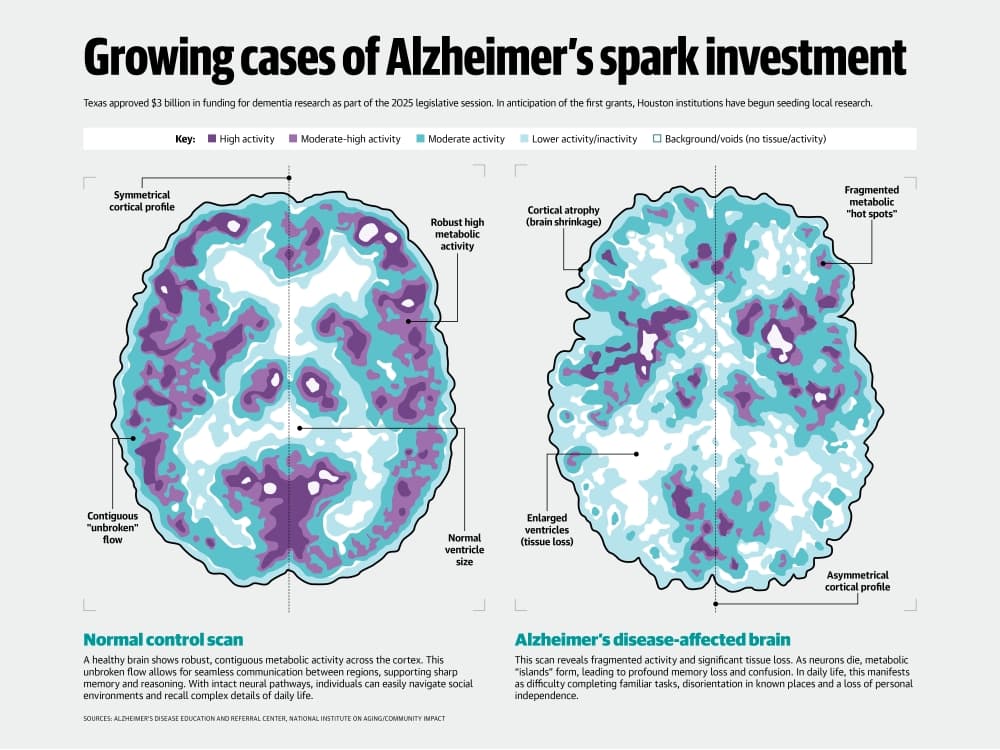
Texas approved $3 billion in funding for dementia research as part of the 2025 legislative session. In anticipation of the first grants, Houston institutions have begun seeding local research.
Current situation
Alzheimer’s disease is a condition that gradually damages and destroys nerve cells in the brain, according to the Alzheimer’s Association, a nonprofit organization based in Houston that is dedicated to the care, support and research of the disease. The disease often causes memory loss, cognitive decline and behavioral changes.
Pernilla Wittung-Stafshede, a chemistry professor at Rice University researching neurodegenerative diseases such as Alzheimer’s, said there isn’t any real medicine to treat these diseases. While research is ongoing, the number of patients continues to increase throughout the world.
“The largest risk factor is age, and we all live longer today in general,” she said. “That means we are getting more patients.”
Texas ranks third in the nation in the number of Alzheimer’s cases and second in the number of deaths caused by the disease, according to the Texas Dementia Initiative.
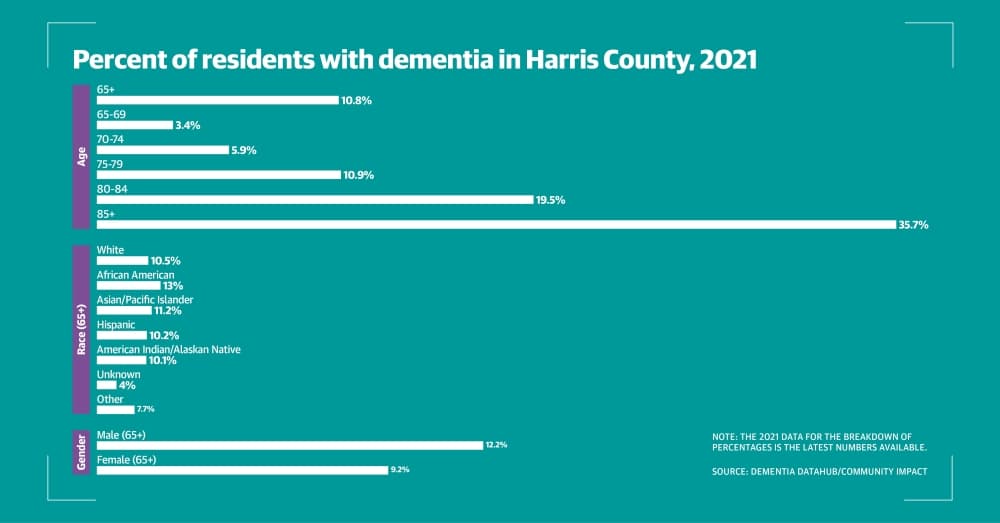
As of 2023, in Harris County, approximately 12.2%, or 64,800 people, ages 65 and older, live with Alzheimer’s disease, according to the Alzheimer’s Association.
Growing challenges
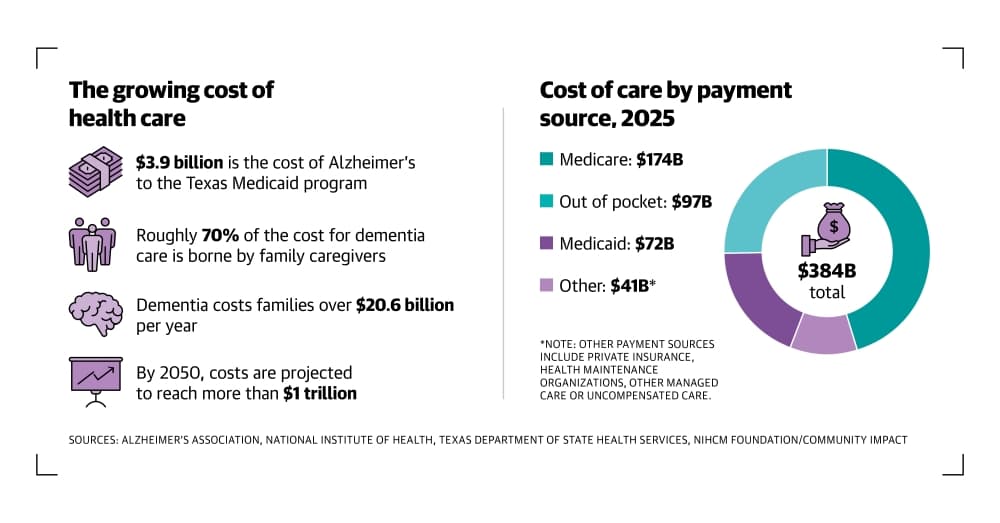
Alzheimer’s is also a major factor in rising health care costs, according to experts. The average total lifetime cost of care for a person living with dementia is estimated at around $405,262, according to the Alzheimer’s Association.
Amanda Bailey, founder of Help for My Parents, a free assisted living search firm in Houston, said most families have to use their life savings or sell a home or property to help pay for long-term care.
“Low-income options are limited,” Bailey said. “That in-between gap ... that’s a big problem.”
Memory care in Houston generally costs between $5,200-$5,500 per month. The average monthly household income in Houston is $5,401, according to the most recent U.S. Census Bureau data.
What's being done
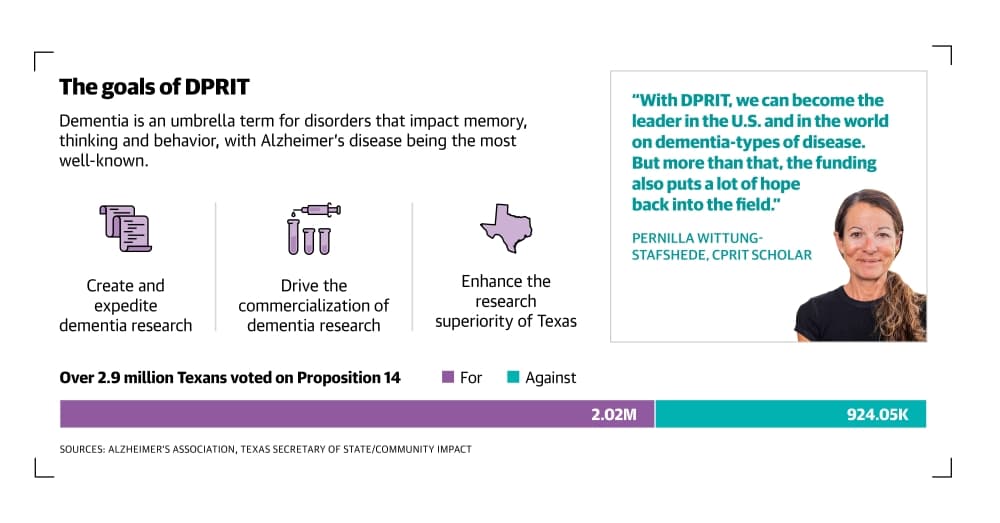
Last year, over 2 million Texas voters approved state Proposition 14 to create the Dementia Prevention Institute of Texas, or DPRIT. The vote, leaders said, was driven by a desire to accelerate cures for Alzheimer’s.
The $3 billion initiative will grant up to $300 million each fiscal year in competitive grants over the next decade, making it the largest state-funded research program in the nation.
“With a steadfast commitment, Texas has the potential to become a world leader in combating dementia through the search for effective treatments and, ultimately, a cure,” Lt. Gov. Dan Patrick said in a 2025 news release after state senators passed the DPRIT legislation.
DPRIT will be modeled after the Cancer Prevention and Research Institute of Texas, or CPRIT, which was created in 2007. Since its inception, CPRIT has surpassed $4 billion in total grants, funded over 2,200 projects, recruited 344 top researchers to Texas and enabled 11.2 million prevention services, according to the institute’s website.
“DPRIT is really important for us to recruit more people to Texas,” Wittung-Stafshede said. “We have stellar researchers in this field, but we don’t have enough. Recruiting people is important.”
The local perspective
As of early May, the Dementia Prevention and Research Institute has not yet awarded any of the official $3 billion in funding. However, some research institutions have started to prepare for when funds are released, especially in Houston.
Rice University has already selected 12 projects that will obtain funding through the Rice DPRIT Seed Grant program, an internal initiative to help faculty launch pilot studies tied to the new state program.
UTHealth Houston has also awarded 21 seed grants to advance dementia-focused research and prepare investigators for the inaugural funding cycle of DPRIT.
Wittung-Stafshede said she hopes that with the funding and creation of the new dementia institute, scientists and researchers will be able to come together to eventually identify what causes Alzheimer’s and dementia and maybe even find a cure or vaccine for the disease in five to 10 years.
Getting help
While researchers wait for funding to trickle down from the state, Bailey said that she hopes families with loved ones who have dementia or Alzheimer’s start to prepare a long-term care plan early on, as 85% of families are not prepared for a dementia diagnosis, according to Alzheimer’s Disease International.
“When rubber meets the road, [families] are less prepared than they thought they were,” Bailey said.
Detecting early warning signs can be key to preparation, she said.
Early signs of dementia can include short-term memory loss, difficulty completing familiar tasks, struggling with language and conversations, or uncharacteristic shifts in mood, according to the Alzheimer’s Association.
Available resources
Local resources that are available to those overseeing loved ones with dementia or Alzheimer's include:
- Amazing Place: An adult day care that offers day programs for dementia patients and supports families.
- CarePartners: A nonprofit organization that offers a dementia day center and resources for caregivers.
- Alzheimer's Association: A nonprofit that helps families and patients with support groups, education and local resources.
- Help for My Parents: A free assisted living and memory care search firm in the Greater Houston area.
“I see the crisis mode a lot,” Bailey said. “And if people could get ahead of the crisis, that would save them a lot of stress.”