When Manvel resident Danica Garza chose to undergo weight loss surgery in 2022, she said she knew the decision would have a major impact on her health—particularly her hormone levels.
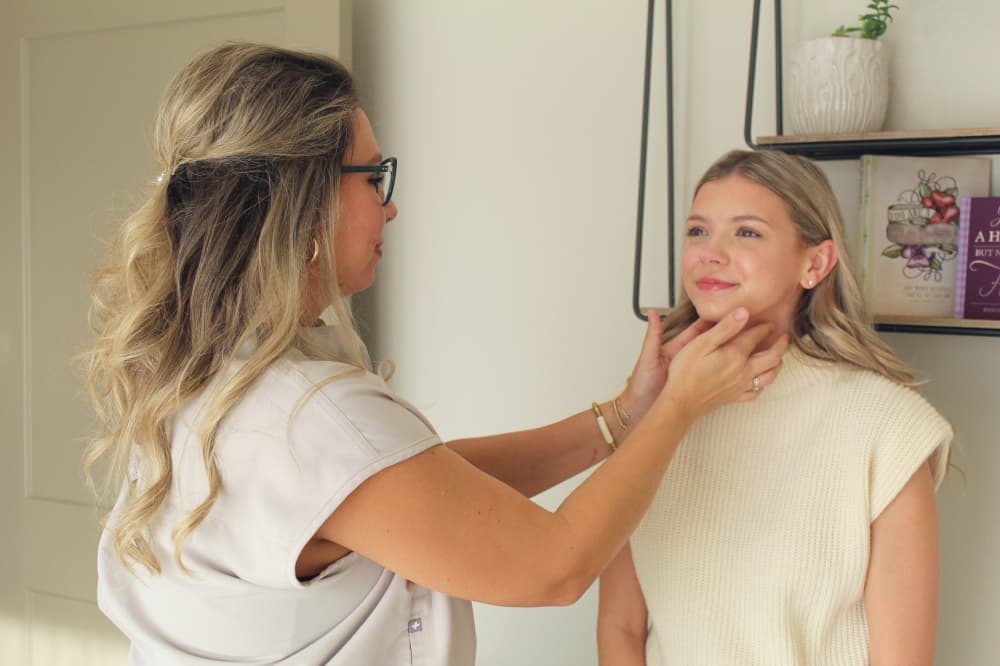
A friend of Garza’s recommended The Hive, a holistic wellness center in Clear Lake owned by Elyse Cho, a certified nurse midwife and one of three practitioners at the center.
Three years later, Garza now makes the 35-minute drive every other month to receive care from Cho.
“I travel to see her because seeing her is that important to me,” Garza said.
Garza is one of many taking advantage of the growing alternative services available for chronic conditions.
The percentage of U.S. adults who reported using at least one complementary health approach increased from 19.2% in 2002 to 36.7% in 2022, according to a 2022 National Health Interview Survey.
In 2025, there were roughly 308,000 alternative medicine providers in the country, according to global research firm IBISWorld—a number that jumped more than 5% since 2020.
Houston’s Bay Area saw a similar increase, with many businesses opening during that time frame.
Why it matters
Nurse practitioner Amy Wilson, who is also the owner of Aspire Medical and Wellness in Seabrook, said she is no stranger to health complications.
She said contracting Epstein-Barr virus set off a 20-year struggle with chronic fatigue.
Within the first year of her illness, she lost an ovary due to complications from ibuprofen use. This eventually required a pacemaker and her undergoing a full abdominal hysterectomy at age 31.
These experiences led her to pursue a career in functional medicine and holistic wellness, she said. Wilson opened Aspire in 2020. By offering an approach that integrates both Western medicine and alternative medicine, Wilson said she’s able to help get to the root cause of patients’ ailments.
“I’m never going to tell you I don’t have an answer, and I’m never going to say there’s nothing we can do, because there’s always something you can do, because there’s always a root cause,” Wilson said.
What else?
Earl F. Hendrikz, D.C., the founder and executive director of Clear Lake Integrative Medicine, said gaps in chronic care fuel patients to seek holistic or integrative care outside the limits of mainstream medicine.
“A lot of patients don’t get presented with alternatives,” Hendrikz said. “They go to the MD, and he says, ‘Well, you can start injections, or you can have surgery, or you live with it.’”
Hendrikz has an integrative practice in partnership with a nurse practitioner to provide “multidisciplinary care,” combining rehabilitation, manual therapy and stem cell injections.
In Texas, for a person who is not a doctor to provide injectable medicine, they must be a nurse practitioner or a physician’s assistant who has been given prescriptive authority, said Texas Medical Board President Dr. Sherif Z. Zaafran.